Do you have a small yard or tight space and want to provide it with some screening?
Then the Firepower Nandina is what you need. It is a cultivar of heavenly bamboo with beautiful foliage color all season long. 😊
The heavenly bamboo Nandina once established is drought tolerant and has lime-green hues in spring with tinges of red. The foliage changes to light green in summer and bright red in fall.
It will remain red through winter in growing zones 8 to 9. Therefore, the best time to plant it is in spring or fall.
You can use the firepower of the heavenly bamboo Nandina in the landscape in different ways. Grow it as a single plant or use it as ground cover. Use it as a foundation planting, a low hedge, or an edging plant.
Plant Name: Nandina domestica Firepower
Other Name: Firepower Nandina
Plant Type: Shrub
Native Areas: Cultivar
Light Requirement: Full sun to partial shade
Watering: Average
Fertilizer: General-purpose fertilizer
Toxicity: Toxic to pets and humans
Temperature: Warm regions
Propagation: Softwood or semi-hardwood cuttings
Growth: 2 feet tall and wide
Soil Type: Acidic, well-drained soil
USDA Hardiness Zones: 6 to 9
Cultivation of Heavenly Bamboo

The Chinese first utilized the sacred bamboo in eastern Asia as far back as the 6th century BCE. The Nandina domestic then became neutralized in Japan in the 1600s.
Nandina is a Japanese name translated from Nan-Din, while domestic is a Japanese practice of planting a shrub near the entrance of a home.
The belief is that you can pass by the sacred bamboo to help you get rid of your heebie-jeebie 😨 post-nightmare dreams when sharing it with the plant.
Still, the heavenly bamboo Nandina is not a true bamboo but a woody shrub, as natural bamboo grows as large grasses.
Still, the berries are toxic, and when grown as informal hedges, you need to ensure they do not become escape cultivation in the area.
These are fast-growing trees, and the bright red berries contain hydrogen cyanide (cyanogenic glycosides) toxic to different birds, like cedar waxwings and other small mammals.
As it is highly poisonous, you can remove the berries when they come out or plant them in containers to keep them under control.
Planting Heavenly Bamboo Nandina
⚠️The heavenly bamboo Nandina is classified as an invasive species in the United States in southeastern states. Research reveals that it produces no bright red berries, but no research supports the facts.
So before you decide to grow it in mass plantings as an evergreen shrub, we recommend you check your state laws first. Great, now that we have got this out of the way, let’s look closer at the Fire Power Nandina heavenly bamboo care.
The Best Soil

We recommend providing Firepower Nandina with well-drained soil for the extensive root system growing as a specimen plant. The heavenly bamboo prefers avoiding alkaline soil as sacred bamboo can develop chlorosis.
Suitable Lighting For Nandina Domestica’s
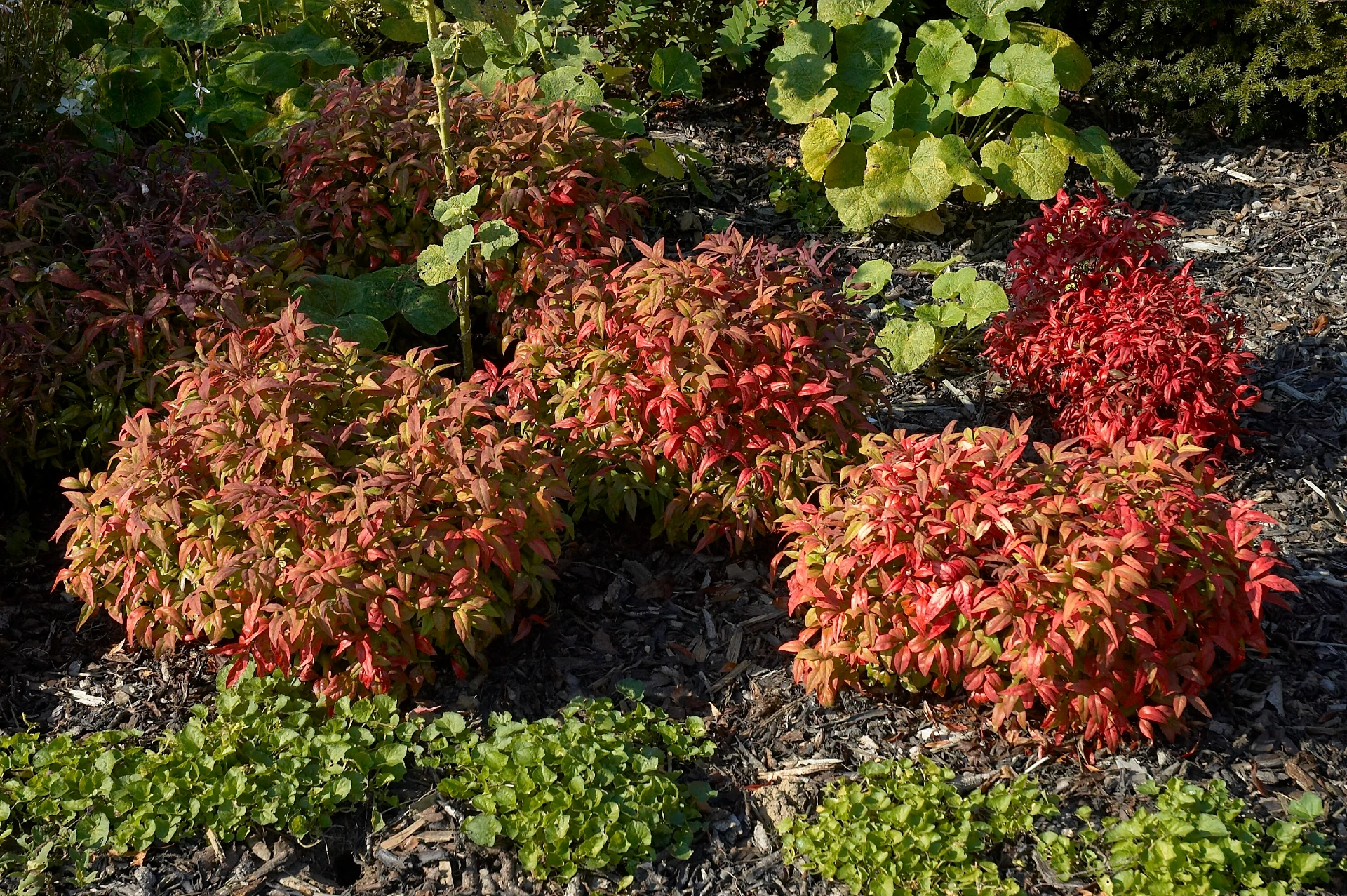
When grown in containers, your Fire Power is not considered invasive but needs full sun to grow indoors or outdoors. The only exception is the growing zones nine, where your plant benefits from shade in the afternoons. Enough sun provides year-round interest, especially with the brilliant red shades in fall.
Watering Heavenly Bamboo Nandina
Young Nandina domestic plants need enough water to become established. Once your plants are mature, they are fairly drought-tolerant.
Temperature and Humidity

The sacred bamboo does not need winter protection grown in garden soil. Still, posted plants will need protection if you live in colder regions. You can wrap the pots outside with bubble wrap or burlap to prevent cold injury in freezing temperatures.
Or you can bring your plant indoors to overwinter. Still, place your Firepower Nandina in a bright spot to receive enough sunlight.
Fertilizing Scared Bamboo

For optimal growth and color, it helps to fertilize your sacred bamboo with a general-purpose feed made for shrubs. You can apply a feed in early spring and then again in early summer. Alternatively, you can work with well-composted materials into the ground for added nutrition.
Repotting and Pruning Heavenly Bamboo Nandina
The evergreen shrub does its best when left to grow in its natural form. Still, when seasons change, you can remove the brown leaves to dead branches for cosmetic purposes.
Please 😊 provide potted plants with a container for the extensive root system, which needs good drainage. Potted sacred bamboo needs consistent moisture.
You can expect to provide your heavenly bamboo with a container size up every two years.
Propagating Nandina Domestica
The best way to propagate Fire Power is through softwood or semi-hardwood cuttings. When the growing season starts takes some cuttings when the weather warms up.
Take a cutting where new growth begins, as it should be soft and green.
Dip the cut end in a rooting hormone and plant in a container.
Keep the soil moist until your new plants have roots sprouting out.
For semi-hardwood cuttings, take them in late summer to early autumn. Follow the same steps except that you cover the container with plastic wrap and wait for the roots to sprout.
As the Firepower Nandina is a cultivar, the seed is not viable and true to the parent plant.


Types of Nandina Domestica
The dwarf variety fits into a small space; it lacks dark red fruit. Yet, there are larger cultivars available.
Nandina domestica ‘Moyer’s Red’ grows up to six feet in height with the same width. It also has light-pink blooms.
Nandina domestica ‘Richmond’ reaches five feet tall and wide. This species has unique foliage color from late spring to fall, with excellent deep red fruit production.
Nandina domestica ‘Gulf Stream’ has coppery foliage with orange tints in spring and changes to bluish-green.
Nandina Domestica Common Diseases and Pests
The heavenly bamboo is prone to mealybugs, whiteflies, and cottony cushion scale attacks. Nonetheless, it can handle low infestations without using a pesticide. Another concern is bacterial leaf scorch.
If you find severe infestations from cottony cushion scales or other bugs, we recommend using a horticultural oil when plants are dormant during the fall to winter. Also, keep an eye on powdery mildew on your heavenly bamboo Nandina.
It is a fungal growth that looks like white powder on the foliage. To prevent this from happening, provide your heavenly bamboo with enough sun and spacing for air circulation.
Whether you want to buy, sell, or simply reach out to other plant enthusiasts, Plantly is the right place to be!