Do you have a garden covered with shade most of the time? Then we know how you can struggle to grow anything in shade gardens.
But the good news is an ornamental grass that will work perfectly in shady areas, Japanese forest grass.
Yes, these grasses are beautiful and have arching leaves that are lanced shaped and green. You can even find variegated forms as well. But more on that later 🥰.
The best part is the perennial grass is a slow grower and not invasive. Another bonus, according to Missouri Botanical Garden, it is deer resistant as well.

More About Hakone Grass, Japanese Forest Grass
Hakonechloa macra, or Hakone grass, is an ornamental grass found mainly in Asia, primarily in Japan. It is one of the rare grasses that grow well in varying shades. You can grow them in woodland gardens, containers, or shade gardens.
The ornamental grass has loose cascading mounds with underground rhizomes that are not invasive. The arching leaves stand out in the garden, reaching up to ten inches long with neat mounding clumps. It can reach up to 18 inches tall to 24 inches wide.
It is a slow grower planted in spring, but you can plant it in the fall when temperatures cool. It is important not to plant them in summer when it is warm and dry. Furthermore, the Japanese forest grass can take a full year before it matures and spreads slowly.
Types of Japanese Forest Grass
The pure Hakone grass has bright green leaves with cascading mounds, but there are a few other cultivars available with different leaf colors and sizes:
Hakonechloa macra Aureola
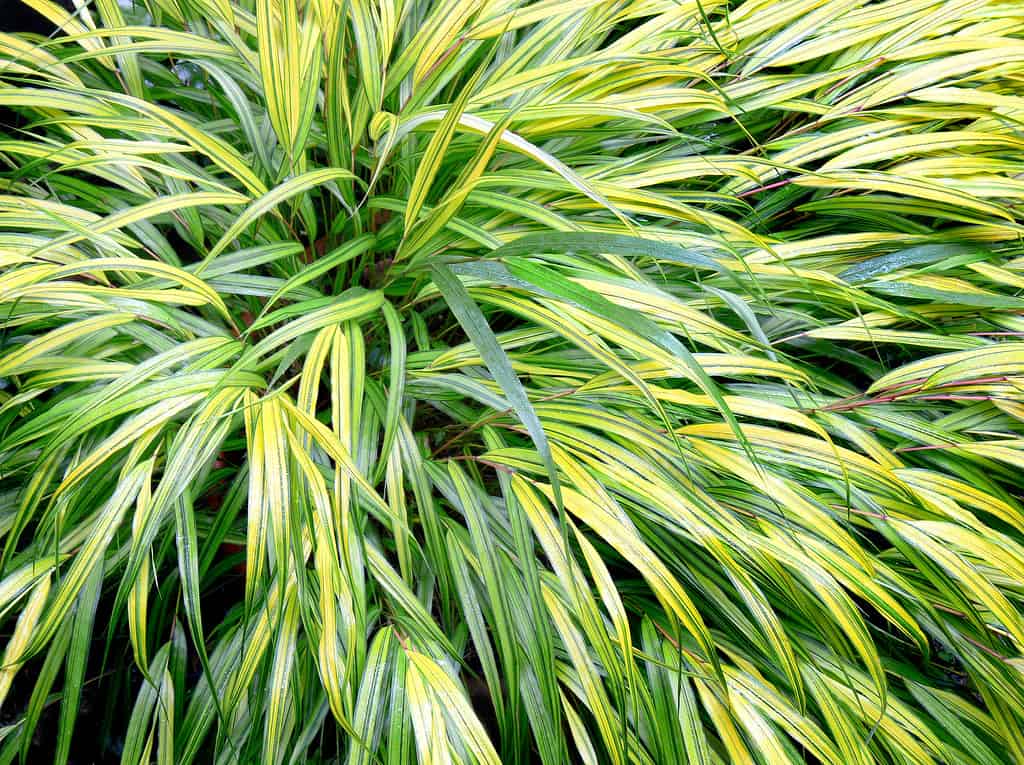
has variegated leaves with chartreuse-green leaves with a mounding cascade reaching 18 inches tall.
Hakonechloa macra Albostriata
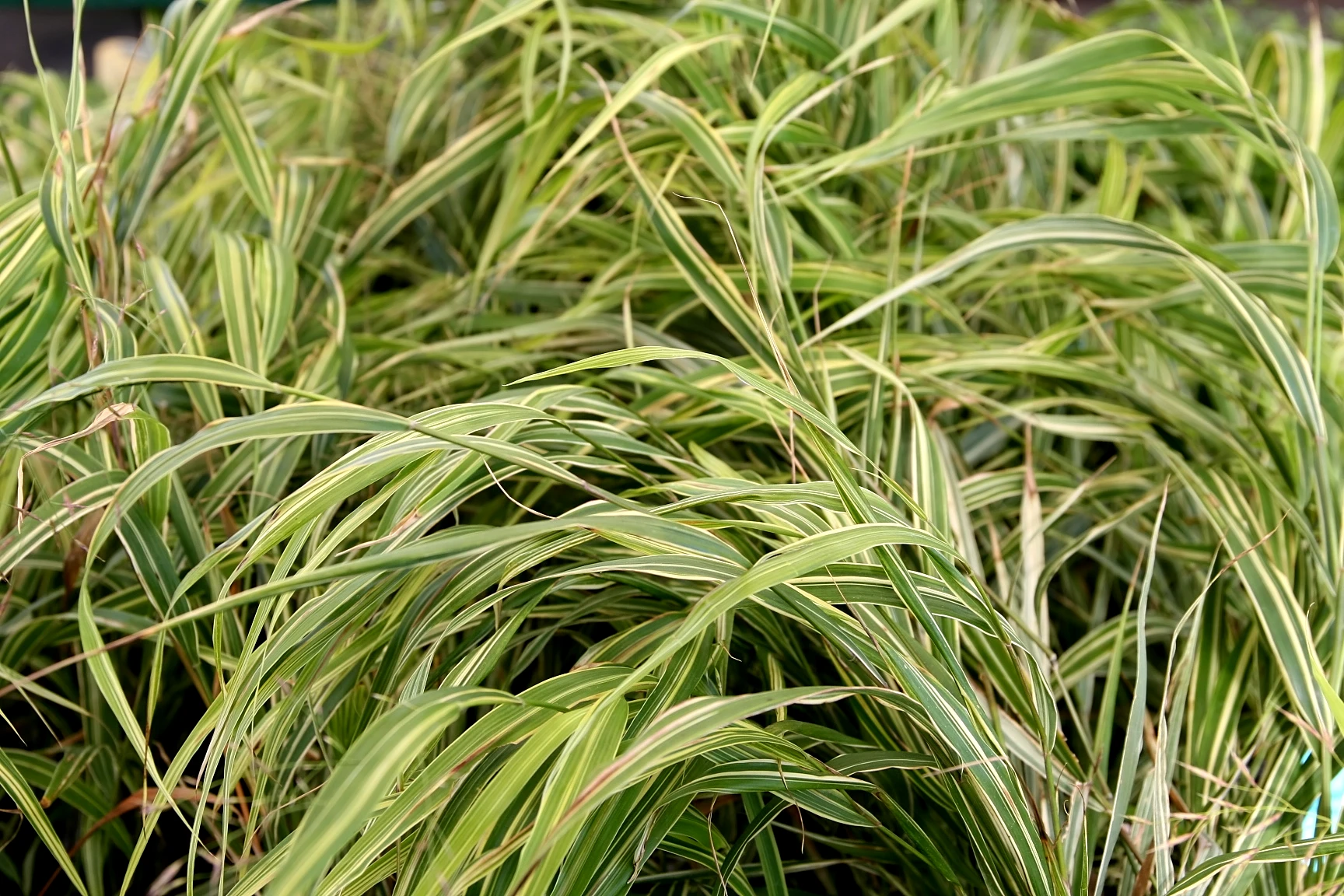
has green leaves with thick and thin creamy white stripes. It is more sun tolerant than your golden forms and will grow faster and taller. It is also more cold-hardy with the solid green foliage.
Hakonechloa macra All Gold

Some people call it the golden Japanese forest grass. The grass has bright golden yellow foliage that grows upright with a spiky form.
Hakonechloa macra Benikaze
is called red wind as it has green leaves in summer and turns to different shades of red in cool summer climates and winter.
Hakone Grass Care
The ornamental grasses are low-maintenance and not troubled by many things. In spring, you can divide them, but it is not needed to keep them healthy. To keep the soil moist and retain moisture, you can add a thick layer of mulch around the Japanese forest grass as ground cover.
Living in the northern end of the hardiness zones helps to heap mulch over the mound to prevent winter kill. But in zone 5, you can grow your ornamental grasses in containers or similarly protect the dense mounds with mulch.
During mid to late summer, warm weather can scorch the foliage, and they can project upwards in freezing winters.
Lighting Needs for Hakone Grasses

Luckily, Japanese forest grass is slowly growing and thrives in partial shade suitable for woodland gardens. If you live in a cool summer climate, that can be done with full sun to partial shade in the afternoon.
While in hot regions, they can thrive in full-shade gardens. Still, part-shade conditions will be yellow, while more direct sun produces a bright green hue. Furthermore, too much sun can scorch the leaf tips.
Japanese Forest Grass Soil Needs
Preferably keep your Hakone grasses in well-draining soil that remains moist. Fill up your potted plant with outdoor grass soil with organic matter.

We recommend amending dense soil with peat moss or compost before planting.
Watering Japanese Forest Grass
The plant thrives in moist, well-drained soil, but the soil must not be soggy. While it is not a plant for arid conditions, it is drought tolerant to some extent once established for short periods. We recommend testing the soil using your finger 👍 to find out if your plant needs water.
You must water your Hakone grass more in a shade garden in hot climates.
Hakone Grass Temperature and Humidity

In Asia, the Japanese forest grass thrives in cooler climates in moist soil. Even when grown in shady areas, it still needs regular watering. Add a thick layer of mulch in warm regions to keep the root ball cool. You may find the foliage dies back in winter or early spring with frost.
Fertilizing Japanese Forest Grasses
We recommend using organic mulch for added nutrition to create humus-rich soil. If you decide to fertilize, do it in early spring, as the growing season starts after new growth appears. Use a balanced fertilizer and only feed these grasses once.


Pruning Japanese Forest Grass
You need not prune your Hakonechloa macra except by removing dead leaves turning yellow or brown. At the end of the growing season, we recommend cutting back the grass and removing the dead foliage before you mulch for the winter.
Overwintering Hakone Grass

The best is to cut back your Japanese forest grass to ground level when the foliage dies in winter. Then add a layer of mulch over the crowns to protect the slender leaves from the cold.
Potting and Repotting Hakone Grass
You can grow the ornamental grasses in containers to cascade down with slender leaves. Preferably choose a pot with large drainage holes to prevent the plant from becoming waterlogged.
Place potted plants in shady areas to receive filtered light. You must feed your grass frequently and add mulch to cool the roots. For container grass, you can provide a monthly feed using diluted fertilizer.
These ornamental grasses will take a long to outgrow their home, and in cold regions, we recommend moving them into a sheltered spot for winter.
Propagating Japanese Forest Grass
Most forms of Japanese forest grass are best grown through division instead of seeds. Here is how you can divide your Hakone grass:
During active growth in spring, you can dig up the whole clump using a shovel.
With a garden knife, divide the root ball into three to four sections and ensure each clump has healthy roots with active shoots attached.
Replant the clumps immediately in prepared soil, and if you use them as ground cover, then space them up to 24 inches apart.
If you want to grow your Hakone grass from seeds, it must be a pure species, and you can harvest the seeds from dry flowers. Then plant the seeds in small pots filled with a potting mix. It can take a few years for viable plants to develop.
Pests and Disease Problems
The Japanese forest grass is quite immune to pests and diseases. The main concern is winter frost which damages the plant crowns. The other concern is to provide evenly moist soil for the root systems.
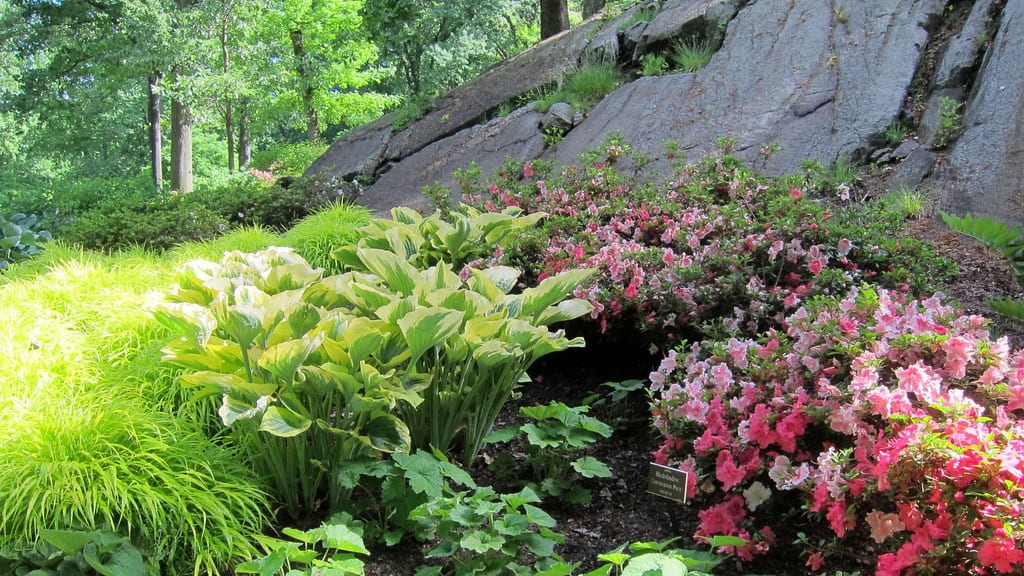
At the same time, the full sun can cause browned leaves like standing in rock gardens.
Whether you want to buy, sell, or simply reach out to other plant enthusiasts, Plantly is the right place to be!