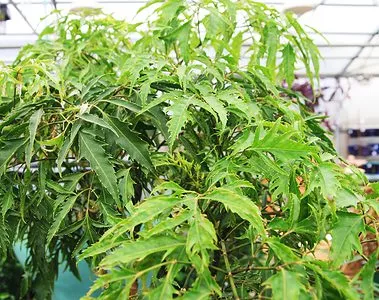
The American Elm tree is one of the most widely used trees in the landscape in North America. However, the Dutch Elm disease resulted in many populations thinning out over the years.
These days, finding an Elm tree is not easy because of the devastating disease. But if you’re lucky, you can find some through hybridizing and cloning.
Elm trees are easy to grow to over 300 years old.
Key Takeaways:
- Planting: Choose sites away from utility lines, ensure well-drained soil, and provide ample water for young trees.
- Soil: Optimal pH levels and proper drainage are crucial for healthy growth.
- Lighting: Full sun to partial shade suits most species, with spacing considerations for multiple trees.
- Watering: Regular deep watering during establishment, with attention to drought-tolerant species.
- Temperature & Humidity: Elm trees thrive in USDA zones 5 to 9, with precautions against wind-induced breakage.
- Fertilization: Use slow-release nitrogen feed to bolster growth, avoiding direct application on the tree.
- Pruning: Early spring pruning shapes tree structure, promotes upright growth, and removes weak or intersecting branches.
- Propagation: Softwood cuttings in early spring offer successful propagation, necessitating proper sterilization and maintenance of rooting media moisture.
- Elm Bark Beetle: Insecticide application and monitoring for signs of infestation are key management strategies.
- Gypsy Moth: Integrated pest management techniques, including pheromone traps and insecticides, combat defoliation.
- Asian Longhorned Beetle: Vigilant monitoring and eradication efforts prevent widespread tree decline and death.

About Elm Trees
No matter what Elm tree you have, it makes for a lovely shade tree, and you can find some disease–resistant cultivars available. The foliage grows dense with a symmetrical crown and an upright or broad vase shape.
The tree grows fast but is susceptible to breakage, and pruning your trees when you are young will help develop a more substantial structure. Once that strong crotch develops, pruning the branches below will help.
The same needs to be done with the branches growing wide to give it that upright growth. Furthermore, Elm trees grow several large ascending limbs to provide those gracefully drooping branches.
The Elm tree’s botanical name is Ulmus, belonging to the Ulmaceae family. You can find different Elm tree species to grow in your garden with care here.
Elm Tree Care & Growing Guide

With the Elm tree, we think the biggest and most important thing is to keep an eye on your young trees to watch for diseases. The trees also need the best soil with water and regular pruning.
Planting Elm Trees
When you plant your Elm tree, always choose a spot away from utility lines to prevent the roots and the growth from causing problems. You can plant indoors either an Elm seed or a sapling by following these easy steps:
First, dig a shallow hole about four inches wider than the tree pot width.
Next, place the root ball or germinated seeds into the hole to cover it with soil.
Now water the roots, allowing the soil to settle, and if it dries fast, water again.
Also, provide your sapling with bark mulch, which helps with lawn care and a rodent guard.
Soil
The soil is essential whether you have the Valley Forge, the pure American Elm, or any other species. A young tree transplants easily and will establish fast. The important thing is to provide well-drained soil with a pH of 6 or 7.
Lighting

The Valley Forge and other species prefer full sun to partial shade. Also, plant your trees far apart if you plan on growing more than one.
Watering
When planting young trees, you must water them weekly to help the roots establish. We recommend deep watering or frequent light irrigation.
Once your American Elms or other species are established, they need minimal watering.
Some species are drought tolerant, so check the cultivar you have. Special considerations are to allow the soil to dry between your water schedules and water at the root ball.
Temperature & Humidity For Elms

The Elm tree can tolerate different temperatures to thrive in the USDA zones 5 to 9. Still, there are some concerns about breakage in high winds.
Fertilize For a Healthy Tree
Fertilizing the Elm tree helps it absorb nutrients below the grass root level. We recommend fertilizing stakes or spikes and not using the fertilizer directly on the tree.
You can add some root growth to the compost when planting your tree.
We recommend a nitrogen feed with slow release to help prevent weak growth.
Pruning Elm Trees
- Prune in early spring for optimal tree health and structure.
- Use stakes to train the tree to grow upright.
- Employ structural pruning to establish one leader.
- Remove major limbs to prevent V-shaped intersections.
- Trim inner pointing branches and dying foliage for tree health.



Propagation
- Propagating elm trees is commonly done through softwood cuttings taken in early spring.
- Cuttings should be wrapped in a moist paper towel and placed in a plastic bag to prevent drying out.
- Insert the cuttings into a rooting media-filled container after dipping the cut end in the rooting hormone.
- Sterilize containers and tools before use to prevent contamination.
- Remove lower leaves and cut stems at a 45-degree angle before planting.
- Mist cuttings with distilled water and cover with a dome to maintain moisture.
- Place in a sunny location with indirect light, ensuring the soil remains moist for successful rooting.
Types Of Elm Trees
Despite the problem with the fungal disease and the Elm tree being vulnerable to Dutch Elm Disease, it does not mean you cannot grow these trees in your garden. Here is our selection of the most gorgeous Elm trees you can find.
Ulmus americana

The American Elm tree remains a favorite to grow and remains the state tree of North Dakota and Massachusetts. It is a classic tree growing tall to provide shade in the garden.
While it has become devastating, it is making a comeback with cultivars developed by horticulturists.
Ulmus glabra “Camperdownii”

The Camperdown Elm has weeping growth with trailing yet twisting branches and dense foliage. It creates a hidden area underneath with a lot of shade.
The canopy is flatter and more widespread than the height.
Ulmus crassifolia
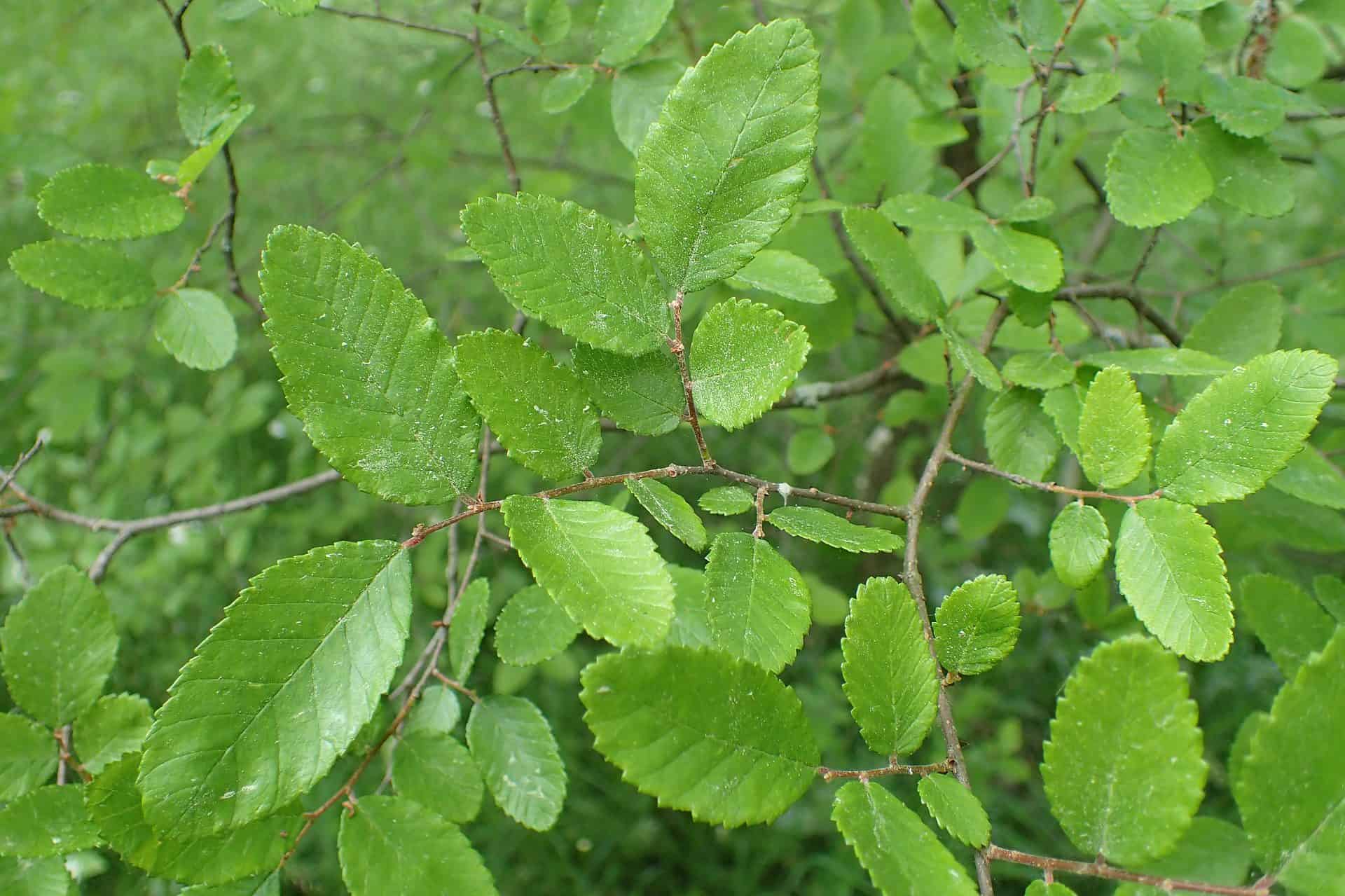
The Cedar Elm is another excellent choice for growing Elm trees in urban conditions. The tree tolerates poor soil, drought, and pollution.
The most common variety grows in Texas but is also susceptible to the dreaded disease.
Other Plants In The Elm Tree Genus
Chinese Elm
David Elm
English Elm
Siberian Elm and so much more
Pest and Diseases Management
Dutch Elm Disease (DED)
Symptoms: Flagging crown, yellowing foliage, rapid wilt, and death.
Solution: Regularly inspect trees for signs of disease, promptly remove and destroy infected trees to prevent spread. Implement preventive measures like pruning during dormant seasons and avoiding wounds to the tree.
Elm Bark Beetle
Symptoms: Presence of sawdust in fall to early spring, flagging crown, and wilting foliage.
Solution: Apply insecticides or use biological control methods to manage beetle populations. Monitor for signs of beetle activity and promptly address any infestations.
Gypsy Moth
Symptoms: Defoliation of tree, weakening of tree health.
Solution: Implement integrated pest management strategies such as using pheromone traps, applying insecticides, and introducing natural predators to control moth populations. Regularly inspect trees for signs of infestation and take preventive measures.
Asian Longhorned Beetle
Symptoms: Tree decline, dieback, and eventual death within two years of infestation.
Solution: Implement eradication programs to eliminate infested trees and prevent the beetle’s spread. Monitor susceptible trees for signs of infestation and promptly report any sightings to local authorities for action.
Whether you want to buy, sell or simply reach out to other plant enthusiasts, Plantly is the right place to be!