Winter does not need to be dull and colorless. The fact is that you can add color to your outdoor space with some winter flowering plants. In addition, you can find some great plants with low maintenance in your garden.
The best part is you do not need to be a gardening expert to care for them. The fantastic thing is with careful planning, you can have a seasonal interest with many varieties available. So, check out our selection of plants for winter to make a lovely addition to your garden this year.
Plants That Grow In Winter
For winter gardens, you can find plants, from evergreen shrubs and trees to winter flowering bulbs that are cold and hardy. In addition, you can add a colorful display to your rock gardens, bedding plants, to containers outdoors.
Still, the amount of color to plant choices will differ depending on the USDA hardiness zone where you live. You may even find you can grow cool-season annuals throughout the winter, depending on how mild your local climate is.
But if you live in a region with icy, snowy weather, your winter color season might only last until the freezing temperatures start moving in. So, create a succession of interest with the following winter garden ideas with the best winter plants suited for your hardiness zone.
11 Best Winter Flowering Plants For Borders
For adding color to your winter landscape, the evergreen shrub is the best plant to grow, but it still depends on where you live. Here you can look at many plants adding essential food for pollinating insects to birds. So, for the best plants to add flair to borders, we recommend an evergreen shrub or tree.
You can find flora with brilliant bark to colorful flowers that can thrive in colder months. You can then underplant your trees with some bulbs that have sweetly scented flowers. Here are some great options to choose from.
1. Begonias

The wax begonia works well in borders and is one of the best winter plants outdoors. You get a display of winter flowers in white, red, and pink with deep bronze to green foliage. The evergreen foliage remains magnificent from early spring, early winter, to late winter, and can tolerate frost.
The plant is cold-hardy in zones 9-11. Still, your Fibrous begonia prefers growing in full sun with partial shade in the afternoon in warmer locations. We also recommend looking at how you can overwinter begonias to make them look their best.
2. Daphne bholua

You can get these winter flowers in a deciduous or an evergreen shrub form. Your garden will be filled with winter blooming flowers in pink and has an amazing fragrance. You can plant these winter outdoor plants in a sunny spot with some shelter to bloom in late winter.
3. Dogwood

These are hardy deciduous shrubs presenting you with stunning features during winter. Once the foliage fades, it reveals vibrant-colored stems.
These winter flowers look fantastic in groups like the Cornus Flaviramea with yellow-green stems paired with the Cornus Winter Beauty with orange-yellow stems and the Cornus Siberia in a bright scarlet hue.
You can plant them as n informal hedge or an underplant with snowdrops. These stunning plants need pruning in early spring even in winter to avoid sap bleeding.


4. Heather

Compared to many different types of plants for winter, the Heather plays an integral part in your garden. The color of this plant is a fantastic choice to stand out against the seasonal browns, fiery reds, and grey stems of other plants.
These plants that survive winter entice bees into the garden year-round and can benefit from an evergreen ground cover to bloom through the season. You can plant these perennials in fall or early spring in the ground with good drainage.
5. Hellebores

The Christmas rose is the best winter plant to grow in sheltered gardens with trees. This brilliant plant grows in semi-shaded spots. The low-growing plant with white flowers attracts bees, providing them with food during the cold winter.
The winter plant thrives in moist, well-drained soil or a raised bed. To maintain these foliage plants, you can deadhead the blooms once they die back in spring and remove dead leaves in winter or early spring.
6. Mahonia
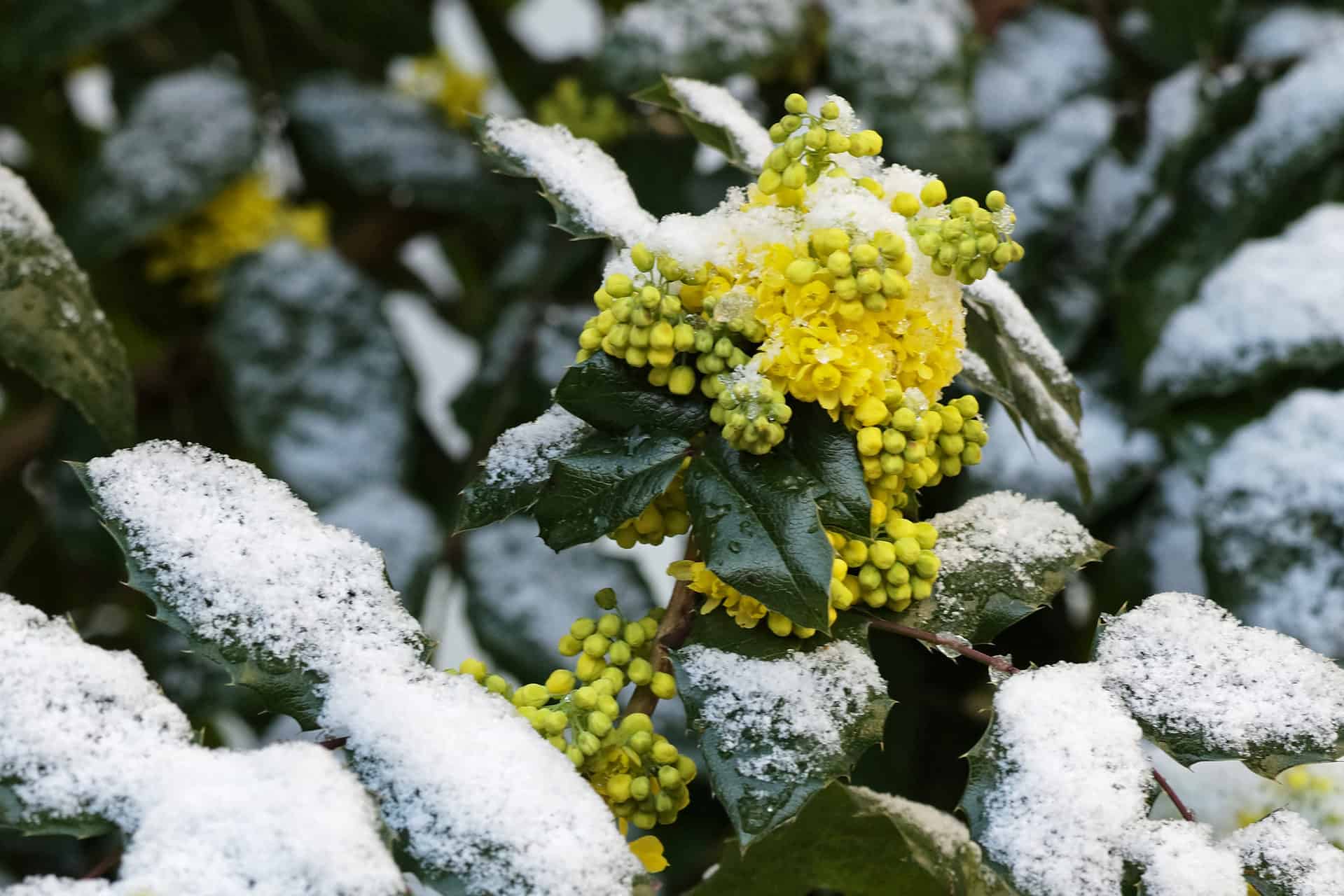
Mahonia is a plant that can survive in cold climates but does depend on the variety you choose to grow as a back border or ground cover. These evergreen shrubs grow well in the shade and add structure to color with their pinnate leaves to the landscaping.
The winter flowering plant grows spikes with fragrant blooms for pollinators in winter. The stunning flowers only start fading in spring and are replaced with purple berries in late fall. The important thing is to provide these plants with well-drained, moist soil and partial shade.
7. Ornamental Cabbages

This is an unusual plant, but it is a worthy addition to the winter garden. The ornamental cabbage relates to edible crops and has a compact rosette habit with snowy foliage—the color ranges from green to purple or white with rosy accents.
These winter plants can grow with smooth leaves, ornamental cabbage, or crinkled leaves, ornamental kale. It has a compact shape that looks great in border rows. Both these types do well in full sun but also benefit from afternoon shade.
8. Snapdragons

Snapdragons are the best winter plants offering you a wide range of colors. You find them growing with pastel colors on long flower spikes. The winter plant is hardy in zone seven but can benefit from a layer of mulch in early winter to protect the crown and roots.
9. Snowdrops

You can plant snowdrops as borders or beneath trees with magical white flowers. Still, you can choose a few varieties to provide color lasting from mid-winter to spring.
The plants self-seed to create a snow carpet and are best planted in spring. But you can also plant the bulbs in the fall, and for a natural look, just cast them and leave them to grow where they fall.
10. Viburnum Tinus

If you want a plant that can withstand the coldest months, the Viburnum tinus is what you want in your garden. The plant displays the best pinkish-white flowers and thrives in part-shade in various soils, from clay to moist soil. It is a beautiful flowering shrub in the front yard with fragrant blooms.
11. Violas

While violas are from the same family as winter pansies, the flowers are smaller but also grow as clusters. The plant looks great growing in walkway borders, or you can plant in masses for a dramatic color display. Violas have fibrous roots that do not grow aggressively and look fabulous in hanging baskets.
5 Best Plants For a Winter Garden Grown in Pots
Remember that most plants grow little in the winter sun when selecting plants for winter pots. The fantastic thing about growing plants in winter containers is that you can control the soil and position, making it fabulous to move around all year round.
These foliage plants we have here, with their glossy evergreen leaves, will provide a color display in the summer shade, late autumn, to late winter. You can cram different plants into the same pot if they have the same growing needs.
1. Camellias

The showy flower will be the first plant to bloom in winter and early spring. The flowering plants grow well in containers. But the Camellia sasanqua varieties are a great choice if you want them to flower as early as fall throughout the winter months.
These flowering plants thrive in well-drained, acidic soil, and best to plant them in the fall to establish their roots. Once your plants outgrow the pots, you can place them in part shade in the garden.
2. Cyclamen

Add some cheer to your yard by adding cyclamen, one of the best winter plant ideas to brighten up the bleakest time of the year. The plant displays white, pink, or red flowers, also known as Christmas plants.
While they look stunning in the garden, they provide a great display in containers or hanging baskets. You can plant the young plants in the fall or even the tubers to bloom the following year. Keep the pots in a sheltered spot to protect them from heavy rain, which helps to deadhead the spent blooms.
When planting in pots or directly into the ground, we recommend providing good drainage as these indoor plants do not enjoy wet feet. Provide them with the part sun in the morning with bright shade.
3. Pansies

An icon of the winter garden is pansies which grow well in pots. These winter plants thrive in cool temperatures and provide a bright display in the dreary months. You will display foliage with blooms in your gardens, from white to yellow flowers, depending on your variety.
It is essential to provide your pansies grown in containers with morning sun and then move them to some shade in the afternoon. Pansies are frost tolerant making them cold hardy to thrive from early spring to late winter.
Alternatively, you can protect the pansy’s crown with some mulch to prevent freezing in late winter.
4. Primroses

Primroses are also fabulous winter plants to brighten up your patio to garden. These plants make for beautiful winter pots displayed in a dull corner as they love the part shade. The plant will not display bare branches and can survive from early spring to late winter.
You can plant primroses in fall, like the Everlast, that will bloom for up to six months.
5. Winter Aconites

The winter aconites bloom in January and February. The plant has shallow roots and is perfect for planting in pots. Provide these plants with well-drained soil and place them in part shade.
These plants will provide a beautiful bloom display in containers as they have the best flowers for a winter display.
Final Thought
Though the plants we listed can endure winter weather, they still benefit from some extra protection during the cold months. Take steps to shield them from harsh winds and ensure their soil doesn’t get oversaturated. Additionally, keep an eye out for any signs of damage or stress.
If you notice issues, refer to our How to Recover Plants from Winter Damage article – it provides tips for giving struggling plants the supplemental care needed to bounce back. With just a bit of extra attention, your hardy plants can make it through winter in good shape.
Whether you want to buy, sell or simply reach out to other plant enthusiasts, Plantly is the right place to be!