The stunning Alocasia regal shield is a sight with its black velvety heart leaves. Now, you might wonder where this magical plant comes from. It is an Asian jungle understory plant grown in a garden or a container.
If you decide to have one, this article is for you. Here, we’ll share our secrets on how to get hold of this plant and care for it.
What Is Elephant Ear Regal Shield?
The elephant ear plant is a hybrid between the Alocasia odora and Alocasia black velvet. The foliage has ruffled edges, and the undersides are reddish with a black velvet tint at the top.
The Aroid grows up to five feet tall, while the leaves elevate out of erect petioles and self-headings that get wide. While the plant will not fit into a small apartment, it makes a great plant to display on the patio. You can put it at a height for all to see the gorgeous leaves.
Alocasia Regal Shield Care

The fantastic news is that elephant ear plants are low-maintenance when you know how to care for them. This plant prefers high humidity, bright indirect light, and porous moisture soil.

If you have pets, this might not be the best indoor plant. However, with some precautions, you can prevent them from accidentally chewing on the leaves.
Best Potting Mix
A loamy mix filled with organic matter works best for the Alocasia regal shield. The ground needs to be well-draining and moist, with sufficient nutrients, and have an acidic pH. Your fresh potting soil needs to provide the roots with enough aeration.
Clayey and consistently moist soil will provide less breathing room for the roots. In contrast, too dry or sandy dirt will not retain the correct moisture level. So, make sure to strike a balance.
Ideal Lighting

The regal shield needs up to 85% sunlight but not direct sunlight. You can grow your plant in indirect light, but please provide them with shade cloth as an outdoor plant.
Another great place indoors is at the west or east window behind sheer drapes to filter the light. You will notice with your Alocasia regal that it grows towards the light. It helps if you keep rotating the pot. Rotating the container allows the foliage to have the same gorgeous foliage all the way around.
If there’s too little light, your elephant ear regal will produce dull foliage.
Watering Needs
While your plant can tolerate intermittent dryness, it grows best in moist soil. You can have a watering schedule, providing them moisture every other day in the summer months. The important thing is that the humidity drains fast through the water drainage holes with the super porous ground.

We recommend using a moisture level soil test for this plant, as it will help you know when to water your Aroid. You may water your plant once you notice that the top two inches are dry.
An overwatered plant will show drooping leaves. On the other hand, if it’s underwatered, the leaves will show signs of wilting.
When the winter season arrives, cut back on water as it can get rotting roots fast.
Temperature & Humidity Needs
The regal shield elephant ear grows in tropical environments and rarely has a dormant period. Hence, the ideal temperature during the day is 77°F (25°C). Night temperatures must not be lower than 60°F (16°C). You will need to replant the corms in spring if exposed to frost.
The plant thrives in tropical conditions with high humidity. So, placing them indoors in a heated room can develop crisp edges in the foliage. Feel free to use a humidifier, provide occasional misting, or set up a pebble tray to lift the moisture level.
Fertilizing
Alocasia regal shield is a heavy feeder. When grown in a pot, limited nutrients can quickly deplete as the plant matures. So first, make sure the growing medium is rich with organic matter. You can use animal dung, sterile compost, or store-bought organic manure.
Next, apply a diluted liquid feed monthly, two-thirds of the recommended dosage—feed, especially in the growing season from spring to fall. Also, make sure to water well before applying the fertilizer.
Propagation
The best time to propagate the regal shield is mid-spring or the summer when it’s actively growing. You can use the division method with the steps here:

Root Clump Division
- Take the recommended plant’s soil and fill up a plastic nursery. Water the soil.
- Remove the entire root ball from the mother plant from the container and wash the soil off.
- You will notice multiple clumps and need to separate them using your hands.
- You can place each clump in a pot and care for it like your mother plant.

Plantlets
- At the base of your Alocasia regal, you will find it growing plantless on the mother plant through a stem.
- Use a sterilized knife to remove the babies at the base and plant them in a potting mix with part perlite and peat. Or you can use sphagnum moss for your starter plant. Keep the potting medium moist.
- When watering, use lukewarm tap water and leave the container at warm temperatures.
- You should notice them growing in two weeks, but never let them stand in cold weather or let the ground get too dry.
Growth Zone
Elephant ears are a hardy plant in the USDA zones three to eleven.
Potting
Your potted Alocasia regal grown can get top-heavy, so providing a stable base is necessary. The important thing is that roots need to breathe, and a terracotta container is best.
You can expect to repot in two years and need an enormous container. Or you can grow your regal shields in the garden in a shaded spot or keep thinning them down using base separation.
Alocasia Regal Shield Varieties
Colocasia Black Magic
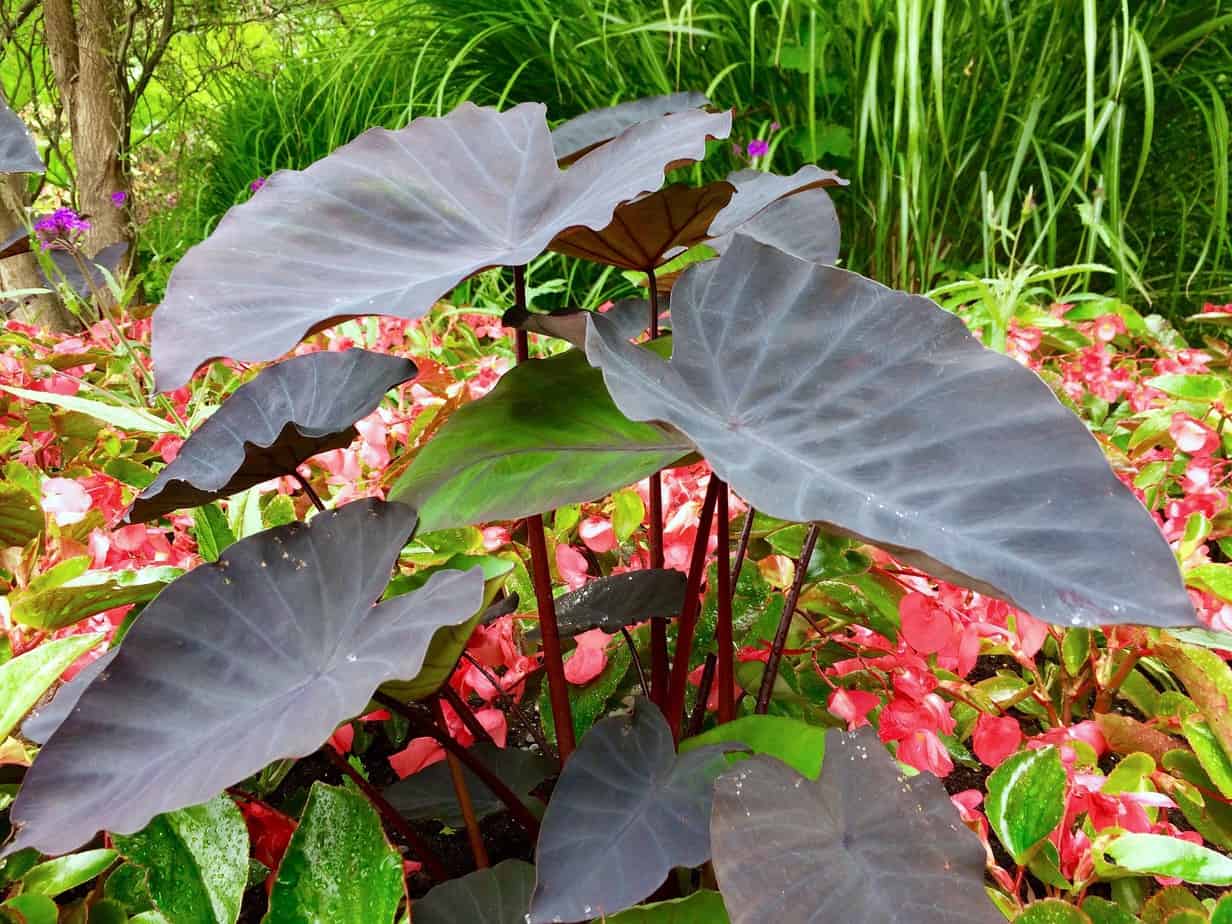
Black magic is a rare plant with blackish-purple leaves that grows up to a foot tall and spreads wide. This is an excellent plant for gardeners with a mystical side.
Alocasia x amazonica

It is an exotic plant crossed between the Alocasia sanderiana and Alocasia longiloba. The green arrow-shaped leaves look gorgeous with their wavy edges.
The foliage you find is decorated with margins and ribs. If you are lucky, you might see yellow flowers on this plant. It makes for a great ornamental houseplant.
Alocasia Frydek

The Alocasia green velvet displays deep, velvety green leaves with white veins. This is one rare plant; if you get your hands on one, it is one hot interior decor design that fits in with any contemporary home.
Alocasia Regal Shield Plant Diseases & Pests
When taking care of the Alocasia purple underside, Alocasia black shield, or new guinea shield plant, it helps to look for the following signs of distress:
Dropping Leaves
When you expose your regal shield elephant ear to cold drafts or stand by a window, it leaves droop and falls off.
Dropping and Wilting Leaves
The typical cause results from root rot caused by waterlogging. It’s best to check the roots by removing the plant. If it looks slushy and brown, saving your plant is not possible. All you can do is look for plantlets to repot.
Yellowing Leaves
You may notice this spreading to the rest of the foliage, starting at the bottom. It can result from overfertilizing, and you can only water your plant profoundly and let the water drain. The best water for this plant is distilled water or rainwater.
If you use tap water, leave it standing for up to two days for watering and avoid fertilizing for a while.
Dusty Webbing on the Leaf Underside
This happens as a sign of aphids feeding on your plant’s leaves. Blasting them with water and using insecticidal soap or neem oil on your plant is best.
Another hack is to use vinegar diluted with three times more water and spray it on the leaf’s underside. The best time to do this is in the morning on a sunny day.
Waterlogged Discoulored Blotches
Leaf edema happens due to overwatering, causing a disease in your plant. Provide fresh potting soil in a clean pot and remove the damaged leaves.
Brown Leaf Spots
If the spots smell foul with an ooze, it is a bacterial leaf spot, and removing the affected foliage is best. Also, cut back on your watering and not get the foliage wet.
Cheat List For Regal Shields
- Provide consistent moisture with a bright shade, and keep turning your pot.
- The soil needs to be well aerated and filled with organic matter.
- The elephant’s ear loves warmth but not frost compared to other plants.
- Try not to over or underwater your plant.
- Dry out the soil partially before watering, and avoid using tap and distilled water.
- A terracotta pot is a great container to limit water to the regal shield roots.
- Always use disinfected tools with your plant.
- You can expect to transplant your Alocasia regal every two years.
- You can also increase the humidity of the elephant ears using a spray bottle to provide moisture around the plant or place it with other plants.