A plant that is currently experiencing a renaissance, captivating gardeners is the Brunnera macrophylla.
Yes, when through the looking glass, it looks like the cheery forget-me-not five petals flower you see blooming in spring. But the Siberian bugloss plants are not true to forget me, not plants. But what the heck?
It does not matter as it makes for a fabulous substitute with its light blue flowers in the garden.
More About Brunnera Plants

The Brunnera macrophylla has different common names Siberian bugloss, large leaf Brunnera, false forget me not, and heartleaf Brunnera. The plant belongs to the Boraginaceae family, and it is a petite plant with light blue blooms and glossy heart-shaped silver leaves that vary from green, white, silver, or gray.
The plant is an herbaceous perennial and can live for years under normal growing conditions forming tidy clumps reaching up to 18 inches tall. The foliage starts dark green and hairy and can change color.
The Brunnera is native to North West Asia and Eastern Europe and does well in the USDA hardiness zones three to eight, growing as a ground cover. The bright blue flowers of the Siberian bugloss last up to ten weeks and start in mid-spring or late spring.
Brunnera Macrophylla Plant Care

The green silver leaves on the Siberian bugloss with tiny blue flowers, and yellow colored center can tolerate dry soils to partial shade. The plant can even handle full sunlight. These are hardy perennials growing with rhizomes forming clumps with heart-shaped leaves with white markings.
The first leaf shapes are oblong and gradually change to the heart shape form.
Planting Brunnera Macrophylla
If not bought as plants but as seeds, the best is to plant indoors first. It helps to determine when your region will no longer experience frost. Hence, it helps to count back ten weeks on the calendar for your sow date.
When the day arrives, you can mix the seeds with a moist growing medium to place in a freezer bag and keep it refrigerated for about four weeks. Once removed, the germination takes about up to three months.
You can transplant the seed outdoors after the last frost or before spring. Also, remember to space the seeds about 20 inches apart.
Rich Soil For Brunnera Genus
Your new plants will grow in most types of soil as long as the soil remains moist and rich in nutrients. So, your young plants benefit from using organic mulch to help them establish faster.

The Brunnera plant is not a drought-tolerant species and prefers that the soil is not dry. The species thrive in well-drained soil to allow excess water to drain freely. Alternatively, you can add some organic matter to the ground before planting with excellent drainage in the garden soil.
Lighting Needs For Siberian Bugloss Plants
The false forget me not can thrive in partial shade to full shade. But it can grow in full sun as long you check for moist soil to prevent your outdoor plant from drying out. The foliage starts to scorch with the hot afternoon sun in warmer climates.
We recommend that when your Siberian bugloss plants receive north morning sun, it helps to keep the soil moist. Another concern with the variegated cultivars is that the foliage quickly burns, and the plant can go dormant.
Watering Brunnera
When you grow your Brunnera macrophylla or any other hardy perennial in the Boraginaceae family, the important thing is to provide your new plants with enough water during the first year.
Once your plants settle into the new environment, they can tolerate dry soils to some extent but not too long. It also depends if you have them in extremely sunny conditions or shade gardens.
So, the rule remains it helps to keep an eye on soil moisture and provide your variegated forms to other species with water when needed.
Fertilizing Brunnera in Early Spring

If you provide your Brunnera macrophylla with the best growing medium that is not too poor in nutrients or too dry, your Siberian bugloss does not need any feeding. But if you have poor soil, we recommend applying an organic liquid fertilizer once in spring and summer for your large leaf Brunnera to thrive during the growing season.
Temperature and Humidity
The Brunnera macrophylla and most other cultivars prefer cool summers to extreme heat. The best growth temperature is 65°F, but it can flourish in temperature ranges between 50°F to 60°F. Still, it does not do well in high humidity and is best grown in hardiness zones 3-8.
We recommend a shady garden or even part shade grown in warm climates.
Pruning Burnnera Plants
For Siberian bugloss plant care, you can remove the unsightly foliage in summer to encourage new growth. You can trim your plants regularly to prevent self-seed. Those seeds dropped to the ground reseed readily, and you can do deadheading when the flowering fades to prevent this from happening.
When fall arrives, we do not recommend cutting the entire plant back to the ground. The reason is that the dark green variegated leaves protect the plant’s crown during winter. You can then clean away the old foliage in spring.
Alternatively, growing Brunnera is well planted in garden soil or containers and can benefit from a thick layer of organic mulch in winter. It is a hardy perennial, and you only need to winterize them when grown in containers to prevent the roots from freezing.
You can cover the potted plant with a first blanket to keep them protected.
Propagating Brunnera Macrophylla
The best way to propagate these cultivars is to dig them up to find the clump in early spring and divide the roots into healthy segments to replant. But of course, when you divide your plants every five years, it remains for longer.
Still, you find a patented cultivar, and best to check your species, as propagation is prohibited. Alternatively, you can take root cuttings to grow in containers with moist soil when you divide them. Or you can collect seeds from germinating and planting in the garden.
Brunnera Varieties
You can find Brunnera macrophylla, with its solid green leaves and sprays of blue flowers, readily available to buy. But there are a few other remarkable cultivars available.
Alexander’s Great

The silver veins with super-sized green leave set this Brunnera apart from other species. The leaves can grow up to a foot across and looks remarkable when the leaves begin to grow. Alexander’s Great thrives in late spring to early summer with beautiful blooms.
Diane’s Gold

Diane’s Gold has golden-hued foliage when it starts and looks like summer. In a shade garden, the vegetation is pretty, but too much sun turns it to a whitish gold, blooms small blue flowers with a touch of gold.
Brunnera Jack Frost Plant

The Jack Frost Brunnera features silver spotted leaves, which makes it something special to have. You can plant Jack Frost in the same conditions as the other cultivars. The green veins create an elaborate pattern with the gleaming surface as the flowers’ blue color reflects in them.
You can grow Jack Frost happily with the Japanese-painted fern and Obsidian heuchera as a trio.
Looking Glass
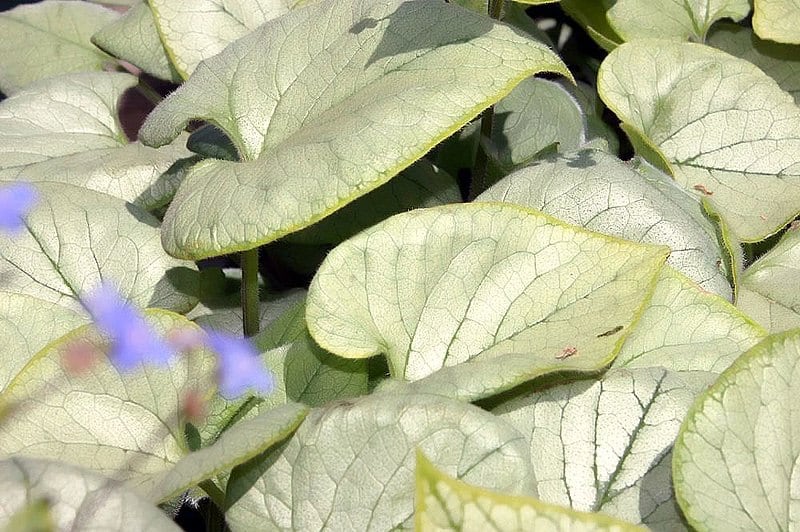
The leaves of this plant look metallic in silver, making it stand out in any garden. Another feature is the heart-shaped leaves prominent in the Brunnera macrophylla.
Common Diseases and Pest Problems
The plant, whether grown as ground cover or left to grow a bit taller in containers, are trouble-free plants with few pests. But they can get leaf damage from rabbits, nematodes, and slugs. Yet it is more cosmetic than a health concern.