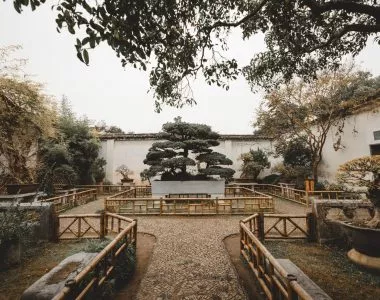
Crimson Queen Japanese Maple trees add flair and color to your garden. The Japanese maple is the prettiest of the Sapindaceae family. The best part is you will have the gorgeous fall color displayed, and it is a dwarf variety, making it suitable for bonsai container growing.

More About Japanese Maples
The Laceleaf Japanese Maple is native to central and south Japan and southeast Korea. It comes with an aesthetically pleasing form with deep red to orange colors deepening into fall. The Laceleaf Japanese is one of the common names but also goes by the term:
Spiderleaf Maple
Threadleaf Maple
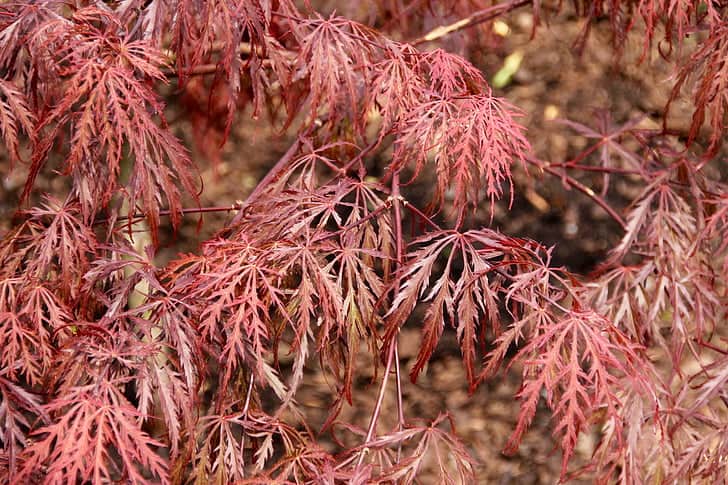
The tree is a deciduous shrub with a low spreading shape with divided lacy leaves, making it an excellent bonsai specimen. The dwarf varieties have a mature height of ten feet tall to 12 feet wide in the landscape.
The Acer palmatum var dissectum Crimson Queen is a slow-growing shrub and blooms small reddish-purple flowers that are not the main attraction. Another huge benefit is that you can grow it with black walnuts.
Another notable thing is that after the plant develops flowers, it is followed by double-winged samaras or even two seeds. The seeds form a boomerang shape, and the wings help to disperse the seed to wider areas.
Crimson Queen Japanese Maples Care

Many gardeners grow the Crimson Queen Japanese maple trees in warm to cool climates. Throughout the growing season, you see a display of the bright crimson red color and remains more petite than other types of maple trees. You can also grow the Crimson Queen Japanese maple tree in a gallon container to keep on the patio.
Still, find the right location to plant your trees in full sun to part shade and well-drained soil.
Crimson Queen Japanese Maple Soil
The Laceleaf Japanese maple tree is a forgiving tree you can grow in a garden or a container. In both cases, providing your tree with a well-drained potting medium is essential to prevent the root system from rotting.
Hence, you can use organically rich but slightly acidic or sandy loam soil. Still, these trees cannot tolerate clay potting mediums. Instead, the tree can thrive in salty or highly alkaline soil. Alternatively, you can use an Akadam mixture with stone or lava rocks with pumice for growing in containers.
Growing your Crimson Queen Japanese maple plant outdoors helps add mulch, like shredded bark, around the roots to protect it and is just as important to provide them with well-drained ground.
Lace Leaf Japanese Maples Light Needs

The Crimson Queen plant can tolerate different lighting conditions. You can grow your tree in full sun if you live in the northern regions. While in the southern parts, the Crimson Queen Japanese maple prefers partial shade.
Growing your tree in the afternoon shade is best if you live in scorching parts of the world, as full sun can result in leaf scorch. So provide your Japanese maple tree with part afternoon shade.
Watering Laceleaf Japanese Maple
The Crimson Queen plant is drought and sun-tolerant once it reaches maturity. Yet, initially, you’ll need to water your Laceleaf Japanese maple often. Then, when you notice the soil dry often, we recommend watering a bit more.
For container growth, the pot must have enough drainage holes, allowing the excess water to drain from the vessel to prevent the roots from rotting. But as the old saying goes, always check the ground to see if it is dry before you water it.
You may need to water your Japanese maple trees more during summer.
Acer Palmatum var Dissectum Crimson Queen Fertilizer

Growing your Acer palmatum var dissectum Crimson Queen outside in the garden helps to provide your tree with compost. The tree is a big feeder but keep doing this throughout the spring and summer months.
When you fertilize your tree, it provides them with the nutrients at the roots it needs. But if you do not use compost, a slow-release fertilizer also works well. You can use fertilizer in spring but refrain from feeding in winter.
Fertilizing helps the new branches and foliage to grow.
Temperature and Humidity
These plants can thrive in a warm climate but always take care of the foliage in the sun, as it can scorch. You can grow your trees in the USDA hardiness zones 5 to 9. But the biggest problem gardeners face is frost and freezing.
Still, the roots can withstand a temperature as low as 14°F. But if you want to play it safe, you can bring the receptacle inside to overwinter or protect your tree with mulch and a frost blanket.
Pruning and Maintaining Crimson Queen Japanese Maples
Pruning a Crimson Queen Japanese maple tree is essential to maintain its shape, health, and aesthetics and helps with new foliage to grow. The best time to trim Japanese maple trees is mid-winter or early spring before new growth begins.
This allows the plant to heal and reduces the risk of sap bleeding from cut limbs. Start by examining the tree to identify the branches that need pruning. Look for dead, diseased, or damaged limbs. Also, check for any crossing or crowded stems that can create congestion. When you prune the branches, always make clean cuts.
Use sharp, clean tools to minimize damage and encourage proper healing. Begin by removing any dead or diseased limbs. Cut these back to the main stem or a healthy branch junction. This prevents the spread of diseases and promotes tree health.
Crimson Queen Japanese maples benefit from thinning to improve air circulation and light penetration. Remove branches that cross each other or are growing too closely. This helps the tree maintain its desired shape.
Selectively, prune stems from the outer canopy to maintain the tree’s overall shape. Make cuts just above a pair of healthy buds or a main branch junction. Don’t over-prune, as this can stress the tree. If your Japanese maple tree is getting too large for its space, you can reduce its size by carefully pruning it.
Cut back longer branches to a bud or branch junction, but avoid removing more than one-third of the tree’s canopy annually. After pruning, applying a wound dressing or pruning sealer to large cuts is a good practice to prevent disease entry.
Yet, many experts now recommend letting the tree naturally heal these wounds. Avoid heavy pruning during the growing season (early summer), as this can weaken the tree. Be mindful of the tree’s natural shape and avoid over-pruning, which can result in an unnatural appearance.


Propagating Laceleaf Japanese Maple
Propagating a Crimson Queen Japanese Maple, like other Japanese maples, can be done through several methods, including seeds, cuttings, and air layering.
Propagating Crimson Queen Japanese Maples Seeds:
Collect seeds in late summer or early autumn from your garden plants.
Soak the seeds in water for 24-48 hours to help with germination.
Plant the seeds in a container with well-draining soil. Bury them about 1/4 inch deep.
Place the container in a cool, dark location (like a refrigerator) for a few weeks to simulate winter conditions.
Move the container to a warm, well-lit area and keep the soil consistently moist.
Seedlings should emerge within a few weeks to a few months.
Propagating Japanese Maple Softwood Cuttings:
Take softwood cuttings in late spring or early summer from your Japanese maple.
Select a healthy branch and cut a 4-6 inch softwood cutting just below a node (where leaves or buds are attached).
Remove the lower leaves, leaving only a couple at the top.
Dip the cut end in rooting hormone to encourage root development.
Plant the cutting in a container with a well-draining potting mix.
Cover the container with a plastic bag or use a plastic dome to create a humid environment.
Place the container in a bright, indirect light location.
Water the cutting regularly to keep the soil consistently moist.
Once roots have developed, typically within a few weeks to a few months, you can transplant the cutting to a larger pot or into your garden.
Propagating Crimson Queen Japanese Maple by Air Layering:
This method is typically done in the spring or early summer months.
Select a branch on the tree that you want to propagate. Make a small upward cut (1-2 inches) through the bark and cambium layer.
Dust the wound with rooting hormone.
Wrap a ball of moist sphagnum moss around the wounded area.
Cover the moss with plastic wrap and secure it with twine or rubber bands.
Check regularly to ensure the moss remains moist.
Once roots have formed (this may take several months), cut the branch below the rooted area and transplant it into the garden or containers.
Japanese Maple Varieties
There are quite a few Japanese maple varieties you can grow with your Crimson Queen. Here are some of Plantly’s favorites:
‘Bloodgood’(Acer palmatum atropurpureum ‘Bloodgood’)
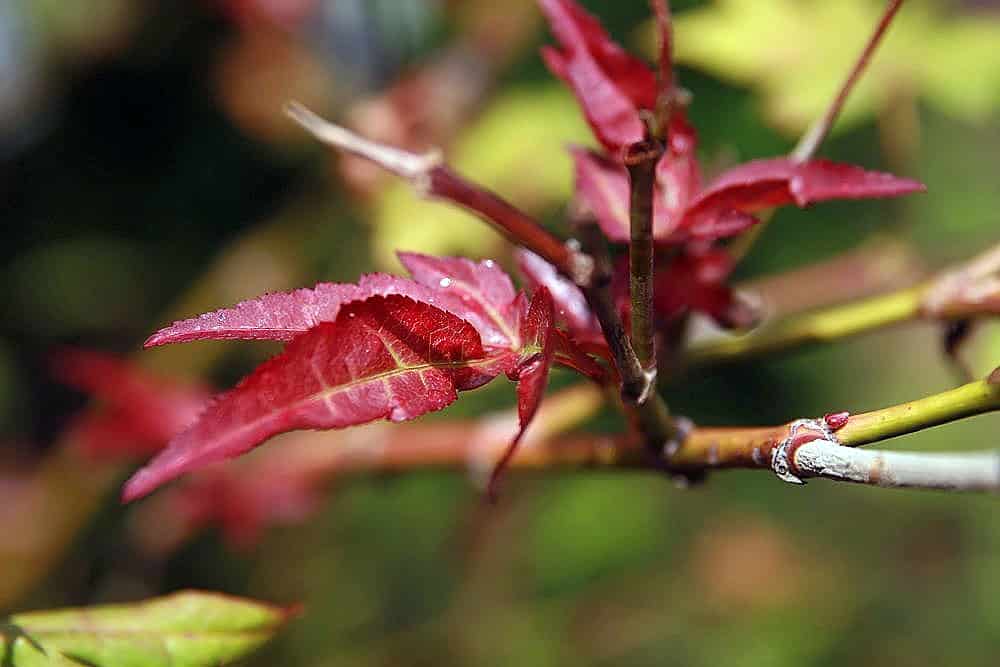
The Japanese maple tree is not a dwarf variety and can grow up to 20 feet tall. So ensure you provide this tree with enough space to grow. Another highlight is that the reddish-purple leaves emerge in early spring.
‘Red Dragon‘(Acer palmatum dissectum ‘Red Dragon’)

The Red Dragon grows eight feet tall with reddish-purple foliage changing to bright crimson red and looks fabulous in a container on a patio. You can enjoy the fall color to brighten up your garden space.
‘Autumn Moon’ (Acer shirasawanum ‘Autumn Moon’)

In springtime, you see a beautiful display of yellow-orange leaves transforming to a brilliant red-orange shade in fall. These Japanese maple trees can grow up to ten feet tall.
‘Butterfly’(Acer palmatum ‘Butterfly’)
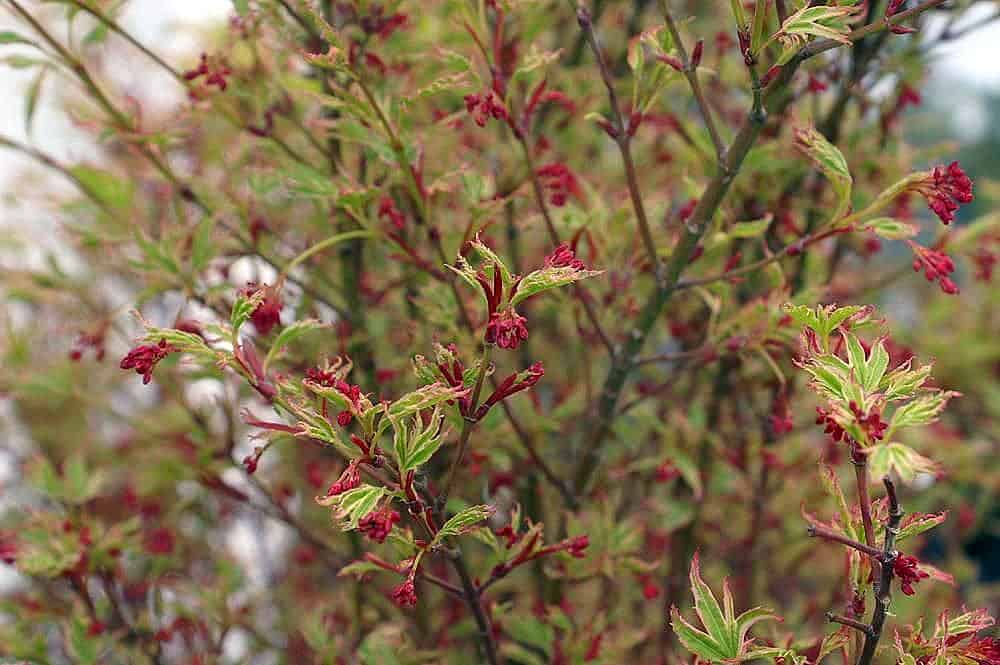
The butterfly grows up to 12 feet tall and sports unique foliage, green with white changing to a bright red or magenta fall color.
Pest and Disease
The Chrismon Queen is as prone to common diseases and pests as most plants in the garden or home. The main concern with the Crimson Queen is poor air circulation, resulting in the breeding place for insects and diseases.
One such disease is powdery mildew in poorly ventilated areas with high temperatures and humidity. It can cause the foliage to appear as a white powder. If you notice the disease, it helps to treat it promptly. The best is to provide the tree with enough air circulation, remove diseased leaves, or spray a pesticide on the plant in severe cases.
Another concern is anthracnose, which affects the foliage, leaving dark brown spots with yellow margins. The same can be done by removing diseased leaves and pruning branches to help improve ventilation. Finally, it helps to use thiophanate-methyl or mancozeb to treat the disease.
Pests that can bother your Crimson Queen are spider mites, aphids, and longicorns. In severe cases, it helps to use an insecticide or neem oil to treat your tree. The same treatment can also be used for verticillium wilt.
Whether you want to buy, sell or simply reach out to other plant enthusiasts, Plantly is the right place to be!