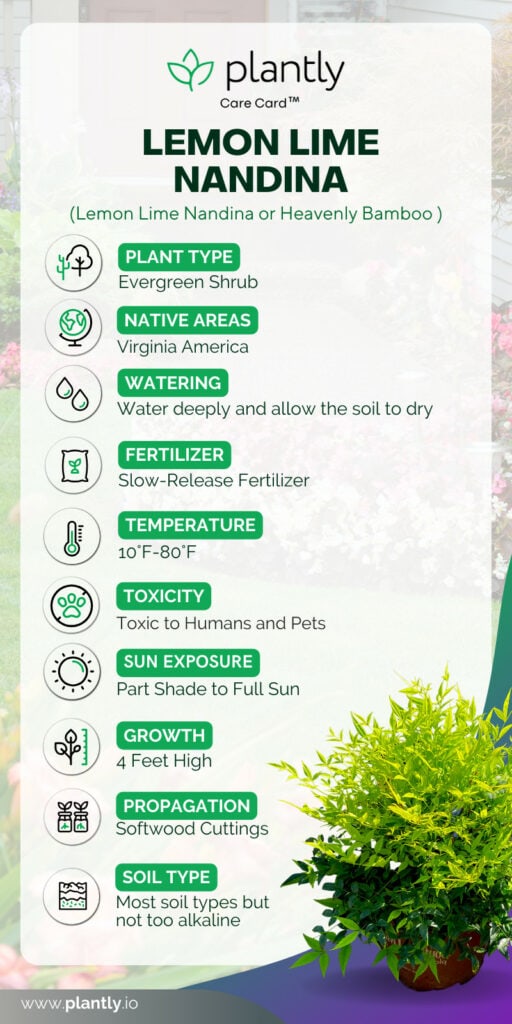
The lemon-lime Nandina is magically impacting the garden or container gardens year-round. It has a compact evergreen shrub form with a tight growth habit and can thrive in different growing conditions.
Hence, if you want low-maintenance yet high-impact foliage, the lime Nandina is the plant to grow in the landscape or your living space. The evergreen shrub is a perfect addition to mass plantings; the best part is that it is deer resistant.
So, you can have a contemporary look year round with the lime green foliage with minimal maintenance. What a bonus, don’t you agree?
More About Lemon Lime Nandina
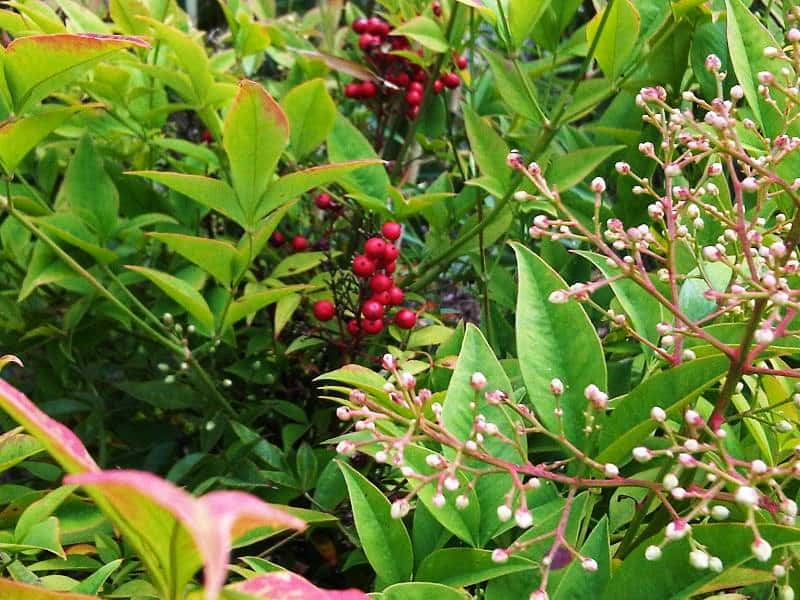
The Nandina lemon-lime has another name Nandina domestica‘ Lemon-Lime or the heavenly bamboo. The species was discovered by Richard E. Davis in 2004, living in Locustville, Virginia. The plant was chosen from some seeds of open-pollinated Nandina domestica ‘Aurea’ plants.
The Nandina lemon lime is part of the Southern Living Plant Collection. The foliage shape has all the Nandina traits, but the leaves are lacy light green without the red fall colors. The leaves are on narrow branches growing in a round bush form.
The average size of mature plants is four feet high and four feet wide, and the lime-green new growth remains throughout the year. So, the lemon’s new green growth appears in early spring and matures to a lime green during summer.
Still, the leaf color remains vibrant in a sunny spot, and the leaves turn a darker green in partial shade. Also, the perennial shrub rarely flowers.
Lime Nandina Care Guide
The lemon-lime Nandina has a naturally compact growth habit making it easy to control in the garden. With some partial shade to full sun and the proper soil moisture, your shrub grows well in mass planting with other plants.
Planting Nandina Domestica Lemon Lime

As the Nandina lemon lime is a deer-resistant evergreen shrub, you can plant them on a border to prevent animals from dining on your other outdoor plants. In addition, you can grow these shrubs on a hillside or even a street median.
It makes for an exceptional accent piece in containers, as the lime green hue adds diversity to your dark spaces. When planting your shrubs in full sun to part shade, we recommend providing an area four feet apart or more, allowing the natural shape to shine in your garden.
The Best Soil For Lemon Lime Nandinas
Whether planted in the garden or a container, the lemon-lime Nandina needs well-drained soil to prevent root rot. While the lemon-lime Nandina is not picky about soil, if you notice yellow leaves, there can be too much alkaline in the soil.
Well-drained soil will achieve the best results for growing healthy plants. We recommend adding sand, perlite, or composted materials to improve drainage. Then you can add a mulch of hardwood or ground cypress, depending on what is available in the region.
Still, if you can obtain these two mulches even better as it adds nutrition when it breaks down and keeps weeds away. But take care not to place it close to the stem, leaving a gap in between.
Lighting Needs For Lime Green New Growth

The plant can brighten dark spaces and adapts to different light conditions, from part shade to full sun. It can even thrive in the light afternoon shade to heavy shade. But to keep the bright nice green color, it grows best in full sun. Another concern is when it grows in full shade; it is prone to leaf spot disease.
Watering Nandina Lemon Lime
Once you plant your young Nandina lemon-lime, water deeply in the first growing season to help them establish their root system and keep the soil moist but not drenched; the same applies to container growing.
Once the Nandina lemon lime becomes a mature plant, it is more drought-tolerant for a short but not long period. After the first growing season, you can water regularly when the climate is hot or dry or if grown in permeable soils.
As the Plantly team advises, do the finger test to check if the soil is dry or moist before it is watered again.

Fertilizing Lemon Lime Nandina

To grow healthy plants and keep the light green foliage, you can fertilize your Nandina lemon lime with a diluted fertilizer, like a slow-release fertilizer containing N, P, and K. You can feed your shrub in the landscape three to four times a year. If you find leaf chlorosis developing in alkaline soils, you can use iron sulfate or iron chelates to rectify the problem.
Temperature and Humidity
The Nandina lime can tolerate temperatures that go as low as 10°F but not for too long. It can also flourish in a temperature of 80°F+ but will not survive too long. Your location in the landscaping will determine where your plant grows best.
We recommend if you live in the USDA zones 6-10, it will not have a problem, but in other parts, these perennials need protection from severe winds, frost, and sun. You will find living in the USDA hardiness zones seven; your plant will die down to the ground in fall to winter and recover in spring.
Still, if you live in freezing temperatures with cold winters, we recommend growing your shrubs in a plant pot to overwinter indoors.
Pruning Lemon Lime Nandina
The canes do not branch; if you do prune, it helps to do it carefully. You can do an annual prune in late winter or early spring of some ground-level trunks to support new growth at the lower level. We recommend keeping the lacey foliage growing from the bottom up.

Propagating Nandina Domestica Lemon Lime
Using softwood or semi-hardwood, you can propagate your planted Nandina lemon lime through cuttings. We recommend taking a softwood cutting during summer by following these tips:
A soft and green cut at that stem section is where you notice new growth starting.
Then dip that end into some rooting hormone for the best results.
Place the cutting into some starter substrate in a container and keep the soil moist until you notice roots sprouting.
Semi-hardwood cutting is best taken in mid-summer to early fall, and parts of the sem are not fully mature. Therefore, we recommend cutting a firm cane that still is flexible to bend.
Then follow the same steps as above, but for this method, you need to cover the pot with a plastic bag to provide humidity inside until it roots.
Lemon Lime Varieties
You can find different cultivars in the evergreen shrub variety to grow in the garden, but these produce berries, some of which are invasive species in North America.
Nandina domestica‘ Firecracker’ or ‘Fire Power’
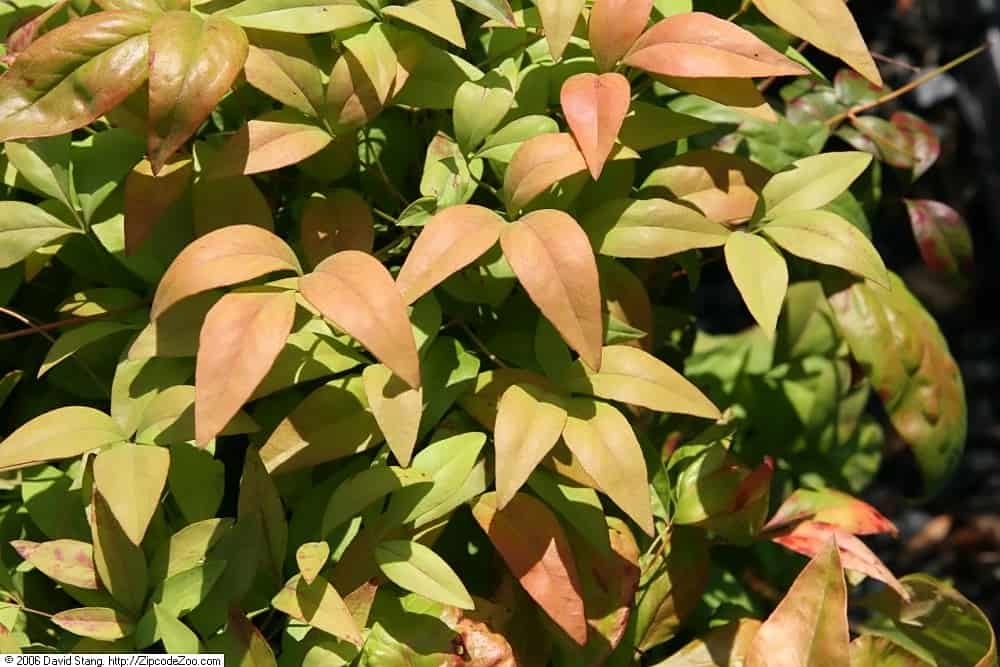
The shrub is a dwarf variety with leaves that turn red in winter. It also grows well in part shade to full sun. Hence, the red foliage will surely be a highlight in your fall garden.
Nandina domestica‘ Richmond’
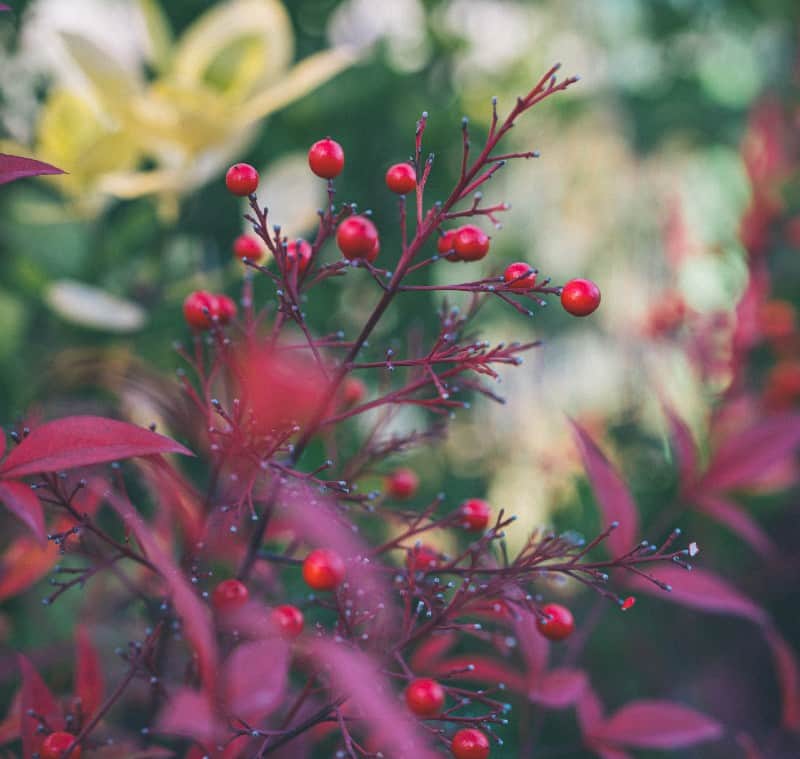
Now, this sacred bamboo produces a lot of berries and can grow up to five feet tall. It also displays a citrus hue in winter.
Nandina domestica ‘Pygmea’ (or ‘Nana’)

The Nandina grows dense foliage but remains a small size of four feet tall without producing too many berries.
Common Diseases and Pests
The lemon-lime Nandina is pretty disease resistant and does not have a lot of pest problems. Still, it can become susceptible to spider mites and scale. Still, all parts of this plant are toxic when ingested. Even the berries are poisonous.
Whether you want to buy, sell or simply reach out to other plant enthusiasts, Plantly is the right place to be!