The Lotus vine plant will pleasantly surprise you with sunset hues in your summer garden.
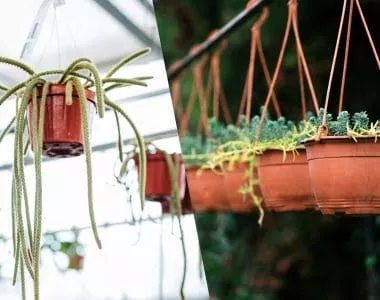
Yes, my gardening friends, many people refer to it as the parrot’s beak, a deciduous perennial plant grown annually. You can grow the lotus vine flower in planters, hanging baskets, or as a ground covering cascading down your rockery.
What is The Parrot’s, Beak Plant
The hanging basket plant makes for a beautiful summer garden filler and works well as an annual in the warmer region of the USA. This semi-rare plant is a shocker keeping everyone amazed no matter where you plant it.
You get brilliant hues of red with golden edges and green accents. The petals are tapered, and the flowers are one inch long, forming a beak with grayish-green fuzzy foliage.
You find the tender tropical plant in Cape Verde, the Canary Islands, and Tenerife. The lotus vines trail with individual tendrils growing up to a foot or longer.
When spring and summer arrive, your plant goes dormant, and you find the flowerings coming in the cooler seasons.
Trailing Lotus Care

The lotus vines have a creeping or trailing habit and work well with other plants. It has a long graceful stem, while the neutral foliage combined with the colorful flowers of golden orange is an eye-catcher. While the evenings are cool, they greet you with their beautiful flowers with curved hooked petals.

Best Potting Mix
The lotus vine parrot’s beak thrives in well-draining potting soil or garden. But, what does that mean? It means that the ground needs to drain the water at a moderate rate to prevent it from pooling.
For example, when you use compacted or heavy clay earth, you need to make it more porous for lotus vines not sit in wet conditions. While using only sandy soil, the water drains away from the roots too fast.
Hence, you can amend the ground using organic matter like bark manure, peat moss, or compost.


Ideal Lighting For Gold Flash

The best lotus vine care provides your creeper with full sun to part shade. Thus when grown in the garden, your lotus gold flash needs at least six hours of direct sun every day in the area you cultivate it.
Watering Needs
Your outdoor plant does best with moist ground, with the top inch mostly dry before watering. While it does not enjoy going completely dry, you must not overwater them. Instead, water deeply and allow the water to drain freely from the pot into the basin.
Temperature & Humidity
While enjoying the full sun, these plants’ best blooms take place in cooler weather, depending on where you live in mid-spring or early summer.
Your plants do not like the hot summer and might stop blooming if the night temperatures remain high.
You can also overwinter the cuttings you take in late summer in cooler temperatures between 45-55° F. in bright light with reduced watering.


Fertilizer Necessity

In spring and summer, you can feed your gold flash a water-soluble fertilizer biweekly. Or you can use a slow-release feed at the start of spring.
Propagation
You can propagate these gorgeous tropical plants with seeds or stem cuttings. You can do this indoors about ten weeks before the late spring frost date for planting seeds.
Do not expect the parrot’s beak to flower in the same year if grown from seed. You will find planting cuttings produce blooms in the same year but not all the time.
Growth Zone
The tender tropical greenery is only hardy in zones 10 to 12, but you can grow them as summer annuals in a pot. Yet, they will succumb when you grow them outdoors if the temperatures drop below 45°F.



Pruning Your Annual Plants
When you notice new growth, you can pinch the tips to provide the development of new side shoots to make them look like thick carpets. Likewise, when your plants look scraggly, you can induce branching to make them look great.
Lotus Vine Varieties
Lotus maculatus x berthelotii ‘Fire Vine’

The orange lotus plant has silver leafage with blooms that look like a small fire on the trails.
Lotus maculatus ‘Gold Flash’

The gold flash is another creeping perennial with silver-grey foliage and looks great as a groundcover. You get unusual yellow blooms with a red-to-orange tint looking like lobster claws.
Diseases & Pests
You will appreciate that your vine is not troubled by many pests or diseases. You can find problems with root rot or leaf spots. It would be best to keep an eye out for aphids, mealybugs, and spider mites.
Whether you want to buy, sell or simply reach out to other plant enthusiasts, Plantly is the right place to be!