One tree with a rich spiritual history and one of the oldest species is the camphor tree. The trees date back thousands of years. It is cherished for medicinal purposes like camphor oil to ease muscle aches.
The locals call it the stinky or mysterious tree with healing properties. Still, they play a vital part in shaping the environment that needs protecting. So, why not plant a camphor tree in the garden today?
More About Cinnamomum Camphora
The camphor tree, or fancier name Cinnamomum camphora, is an evergreen tree native to China and Japan. You can find them growing in some southern parts of the United States as street trees or shade specimens.
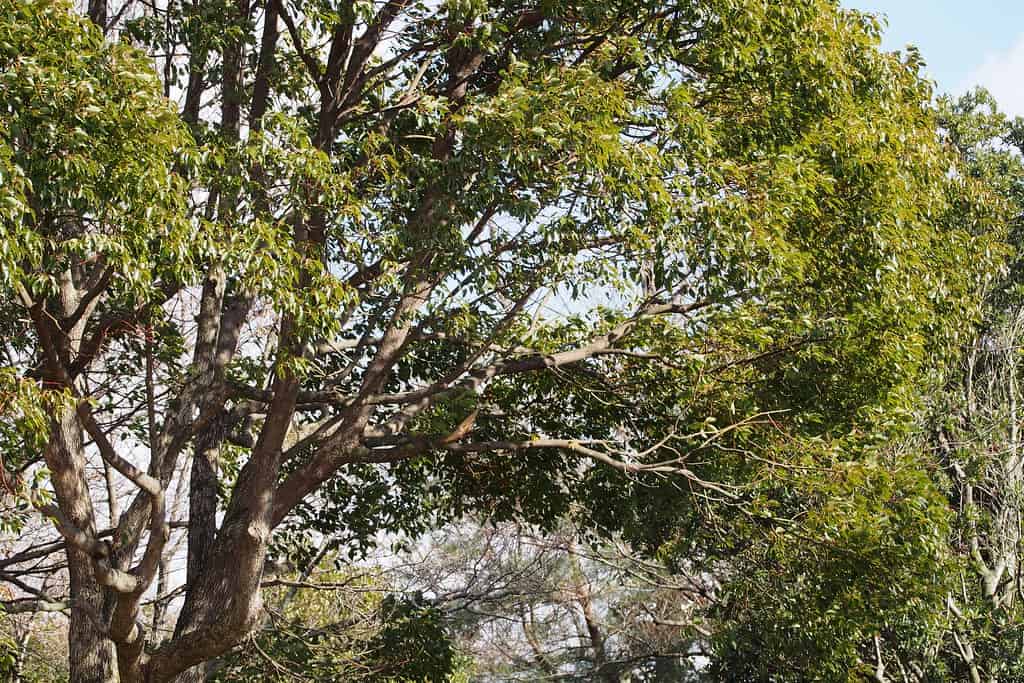
The young camphor tree stems are bright green with a tint of red. In contrast, a mature tree turns to an oak-like appearance. The flowers are insignificant, and you see them in spring, followed by black berries.
The foliage smells like camphor when bruised, and it has a sprawling form with beautiful bark making it an exceptional choice for winter gardens in landscaping. In addition, berries are food for birds to wildlife.
Still, while the camphor tree has favorable traits, there are some drawbacks that gardeners need to know. But luckily, some of the issues you can rectify, but careful placement is necessary. The camphor tree grows dense foliage, and other indoor plants will compete to survive.
The young camphor tree, as it matures, can reach up to 60 feet tall with a broad crown. Another concern is the shallow roots that spread aggressively, damaging the infrastructure or cracking pavements.
The fruits drop on pavements to cars and can stain them, so planting your tree needs to be done away from sidewalks or any other foundation. In some areas, the tree is aquatic and invasive plants.
Lastly, the foliage of berries is poisonous to humans and pets.
Cinnamomum Camphora Care
Before investing your money in the camphor tree, we recommend checking your local state department of environmental protection to see if you can grow it in your garden. If you can grow camphor trees, they make for lovely ornamental shade trees and are easy to maintain.
Planting The Evergreen Tree
When it comes to the camphor tree, it is a love-and-hate relationship. Also, please choose the right site to plant outdoors as you cannot transplant it again as the roots are susceptible, growing far away from the trunk.
Also, avoid planting it too close to any foundation that the roots can uplift. Another notable thing is that while grown for shade, when grown commercially in China or Japan, it is mostly grown for oil.
The Best Spot For a Camphor Tree

The Cinnamomum camphora has a round canopy, so it enjoys full sun to perform its best. So, provide the entire canopy with at least six hours of direct sun for those gorgeous green leaves. Still, your camphor trees can tolerate some partial shade, but for full potential growth, direct sunlight is best.
So keep a safe distance between this tree and your home.
The Right Soil Condition For a Camphor Tree
The fantastic thing is that camphor trees adapt to different soils. But they prefer growing in fertile sandy soil and have a broad pH level. The range of the soil needs to be from acidic 4.3 to alkaline 8.0.
Watering Camphor Trees
It is important to keep the soil around your tree moist to thrive. Hence, it needs about 15 to 20 gallons of water per week for the first two years. Once young camphor trees are established, you can reduce the watering if it receives regular rain. As you can see, it is a benefit as it is extremely drought tolerant.
Temperature and Humidity

The maintenance when you have the camphor tree in the landscape is minimal. But it helps to grow trees in warm climates with high humidity. The best agriculture plant in USDA hardiness zones 9b to 11.
If you live in a climate where it gets freezing, we recommend covering your trees with some agricultural fleece. For potted camphor trees, you can keep the plant outdoors in summer but bring them inside when the temperature drops.
Fertilizing Cinnamomum Camphora
If your Cinnamomum camphora shows signs of a deficiency, you can use fertilizer evenly spread around the base. We recommend a slow-release organic tree fertilizer to apply in spring, following the directions on the package.
Pruning Camphor Tree
While the maintenance is minimal with watering, camphor trees need regular trimming when young and occasional care with pruning when mature. It helps to prune branches growing low when young to provide compact growth.
Cut branches back, making sharp, clean cuts flush next to the stem where it originates from using sterilized pruning shears. For example, you can prune branches growing near the base to develop a single strong main trunk and remove branches on the trunk, leaving them standing every 30 inches apart.
Also, remove damaged or diseased branches at any time of the year and prune them back in winter to control growth. We do not recommend blunt cutting or topping camphor trees as it creates more dead branches that can fall.
Even using a chainsaw constantly results in problems, and at times you may need professional trimming done by an arborist.
Propagating Camphor Trees

Another exciting thing is that you can use your camphor tree as a spice. You can remove the inner bark into thin strips to drive in the sun. Once dry, it starts to curl like twigs, and you can ground them into powder.
But ensure that the tree is at least three years old.
When camphor trees in the home landscape grow, it produces thousands of berries you can harvest for seed propagation during summer. Leave the fruit to dry in a shady spot for about three days before you rinse the seeds. Then leave them to dry further and plant them within ten days.
The seedlings germinate in 20 days, will need loads of attention, and are the best way to propagate your tree.
Cinnamomum Camphora Varieties
There are different types of Cinnamomum camphora trees known that you can look at here:
Yongjin
The tree sprouts in early spring under full sun and has yellow buds with newer leaves in a golden color. The main vein area is reddish and turns light yellow when fully mature. The flower stalks are golden yellow with light yellow fruit turning purple-black.
Xiaguang
As with the other camphor trees, you find it growing well in full sun. The buds are red with new red leaves turning pale green to yellow-white in summer. After it flowers, the berries develop on yellow stalks turning purple and black.
Yuhuang
The tree thrives in full sun with bright yellow buds with yellow leaves and matures to pale green.
Common Problems With Diseases and Pests
The camphor tree can have its fair share of problems, like leaves turning brown. It can result from high salt levels in the soil caused by fertilizers. We recommend changing the soil in the ground with fresh ones and using a different feed.
Another concern is leaves dropping, which can result from overwatering, and if the soil is saturated, mix in some more sand. Doing this will help prevent root rot as well. Finally, small brown spots on the foliage can be leaf spots caused by a fungus.
The best is to remove branches infected with the disease to prevent the spread of the fungus. Your camphor tree can also suffer from stripe canker that starts in the soil. Insects that bother your tree is mealybugs, and you can remove them by washing the leaves with lukewarm water.
Or prune the infested leaves to reduce the risk of spreading. Other common concerns your trees are susceptible to are foliar disease, brown root, blight leaf spot, seedlings blight, and verticillium wilt.