Here where I live in South Africa, there is one indestructible plant that I care for a lot, the Clivia plant. But while it does come from my region, it grows well in the USDA hardiness zones 9 and 11 as outdoor plants.
While in other growing zones, they grow best indoors.
Plant Name: Clivia
Other Name: Clivia plant or bush lily
Plant Type: Shrub
Native Areas: South Africa
Light Requirement: Bright indirect light
Watering: Average
Fertilizer: Balanced indoor plant food
Toxicity: Toxic to humans and pets
Temperature: 65°F – 70°F
Propagation: Offsets and plant division
Growth: 2 to 3 feet tall and wide
Soil Type: Well-draining potting mix
USDA Hardiness Zones: 9 and 11
More About Clivia Plants
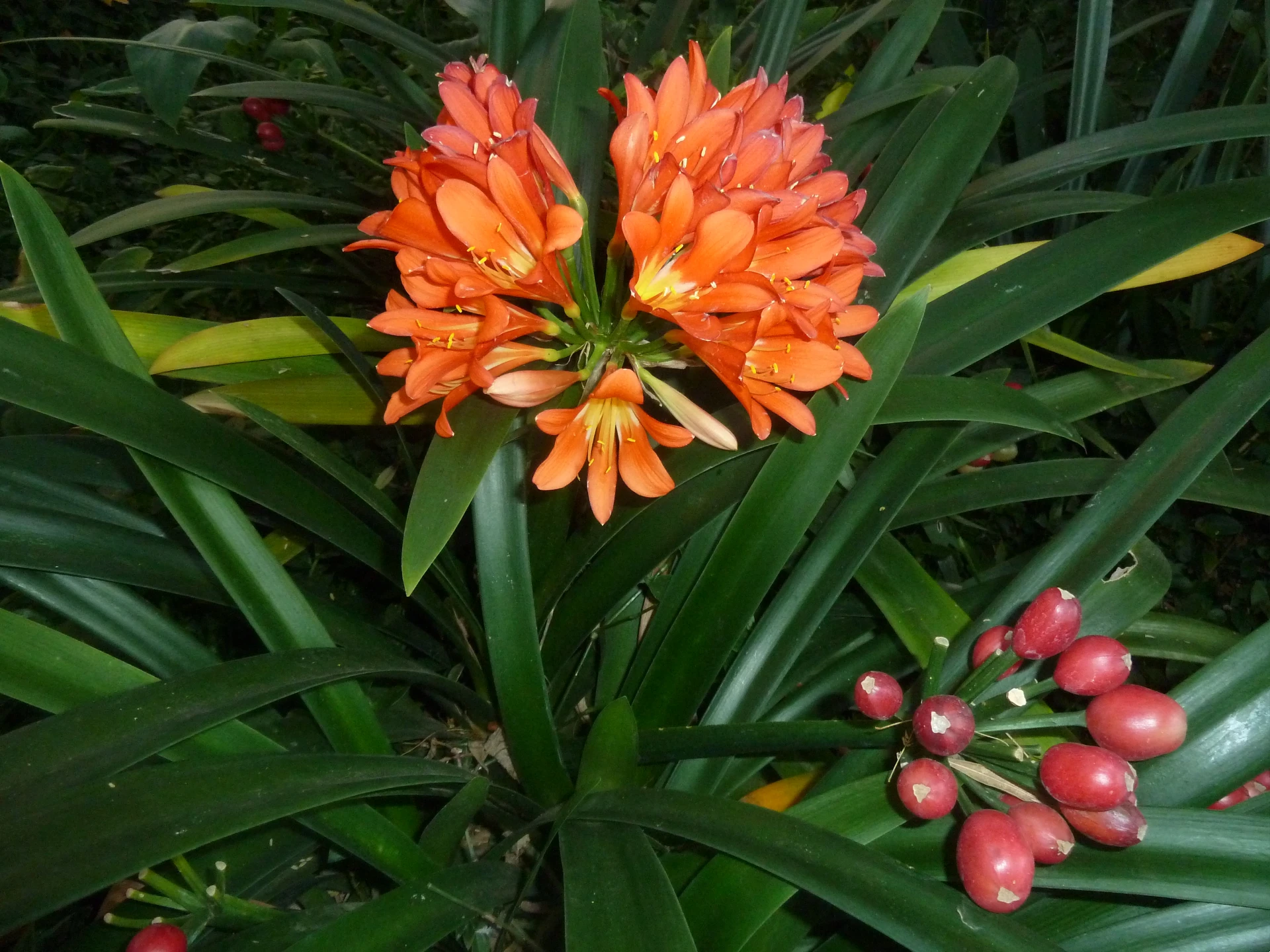
Clivia are flowering plants belonging to the lily family, the same family as the amaryllis. Here in Southern Africa, growing Clivia plants is best done in the shade of trees.
Another exciting thing is that they do not grow in the soil as they are semi-epiphytic and prefer rich decomposing leaf mold underneath trees to rotten logs.
The plant has thick fleshy roots that store water and is drought tolerant to survive the African dry seasons. 😊 But a standout feature is the trumpet-shaped flowers that look like the amaryllis but are smaller.
Unlike amaryllis, the Clivia plant retains its foliage year-round. You find six species in the Clivia plant genus, but many are hybrids. The Clivia miniata, the Natal lily with orange flowers, is the most common.
Furthermore, you can find cultivars with variegated leaves or flower buds in yellow, white, red, and more. No matter the type of Clivia you have, they all bloom up to 20 small trumpet flowers on tall scapes.
You can grow Clivia in the landscape as outdoor plants in zones 9 and 11, but they grow best indoors in colder climates.
Clivia Care Guide
A standout for these amazing plants is the Clivia foliage and the Clivia blooms that brighten up 👆 a place as the winter starts to leave and spring is on its way. But for these Clivia to bloom, they need a dry and cold period, even if it is a potted Clivia.
The Best Soil For Clivia Plant

Whether growing Clivia indoors or outside, the crucial thing is to provide your plant with well-drained soil.
These cultivars make for interesting houseplants, but they will need enough drainage holes for excess water to run out.
We recommend a potting mix of sand with peat moss or work in some organic material like fir bark for added drainage.
Lighting Needs For Clivia Flowers

The Clivia plant grows best indoors in bright indirect light but not direct sun. Too much direct sun will scorch the Clivia foliage and ruin the Clivia flowers.
If you decide to keep your plant outdoors during the summer, provide them with some shade.
When growing outdoors, especially in warmer climates, provide your Clivia plants with enough shade to keep them out of direct sunlight.
Watering Clivia
Most Clivias from early spring to summer prefer water regularly when the soil dries at the top. But in the fall to winter, you can reduce your watering and leave the soil to dry completely before watering again.
If you notice pale green or orange lesions, your Clivia is overwatered. When growing wild, these plants depend on the rainfall for water and store it in the fleshy roots for dry summer days.
So preferably, do not overwater your plant as it can lead to root rot and is detrimental for the Clivia plant. But if you find the summer hot and without rain, we recommend watering your plants.
Temperature and Humidity

When you care for Clivia, provide them with temperatures between 65°F – 70° F (18.3°-21.1° C) in spring and summer to early fall.
Yet, when your plant goes through its rest period, the temperature range should be 40°F to 55°F (10°-12.8°C).
The Clivia plant does not do well in winter temperatures below 50° F (10°C). For growing indoors, the average humidity is enough for your Clivia plants.
Fertilizing Clivia

Once you notice your Clivia plant’s flower stalks have finished blooming in early summer, you can feed your plant with a water-soluble fertilizer diluted to half the strength.
During the first six weeks in winter, your plant will rest until mid-winter and does not need feeding.
After the resting period passes, feed your Clivia plant a fertilizer high in potassium to encourage flowering.
Pruning Clivia Plants
Your Clivia plant requires no pruning, and you can remove the trumpet-shaped flowers that have withered in late fall. Cut the dying flowers at the base of the flower stem to help prevent your plant from expending energy.
Potting Clivia Plants
When grown outdoors, you need not transplant your Clivia plant unless you want to divide them to provide more air circulation and do propagation. Remember to give your plants a cool spot from the direct sun in partial shade.
An indoor Clivia plant will only need repotting when it becomes root bound. Then you can move up a pot size. The best time to do this is in early spring; use a quality potting mix, keep the rhizome or root ball above the soil level, and provide your plant with a new pot.
Propagating Clivia Plant
While you can propagate your Clivia plant from seeds, it is a lengthy process and not always true to the parent plant. You do this by removing the Clivia offset from the mother plant, but it takes years to produce blooms.
Also, use a clean, sharp knife and ensure the offsets have plenty of roots to pot them up in a potting mix. Another way is to divide your plants, removing them from the ground or container to split the rhizomes and transplant them into their spots.
Clivia Similar Plants
As mentioned, there are six Clivia species you can grow indoors or in the garden:
Clivia caulescens

The Clivia plant has a distinct aerial stem that develops as the plant matures. The aerial stems can grow long, and the leaves are smooth yet pointed. The Clivia flower has tubular and pendulous-shaped flowers in an orange-red color.
The flower buds’ tips are green and bloom in spring and summer.
Clivia gardenii
Like most Clivia plants, this cultivar prefers a bit pot-bound in a fast-draining potting mix. The Clivia plant has bright green leaves that form a tuft and differ from one species to another. On the lower section of the leaf, it is paler in color.
The tubular-shaped blooms are orange-red. But you can find clones like the yellow Clivia plant with yellow flowers or pink blossoms.
Clivia miniata
The Clivia is a flame-colored flowering plant with a red lead growing in bright light with some shade. Still, they grow orange blooms in the wild, but you can find paler orange and yellow ones.
Clivia mirabilis
This is a rare Clivia plant with thick roots that survive under rock slabs. Compared to the other species, this one goes dormant in summer. The leaves have a white striation and fade as the plant matures. The foliage also has a maroon tinge and blooms orange-red to salmon-pink flowers.
Clivia nobilis
This plant received the name of the Duchess of Northumberland with the family name Clive and was the first Clivia plant ever discovered. The leaf margins are serrated, the apex can be strong or weak, and seedlings develop slowly. You see the flowering plants with an umbel with up to 60 florets, and the color varies from pale orange, pale green, yellow, and more.
Clivia robusta

The Clivia blooms are orange-red and it has green tips, but the flower stalks can vary in color from one cultivar to another.
Clivia Common Diseases and Pests
When growing your plant outdoors, there are a few pests that can cause damage to your plant. These include mealybug, spider mites, aphids, scale, and the lily borer that munches on the leaves. For diseases, the main concern is root rot from overwatering plants.