If we can describe the flowering quince shrubs in one word, it is apricitas meaning sunny.
The bloom time is before other plants start to flower and brighten up the garden with a dazzling 🔆 display of apple-bloom flowers.
You see them in various colors to cheer up any landscape—these plants first in with any foundation plantings or garden styles.
But one thing is sure: the flowering spurs a smile on any face in the late winter chill with the rich pink flowers on shrub borders.

More About Flowering Quince Shrubs

Flowering quince is a multi-stemmed deciduous shrub with messy growth with beautiful double flowers in orange, red, pink, or white flowers with dark green foliage.
The shrub relates to the rose family and has spiny branches suitable to grow on shrub borders. With the dense mount with gray-brown twigs, it develops five petal flowers about two inches in diameter. The blooms last for up to 14 days.
After the bloom, it bears fruit production in yellow-green to use in preserves and jellies. The leaves have serrated edges and reach up to 3 1/2 inches long. You typically plant Chaenomeles in the fall or winter in containers, which must be kept watered until established.
FLOWERING QUINCE VARIETIES
The flowering quince is one of Asia’s oldest landscape plants, cultivated centuries ago. You can find several cultivars with similar growth, and you can also find hybrids, as seen here.
Chaenomeles speciosa ‘Moerloosei,’ with its unusually long bloom time, runs through to early spring with white blooms for weeks.
Chaenomeles speciosa ‘Geisha Girl’ is a small variety with apricot flowers in late spring.
Chaenomeles speciosa ‘Orange Delight’ has beautiful early spring flowers in bright orange with double-take blooms.
Double Take series: Orange Storm, Scarlet Storm, and Pink Storm can reach up to five feet tall with orange, scarlet, or pink flowers.
Then you have the hybrids between C. speciosa and C. japonica (Japanese quince), all excellent landscape plants. Here are the award-winning ones:
Chaenomeles x Superba ‘Jet Trail’ has white flowers reaching four feet tall.
Chaenomeles x Superba ‘Crimson and Gold’ is a fast grower with crimson flowers into early spring.
Chaenomeles x Superba ‘Pink Lady’ is a five-foot shrub with rich pink flowers in early spring.
Chaenomeles x superba ‘Nicoline‘ develops bright scarlet flowers in early spring.
Chaenomeles Species: Plant Care & Growing Guide
The plant is easy to maintain and grows well when you keep the soil evenly moist in well-drained soil except for alkaline clay soils. The plant spreads through suckers; you must remove them to keep your plant and the root ball contained. A main concern with flowering quinces is fire blight and best to keep an eye on the stem dying back as it signals the disease. 😲
Lighting Needs Flowering Quinces
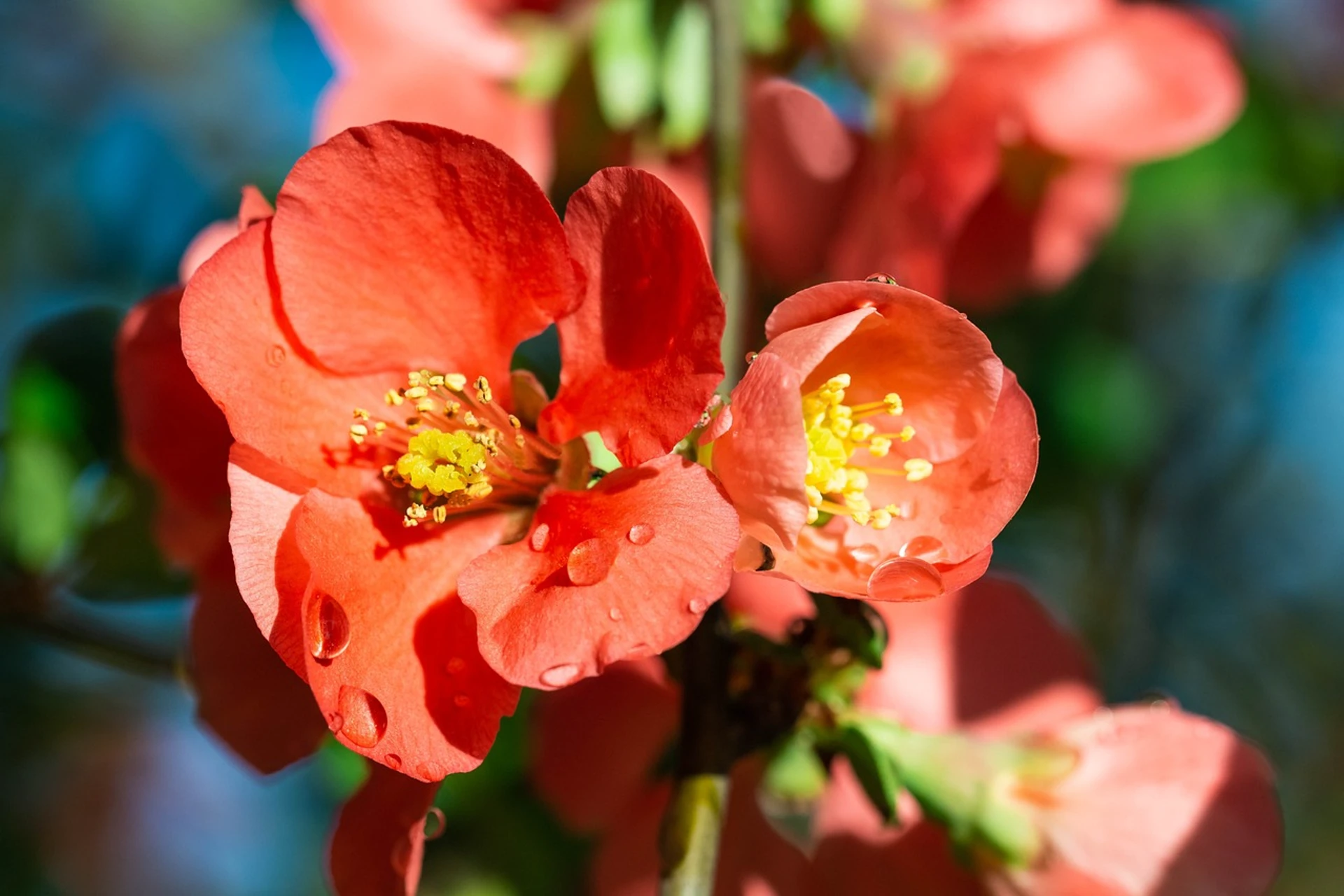
Flowers bloom when you grow the flowering quinces in full sun and partial shade, depending on where you live. When exposed to direct sunlight, the spring flowers display better.
Soil Types Flowering Quince

The flowering quinces prefer well-drained soil for late winter to early spring flowers. Too much alkaline in the ground can lead to chlorosis, and it is best to keep the soil pH slightly acidic to neutral. You cannot grow your new plants in sandy or clay soil and need medium moisture to thrive.
How to Water Flowering Quince?
To help suppress weeds and retain moisture add a layer of mulch at the base of your plant. While the flowering quinces are drought tolerant, once established, your first shrubs need regular water 💦. Preferably water in the morning allows excess moisture to dry out before nightfall. With sprayed water, it can lead to leaf spots, and it will drop its leaves when wet.
Temperature and Humidity

The plant is hardy in zones 4 to 8, but some gardeners in zone 4 also grow them outside. It is hardy down to -25°F, but a young plant needs protection from the cold. Once your shrub becomes established, it can survive various temperatures to humidity levels. You can add a layer of mulch to protect the root ball.
Fertilizing and Pruning Flowering Quince

You can use a slow-release fertilizer in early spring before new growth appears. Nonetheless, it helps to add some compost to amend the soil.
Neither should the fertilizer touch the foliage, as it will scorch the delicate leaves. Then do deep watering to help distribute the feed to reach the root ball.
You need not prune your plant unless you shape it in a hedge. Prune after the bloom time ends as flowering quince blooms on old wood. Furthermore, it will help stimulate growth for more blooms.
Still, the pruning will reduce fruit production, so best avoided if you want to use edible fruit. To prevent the plant from spreading, remove the suckers found at ground level when it appears.
If you notice any damaged or infected branches, you can remove them anytime.
Repotting and Overwintering Flowering Quince
For smaller cultivars with a height of four feet tall, you can grow them in containers. Ensure to provide your plant with a heavy pot and good drainage.
Then use a regular potting mix blended with sand to drain better. For colder regions, you can move the container to a sheltered spot for winter. You can expect to repot your plant every two years.
Your flowering quince can get damaged by rabbits in winter when young. Thus it helps to protect them with a closed cylinder or metal hardware a few inches deep in the ground to prevent burrowing.
Protect the root zone with a mulch layer; no protection is needed once it matures.
Propagating Flowering Quince
The best way to propagate flowering quince is through stem cuttings or planting seeds. The best method is to root the cuttings if you have a hybrid. The cuttings need semi-hardwood with some mature wood and leaves attached. You can take cuttings in summer or early fall.
Take a few cuttings about six inches long from the previous year’s growth from old wood from the parent plant. Look for stems with a diameter similar to a pencil.
Leave the top leaves and remove the rest.
Score each bottom section to reveal the cambium layer found beneath the bark.
Dip that section into a rooting hormone and place them in small pots with a porous mix of sand and peat moss.
Cover them with a clear plastic bag and put them in a bright spot with bright indirect light.
Wait a month to see if it has rooted by tugging at the stem. If rooted, remove the cover and wait another month before transplanting them outdoors.
How to Grow Flowering Quince From Seed
For the seeds to germinate, you must stratify them or put them in a freeze-and-thaw cycle. You can place the seeds in a fridge for up to 90 days and then remove them to place them in soil and water. Then cover them with a plastic bag until germination occurs.
Then transplant your seedlings into separate containers once you notice new growth. Keep the soil moist and wait until they reach 12 inches in height before planting them outside.


Common Pests & Diseases
A pest that can cause severe damage is aphids, especially on new growth, but it is not life-threatening. Other bugs are spider mites and scale, where you can use a horticultural oil like neem oil.
Flowering quince can get fungal diseases like fungal leaf spots causing defoliation with heavy rainfalls in spring.
You can use fungicides to treat these diseases. The other concern is cedar quince rust, fireblight, and scalp. These bacterial diseases result in the branches dying back and affected limbs needing removal.
Whether you want to buy, sell, or simply reach out to other plant enthusiasts, Plantly is the right place to be!