When we think of summer, what comes to mind is strawberries, of course! So instead of buying strawberries from the local grocer, why not grow them yourself?
Now we are not talking about just buying strawberry plants and growing them in the garden. No, we are talking about hydroponic strawberries you can grow at home to enjoy ripe and fresh fruit production.
Believe us; it will become your favorite way of growing strawberries. 🍓 The best part is hydroponic strawberries are soilless growing and trending these days.
But before we get to growing hydroponic strawberries, check out this exciting article about hydroponics vs aeroponic gardening.
What Is a Hydroponic Strawberry?

Hydroponic systems allow you to grow different fruits at all times and even enjoy your succulent fruit in winter. The main attraction of hydroponics strawberries is that no soil fumigation uses methyl bromide to kill bacteria and fungi that can interfere with fruit production.
Growing strawberries hydroponically is certified organic and better than conventional ground cultivation placing strawberry plants in soil. Still, one question remains do strawberry plants grow well in hydroponic systems?
The answer is yes, as all strawberry types grow with shallow roots and compact structures and are excellent candidates for your home hydroponic system. When you have a hydroponic strawberry production, it produces fruit in abundance for you to enjoy.
Yet, what hydroponic solution do you need for hydroponics systems growing strawberries? First, you need a nutrient solution to provide the plant’s roots with:
Nitrogen
Potassium
Phosphorus
Calcium
Magnesium
Sulfur
Chlorine
Cobalt, Copper, Molybdenum, and Zinc
Compared to traditional soil, the growth medium is different, and you must always keep a close watch. Find a suitable moist environment for your deep water culture and ensure it has up to 16 hours of light.
You also need to check the pH levels of your indoor growing hydroponic strawberries, which must be between 5.5 and 6.5. Temperatures also need to be monitored, remaining between 65 °F and 75 °F
Best Hydroponic System For Strawberry Plants
Multiple hydroponic systems are available for growing young strawberry plants that are soilless. You have two options available with hydroponic growing to save you money.
The first option is to make one or invest in a Nutrient Film Technique. You place your strawberry plants in a net pot to ensure the nutrient solution reaches the roots and is very effective. The crop tray is placed on a slope while the nutrient solution continues pumping around.
Next, you have an Ebb and Flow system known as the food and drainage method, similar to the previous one. Here the root system remains immersed in the water while large quantities of the hydroponic nutrients are pumped into the growing environment until flooded.
How to Grow Hydroponic Strawberries Indoors?
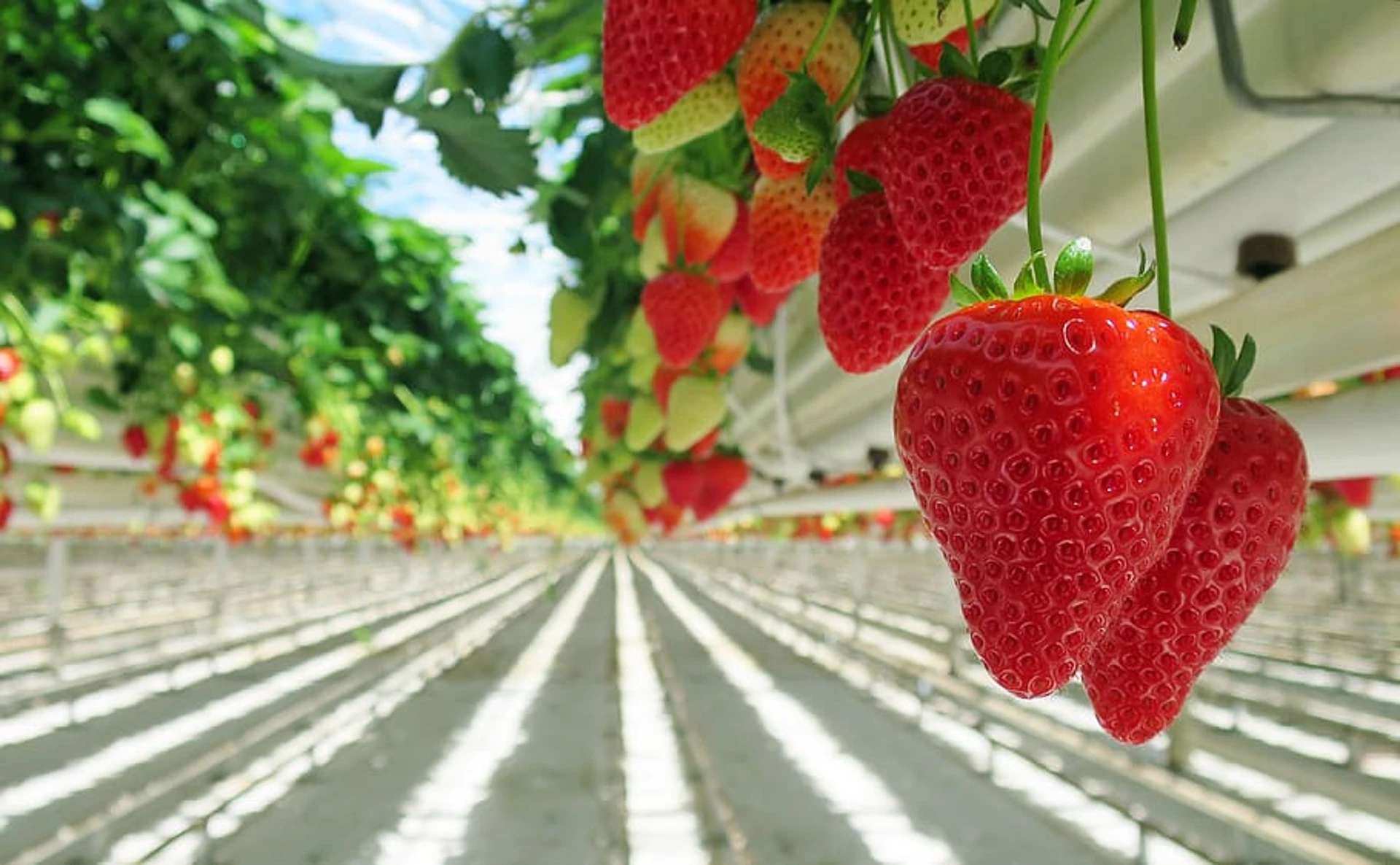
With hydroponic systems growing strawberries is possible throughout the year. The reason is that there is a high water 💦 content, and the fruit production performs well.
Your strawberries grow anywhere from your kitchen to the garage. Still, there are different ways to grow strawberry plants in a hydroponic garden.
First, as your plants need room to grow, they are grown in traditional soil horizontally but growing them vertically gives you more space.
Another fantastic thing is that this growing medium is not soil-grown strawberries; you need not bring beneficial insects to eradicate pests or diseases.
So, the first thing is to consider your initial setup cost for your system and the starter strawberry plants. Then you need to know your strawberry varieties as follows:
June-bearing strawberries grow only fruit in summer and respond to light changes to determine fruiting. We do not recommend these as strawberries grown hydroponically.
Then you have day-neutral strawberries, and the growth pattern does not change to light or the length of the day as long as they are kept warm and will then bloom strawberry flowers.
Lastly, you have your ever-bearing varieties with no fixed season for fruiting; when kept warm, they produce enough fruit yearly.
Starting Hydroponic Strawberries With a Root Bulb
When selecting plants choose ones with several fine roots that will establish well compared to ones with coarse root systems. Choose strawberry plants with crowns at least 0.40 inches in diameter.
Avoid using a diseased or rotted plant. When planting, ensure the roots are straight down in the substrate, like peat moss, vermiculite, and more, to grow in a controlled environment. Then follow these steps:
Prepare The Hydroponic Growing Medium
Take your medium and soak it overnight and use half-strenth of the best hydroponic nutrients, as the strawberry roots will need it to grow.
Choose a growing medium like coconut coir, perlite, vermiculite, or rock wool. Remove the soil around the root system, washing it off with water as you do not want dirt present.
You can use the same technique for growing leafy greens.
Plants in The Hydroponic System
Place the roots in the soilless blend, and with rockwool, you will need to hollow it out to provide a space for the root ball. Then place all your plants in the system.
Strawberry Growers Using Seed

Starting Strawberry Seeds Hydroponically
While starter bulbs are the best method to grow hydroponic strawberries indoors, you can grow them from seed.
Start by choosing your medium, and we recommend a dense water-holding material like Oasis or Rockwool. An alternative is coco coir starter plugs, a sustainable choice for transplanting in an indoor garden. Or you can grow strawberries using seeds directly into the growing baskets but keep them in a nursery container until the roots develop.
Then soak the medium overnight to prepare it for the strawberry seeds. You do not need the liquid nutrients now at this stage. The general hydroponics nutrients are added later after sprouting.
Next, select two seeds to plant at a depth of 1/4 inch. Take a popsicle stick to inset the seeds in the medium for a starter block.
Place the moist starters into the container and close the lid. Keep them warm and humid to help with germination. Check them daily to ensure they remain damp but not soggy when moisture is needed; mist them.
Growing strawberry plants, you need to keep the temperature around 75 °F (24 °C) for the seeds, and they should sprout in about seven weeks and will need to be patient.
So, growing strawberries hydroponically, you need to keep the seedlings there until true leaves appear and transfer them once you notice the roots sprouting from the growing medium.
Then, place the starter block into a net basket, and the roots will descend quickly.
Now, place all your seedlings into the hydroponic system.
You only need patience, as male and female flowers appear only in about six to eight months. Also, prune away the flowers that encourage new growth on the plant’s roots instead of it to produce fruit.
Growing Hydroponic Strawberries Care
When growing hydroponic strawberries, there are a few things to consider to care for them to produce fruit. Here are some tips for growing strawberries hydroponically.
Light

Whether you grow strawberries indoors or outside, they need a lot of light to produce flowers and delicious strawberries.
For the strawberry fruit quality to develop, your plant needs up to 16 hours of bright light daily. Traditional soil outside the sun provides the light they need, but indoors you can use LEDs as growing lights.
Water
Strawberries thrive in mildly acidic soil and will need nutrient solutions that are mildly acidic between 5.5 to 6.0. If the pH drifts too high, younger leaves begin to yellow, indicating an iron deficiency, as the alkaline roots cannot access all the nutrients like iron.
Hydroponic Systems Growing Medium

For strawberry hydroponics systems, aeration is essential as the roots need oxygen to thrive. Hence, the medium you choose is critical.
Thus, it would be best to have a free-flow system medium like clay pebble or perlite to balance the structure and aeration.
If you use a drain or drip system with more water retention, then coco coir, rockwool, and perlite are excellent choices. We recommend a blend of perlite and coco coir to help with aeration and water retention.
Nutrients Growing Indoors
Surprisingly, strawberries prefer a less powerful nutrient solution than you think to bear fruit. We recommend a blend made for peppers and tomatoes used at a half concentration.
You can aim for a 1.0 EC, but higher is tolerable. Then provide them between 800 to 900 ppm when thriving in early growth. Then drop it down to 400 to 500 ppm when flowering.
Another essential thing is to avoid too much nitrogen as it will encourage more leaves when growing strawberries instead of fruit.
Ensure that the nutrient solution you choose has extra calcium and magnesium when flowering to help promote more flowering.
How to Pollinate Your Strawberries
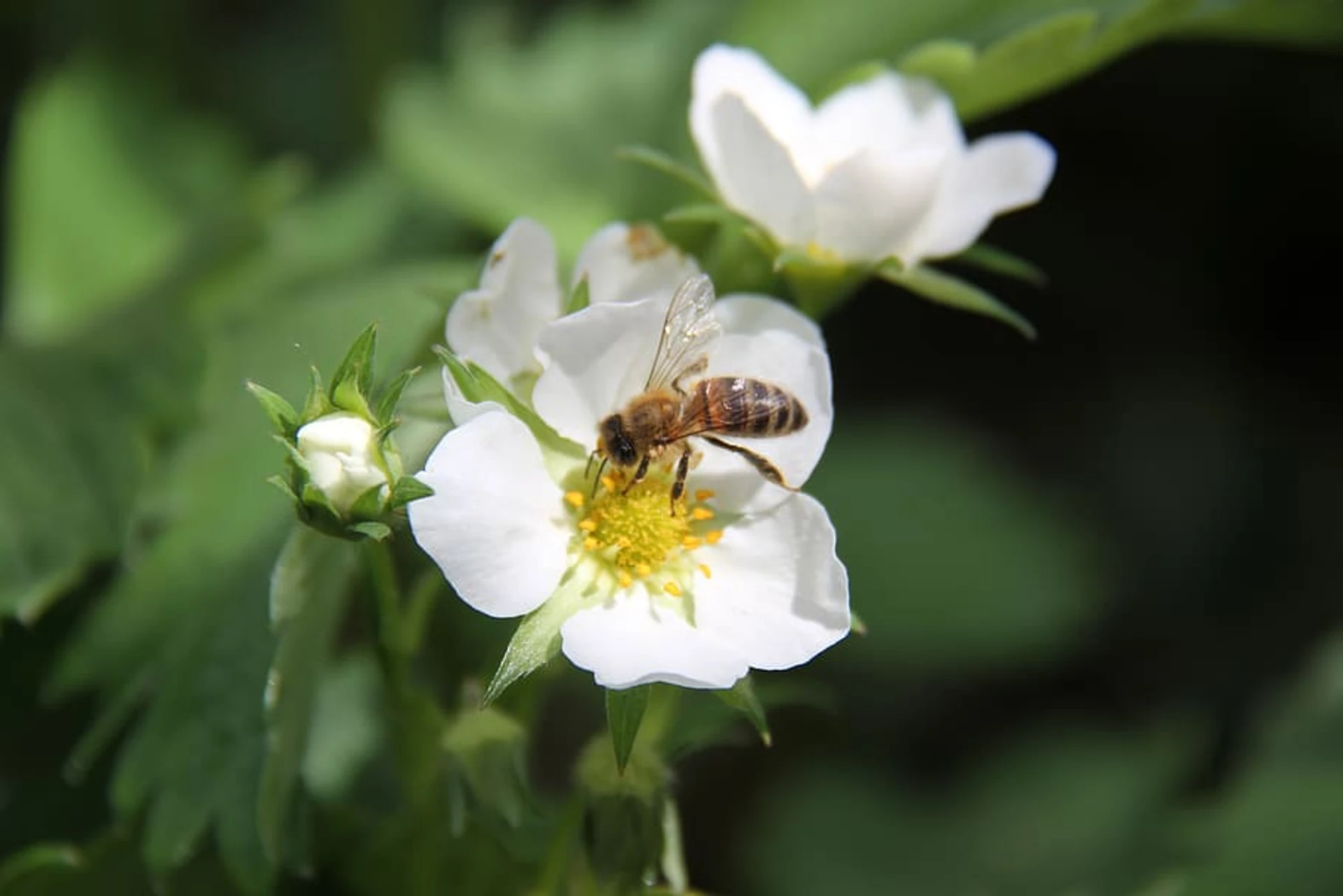
For producing fruit, your plant needs to be pollinated, and as you know, outdoors, this occurs through bees, butterflies, birds, and other pollinators. So how do you pollinate your strawberries indoors?
Well, for harvesting strawberries, you will need to do this manually, and it is not as daunting as it sounds. All you need to do is to vibrate the bloom for the pollen to reach its destination.
The simplest method is to take a cotton bud and jiggle the bloom to shake the pollen-free. Or take a more high-tech approach using an electric toothbrush at the base of the flower.
Even a small hand fan gets the job done.
Pruning Your Hydroponic Strawberry Plants
As with growing strawberries outside, you must remove damaged and older leaves with your hydroponic strawberry. Also, remove the runners, which are long, fine vines that protrude from the main stem. These vines have small plantlets that propagate themselves.
For harvesting strawberries that are of quality, it is best to remove them.
Temperature

Hydroponic strawberries need cool conditions to produce fruit that is sweeter when ripe. So, the average temperature for your hydroponic strawberry 🍓 is around 60 °F (18 °C). At temperatures below 77 °F (25 °C), you get more flowers to produce more fruit.
Growing Strawberry Plants and Spacing
Growing strawberries hydroponically, you need to give them more space of about six inches between your plants to spread. Thus a vertical setup is the best hydroponic system for growing hydroponic strawberries.

Common Pests and Diseases
While pests are more common on outdoor plants, you must keep an eye on growing strawberries hydroponically. Here are some bugs to keep an eye on:
Spider mites can still nibble on your plants, and best to check under the leaves for silk traces.
Aphids look like sesame seeds and cluster around the leaf veins and stems.
Fruit flies love fruits, and you easily confuse them with fungus gnats.
For hydroponically grown strawberries we recommend avoiding chemicals and opt for a biologically controlled environment instead.
You can introduce ladybugs 🐞 as they are voracious hunters to remove these pesky bugs. For fruit flies, it helps to keep the fruit dry and avoid the strawberries touching the growing medium surface.
Then use some vinegar traps to capture them. As with pests, you can also get diseases in the growing environment.
watching the leaves with densely growing hydroponic strawberries would be best to ensure they have enough ventilation. The other concern is root rot, and using an aerated growing medium helps.
Ensure only the nutrient solution reaches the roots by checking that the air stones and pumps remain in good working order. Too much moisture at the roots will cause your plant to die.
A helpful tip is to wash your new plants with a weak peroxide solution before you place them in the hydroponic system
Whether you want to buy, sell, or simply reach out to other plant enthusiasts, Plantly is the right place to be!