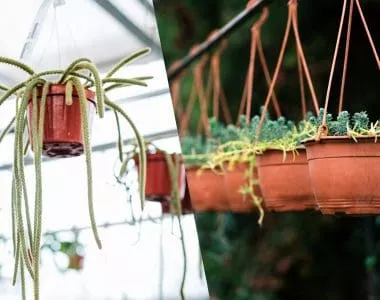
You must agree that the Mother of Thousands is a peculiar plant loved by gardeners worldwide. The unique succulent pours out pups on all the leaf edges, which are categorized as invasive species.
But it need not be this way as the plant outdoors can become a problem but grown indoors, you can control the growth of these succulent species. So, let’s get started on caring for this interesting plant.
Plant Name: Kalanchoe daigremontiana
Other Name: Mother of Thousands, Devil’s Backbone, alligator plant
Plant Type: Succulent plant
Native Areas: Africa
Light Requirement: Full sun to partial shade
Watering: Average
Fertilizer: No need to fertilize
Toxicity: Toxic to humans and pets
Temperature: 65°F to 75°F
Propagation: Plantlets
Growth: 3 feet tall
Soil Type: Acidic, neutral, alkaline soil
USDA Hardiness Zones: 9-11
More About Mother of Thousands Plant

The Mother of Thousands was previously known as the Bryophyllum daigremontianum but has received a new botanical name, Kalanchoe daigremontiana.
The succulent plant has many tricks up its sleeves 😊 called pups. The succulent species come from Madagascar along the African coast. The Kalanchoe daigremontiana common names are:
Mexican hat plant
Alligator plant
Devil’s Backbone
The Mother of Thousands plant is related to the jade plant. The reason for the interesting name as it has small plantlets that grow along the edges of the leaves. The plant is highly recommended for beginners, as all the other stone crop families are.
We also recommend reading our article on caring for succulent species indoors here. Another trick up this plant’s sleeves is the fact that it also opens its leaves at night. It makes for an effective defense mechanism when growing in hot climates.
It is a drought-tolerant plant outdoors and less sensitive to light, humidity, and water. The Mother of Thousands forms low-spreading rosettes that only reach a few feet tall in the garden and remains smaller, grown as indoor plants.
Furthermore, the Kalanchoe genus rewards you with bell-shaped blooms hanging off the stems. You find them in shades of orange, yellow, and pink.
⚠️Still, as mentioned earlier, the Mother of Thousands Kalanchoe, with its blue-green leaves, can spread fast with the baby plantlets and is invasive in many countries. So, check with your local plant registry before you plant them outside.
Kalanchoe Plants – Varieties
Three main varieties are available before we care for the Mother of Thousands plant. These include the one we have mentioned, followed by these two plants:
Kalanchoe x laetivirens

It is a large leaf 🍃 plant that grows larger and thrives in more shade, and the foliage color changes when standing in different lighting conditions.
Kalanchoe x laetivirens variegata
The variegated version has yellow or white edges on the leaves and prefers standing in indirect sunlight or part sun. When standing in some light, the tiny plantlets look neon-like.
Then you have the Mother of Millions with the same botanical name, but the main difference is the shape of the plant leaves.
The Mother of Thousands has wider and broader foliage. In contrast, the Mother of Millions has narrower leaves, while the plantlets develop near the end of the leaf. So, if you want one, check out our shop 🏪 here.
Let’s continue with our care guide for this amazing drought-tolerant plant.
Alligator Plant Care
The Mother of Thousands plant is hardy and can go without water. It can also handle intense heat very well. While it does not tolerate in cold or temperate regions, many grow it as a houseplant.
Mexican Hat Plant Light Needs

The sunlight for the Mother of Thousands plant varies depending on the environment. We recommend placing your flower near a windowsill with indirect sunlight during hot days. The leaves are very delicate and can deteriorate quickly.
In cooler months, you can place your plant at a sunny window to receive direct sunlight. We recommend an east-facing window during the fall to early spring. Providing your succulent species with sufficient light will give you a beautiful display of bell-shaped flowers.
A sign your Mother of Thousands is getting too little light is when it starts to grow leggy. A sign your plant is getting sufficient light is when the bright green leaves have a hint of red. North-facing windows are not recommended as they will not provide enough light.
Recommended Soil For Devil’s Backbone

A preferred soil is a cactus potting mix, a well-draining soil that is loose around the roots. Depending on your soil, adding amendments like gravel, tar, or perlite is recommended. But a cactus potting mix has everything inside made for succulents.
We also recommend using a terracotta pot, which removes excess water faster but adds enough drainage holes. Alternatively, you can create your own mix for your plants. You only need three ingredients:
Potting soil
Coarse sandy soil like Turface or Poultry Grit
Pumice or Perlite
We do not recommend using heavy garden soils with vermiculite as it retains too much moisture leading to root rot. Still, cactus soil remains a good choice as it provides good drainage.
Watering Succulent Plant
We previously mentioned how unique this plant grows with photosynthesis taking place, allowing it to conserve water during the day. Still, the Mother of Thousands plant prefers a large drink of water using room-temperature water like filtered, distilled, or rainwater. Yet, the rule is to keep checking the soil before watering.
Temperature and Humidity

The Mother of Thousands, as you know, are native species to Africa growing in desert regions. The plant growing indoors prefers warmth between 65°F and 80°F. You find these temperatures close to windows.
Still, the temperature must not go higher as it will result in a leaf drop. And when freezing temperatures are present, the growth slows down, and you will have fewer blooms. Compared to other plants, they provide direct sunlight in the morning and indirect light in the afternoon.
The same applies to humidity, as the plant adapts well to dry climates. But if you notice the leaves drying out, you can place your plant on a pebble tray with just the right amount of water, not touching the roots.
Another huge no-no is misting the leaves, as it can promote pests and rot. When growing outdoors, we recommend bringing them inside for the winter with temperatures dropping below 40°F.
Fertilizing Mother of Thousands
When you grow Mother of Thousands, you need not provide fertilization as it can survive without feeding.
Pruning and Repotting Mother of Thousands Plant
You only need to remove dead stalks or the dropped plantlets that grow along the edges. You only need to repot when the fallen pups root in the same pot as the parent plant.
Propagating Mother of Thousands Plant
Growing new plants is easy and simple as you remove the tiny plantlets that form naturally on the mother plant. You can easily detach the tiny plantlets from the stolon. Okay, let’s get propagating:
Gather and fill a few pots with a cactus potting mix.
Remove the pups from the parent and place them on a damp paper towel if you do not plant them immediately.
Plant your baby plantlets in the pot, leaving a few inches between them.
Moisten the potting soil and cover it with a clear plastic bag to provide humidity.
Place the pots in a sunny spot but not in direct sunlight.
Keep the little plantlets in the bag for a few weeks and provide them with water as needed.
After a few weeks, you can remove the bag and water as needed.
After two months, you can transplant your new plants into individual containers.
The best time to propagate Mother of Thousands is in the growing season in the spring and summer months.
Common Issues With Mother of Thousands Plant
Unfortunately, you can find some issues caring for your Mother of Thousands plant.
Browning Leaf Tips
It can result from leaf burn exposure to direct sun or using too much fertilizer. If you notice the edges of the leaves browning and becoming crispy or thin, find a spot in indirect sunlight.
Kalanchoe Daigremontiana Brown or Yellowing Leaves
When you notice yellow leaves, it can be from overwatering, or it does not have good drainage. To fix the problem, you can amend the soil and provide less watering. If root rot is present, it helps to repot your plant and remove the damaged roots.
Alternatively, you can propagate the mother plant by removing the baby plantlets.
Diseases and Pests
Most succulents are not pest or disease free, and you can still find issues occurring.
Root Rot
Rotting of the root can happen with overwatering, and it is best to allow the soil to dry between watering. A sign of this happening is yellowing and brown leaves that drop.
Fungus
Fungal diseases are common with this succulent and easily spotted with brown or yellow circles on the Mother of Thousands plants. To treat fungal diseases, mix white vinegar with water in equal parts to spray on the plant. Also, reduce the amount of water you give to your plant.
Another helpful tip is to water at the base and not over the plant’s leaves.
Bugs
Common pests are spider mites, mealybugs, and other pests that bother your Mother of Thousands. You can easily spot them with the webs or white puffs of cotton left on the foliage. We recommend using neem oil to treat your plants.
Whether you want to buy, sell, or simply reach out to other plant enthusiasts, Plantly is the right place to be!