It’s time to elevate your garden with this captivating deciduous shrub, Orange Rocket Barberry. This plant beckons with its brilliant orange-red foliage, creating a burst of color that transforms any landscape into a vibrant tapestry.
Whether you’re a seasoned gardener or just starting your horticultural journey, the Orange Rocket Barberry is a delightful addition.
Hardy, compact, and resistant to deer, it thrives in various conditions. Plant it as a striking hedge, a dazzling border, or a standalone showpiece—it effortlessly adapts. Low maintenance and visually stunning, growing Orange Rocket Barberry promises to infuse your outdoor space with year-round allure.
PLANT NAME: Berberis thunbergii ‘Orange rocket’
Other Name: Japanese barberry ‘Orange rocket,’ Thunberg’s barberry
Plant Type: Deciduous shrub
Native Areas: Japan
Light Requirement: Full sun, partial shade
Watering: Low to average water needs
Fertilizer: Feed yearly in Spring
Toxicity: Mildly toxic
Temperature: Hardy to -20°F to -10°F
Propagation: Semi-hardwood cuttings
Growth: Moderate growth rate
Soil Type: Well-drained soil (chalk, clay, loam, and sand)
More About Orange Rocket Barberry
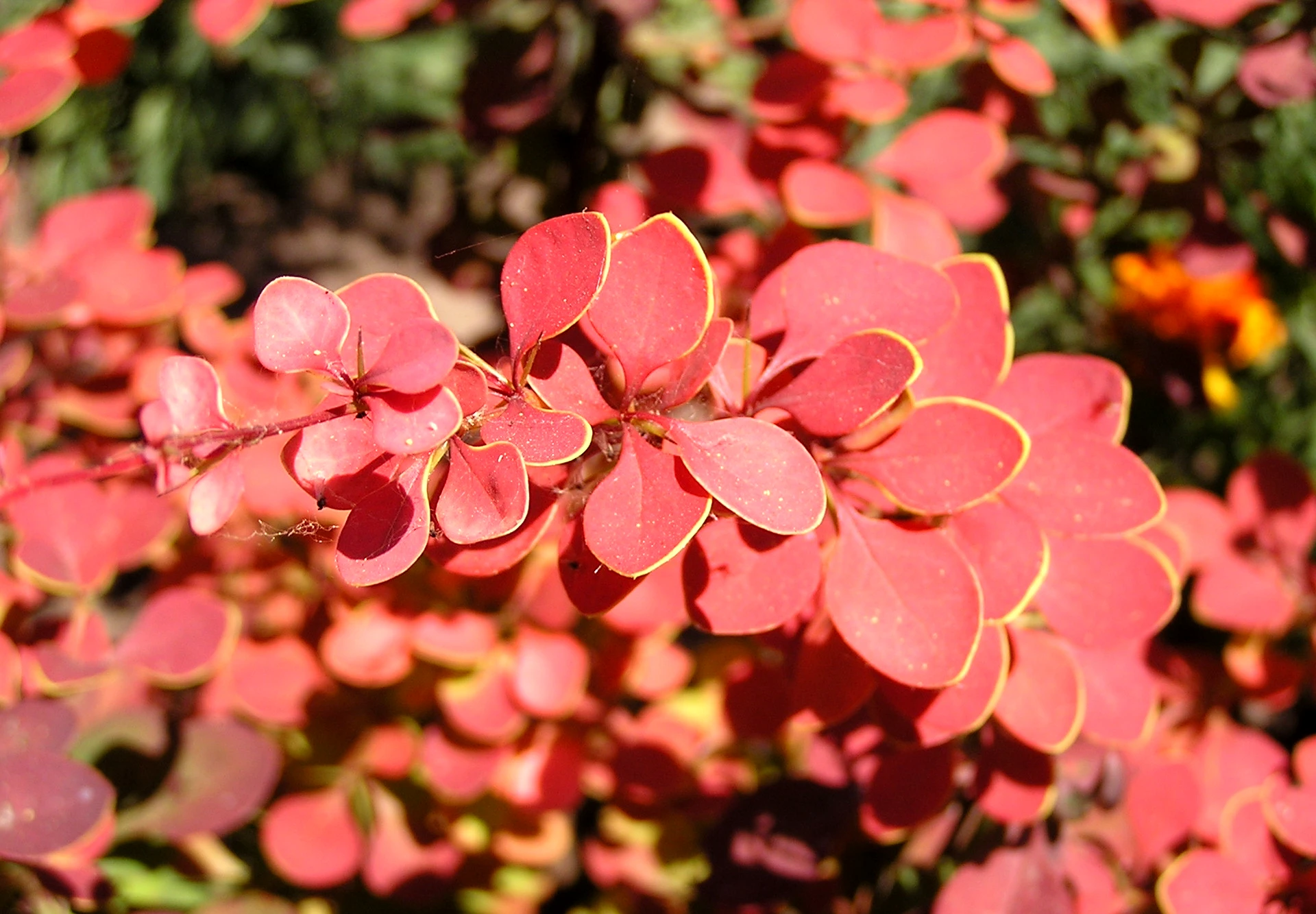
Orange Rocket Barberry is known for its vibrant coral orange foliage, which intensifies in color during the fall, providing a striking display. This cultivar is a variety of the Japanese barberry species and is popular in landscaping for its distinctive features. It typically has a narrow, columnar shape, making it well-suited for mass planting, hedges, borders, or as an accent plant.
A deciduous shrub prized for its vibrant foliage and compact, upright growth habit (4 to 5 ft), Orange Rocket Barberry is a one-of-a-kind addition to any garden. This plant will stand out whether used for mass plantings or in containers.
However, it’s essential to note that while Orange Rocket Barberry is visually appealing, it may have tiny thorns, so caution should be taken during handling. Additionally, local regulations should be checked, as some regions classify certain barberry varieties as invasive due to their potential impact on native ecosystems.
Orange Rocket Barberry Care Guide
Soil
Like most plants, the Orange Rocket Barberry needs well-drained soil to grow a healthy root system. Avoid wet sites or areas that have saturated soils. Given that drainage is good, it can survive in a wide range of soil types, be it chalk, clay, loam, and sand.
Soil pH isn’t a problem, as Orange Rocket can thrive in acidic to alkaline soils.
Lighting

Orange Rocket Barberry shrubs won’t have trouble growing in full sun or part shade. However, its best color will appear when planted under full sun, especially in colder areas. Partial sun exposure is ideal if the location is warm. Avoid planting in fully shaded locations.
Watering
One good feature of the Orange Rocket Barberry is its drought-tolerant once established. This means they’ll be fine even if you don’t water regularly. It’s best to wait for the top three inches of the soil to dry to prevent overwatering. Otherwise, the root system of barberry shrubs will quickly rot.
In times of severe heat, providing mulch will help conserve moisture in the soil. This is primarily helpful when establishing young plants in the outdoor garden. Constantly water the soil profoundly but sparingly.
Temperature and Humidity

USDA growing zones 4 to 9 are the best locations for planting Orange Rocket Barberry shrubs outdoors. It can withstand temperatures as low as -20°F (-31.6°C). Orange Rocket will lose its leaves after a couple of hard freezes. But it will develop new growth in Spring.
Fertilizer
For best growth, fertilize your Orange Rocket Barberry bushes once every year. Do this in the growing season to encourage new growth. A well-balanced fertilizer will suffice, but follow label instructions to prevent overfertilization.
Remove the grasses and weeds surrounding your plants to minimize competition for nutrients. This helps the roots of your Rocket barberry bushes absorb the nutrients from the soil.
Pruning
Pruning your Orange Rocket Barberry isn’t necessarily required unless you want to maintain good shape. You can trim back outgrowing branches, dead stems, and foliage to keep the plant neat and healthy. It’s best to conduct pruning when the Orange Rocket Barberry shrubs are dormant in late winter or early spring.
Remember to use a sanitized pruning shear to prevent the spreading of disease.
Potting
Planting Orange Rocket Barberry in pots and small container sizes is ideal. It allows you to move the plant from one location to another. Just make sure to repot older plants to bigger containers to prevent root-bound that may cause plant deterioration.
Propagation
Asexual propagation using semi-hardwood cuttings is the best way to multiply your Orange Rocket Barberry shrubs. Choose healthy cuttings and plant them in a moist potting mix. Put them inside a nursery with partial shade until they develop roots.
Once established, repot these rooted cuttings in an enormous container or plant them directly on the ground.
Orange Rocket Barberry Similar Plants
Ninebark (Physocarpus opulifolius)

Ninebark is an excellent alternative to Orange Rocket Barberry because of its stunning autumn color. In summer, the foliage is dull green, which turns yellow in autumn. Adding to its charm, Ninebark produces small clusters of white to pinkish flowers followed by ornamental fruit clusters and showcases exfoliating bark in shades of reddish to tan.
This unique peeling bark is a notable characteristic, giving rise to the shrub’s common name.
With its adaptability to various soil types, tolerance to drought and wet conditions, and versatility in the sun to partial shade, Ninebark is a popular choice in any landscape for hedging, screening, or as a specimen plant, just like the Orange Rocket Barberry bushes.


Fragrant sumac (Rhus aromatica)

Aside from the fragrant flowers it produces in spring, the fragrant sumac also turns its foliage into beautiful autumn colors of red, orange, and yellow. It’s a
low-growing deciduous shrub that has a spreading growth habit. It’s best used in mass plantings.
Fragrant Sumac has low watering requirements, so it’s relatively drought-tolerant. It can also grow in partial shade to full sun conditions. Aside from its ornamental value, the berries of Fragrant sumac are also food for small animals.
Red chokeberry (Aronia arbutifolia)

Like the Orange Rocket Barberry, the Red Chokeberry produces a vibrant fall color. It’s a deciduous, multi-stemmed shrub that grows an average height of 6 to 12 feet. This plant has a vase-shaped form and upright growth habit.
In Spring and Summer, its foliage is bright green and glossy, with white to pinkish flowers—the foliage color, then, changes to orange-red when the autumn season begins. The bark also turns reddish brown while bright red pear-shaped berries appear.
The Red Chokeberry becomes an attractive shrub in your landscape from one season to another.
Orange Rocket Barberry Common Diseases and Pests
One good feature of Orange Rocket Barberry is its improved pest resistance. You wouldn’t have to worry about it getting severely infested with annoying creatures. Although scales, aphids, and mealybugs can be an occasional problem, they can’t damage the plant severely.
Watch out for common diseases such as powdery mildew, rust, and canker, which can sometimes trouble your plant. Proper spacing and air circulation in the landscape usually prevent such problems.
Whether you want to buy, sell, or reach out to other plant enthusiasts, Plantly is the right place to be!