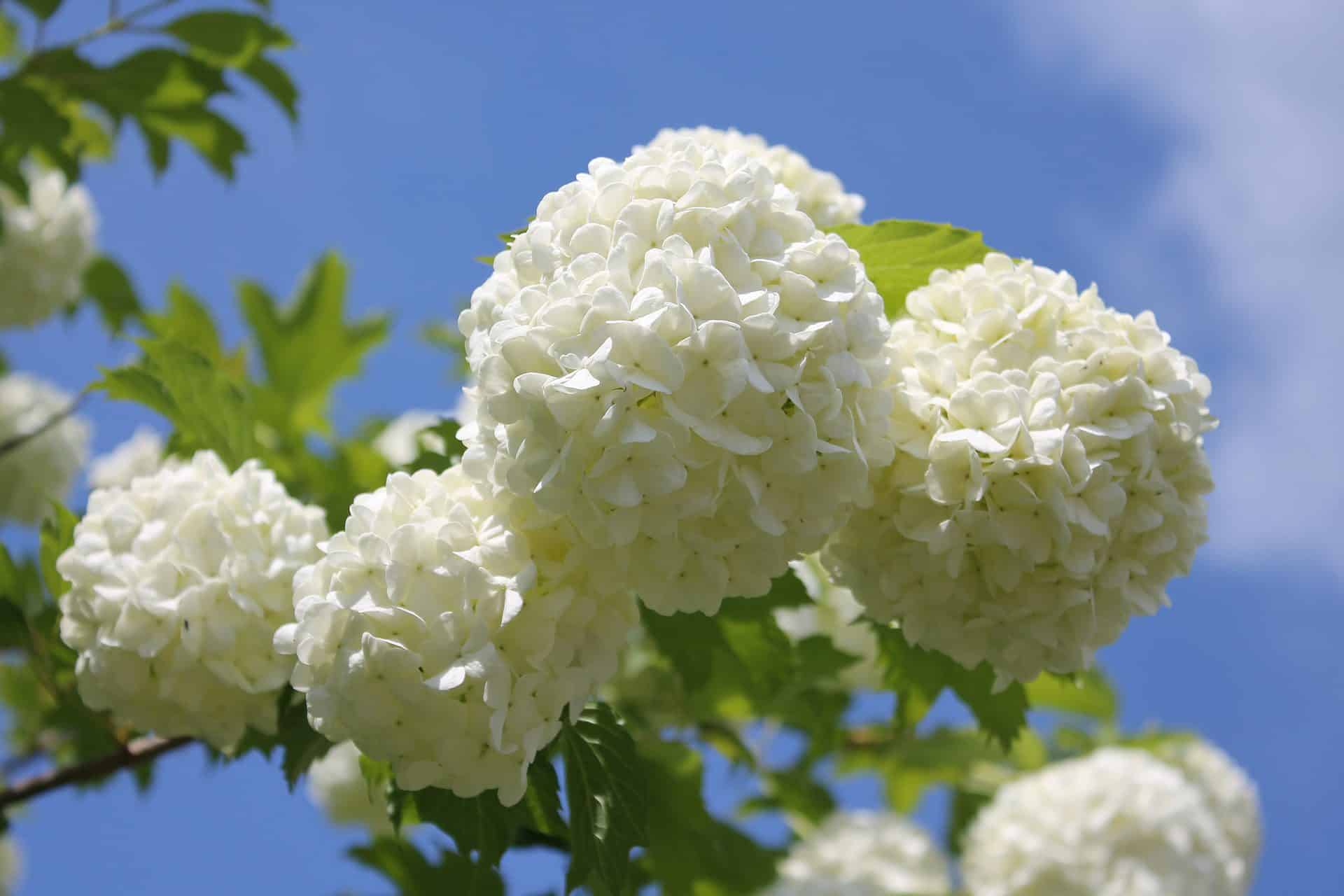
One thing you’ll surely love about snowball bush viburnum is its large, white, and rounded spring flower clusters.
The desirable blooms are much more like those of hydrangeas, making every landscape extra appealing and pretty.
Sounds good, right? Let’s get down with additional information about snowball bushes.
Plant Name: Viburnum x carlcephalum
Other Name: Snowball bush viburnum, European cranberrybush, Eastern snowball bush
Plant Type: Deciduous shrub
Native Areas: Nursery hybrid
Light Requirement: Full sun to partial shade
Watering: Moderate
Fertilizer: Slow-release fertilizer
Toxicity: Non-toxic, but the berries can cause an upset stomach
Temperature: Warm temperatures
Propagation: Cuttings
Growth: 6-12 feet tall and 6-10 feet wide
Soil Type: Well-drained soil
USDA Hardiness Zones: 6-8
More About Snowball Bush

The Snowball bush plant is one widespread genus among the flowering shrubs category. It’s a collective term used to refer to different varieties of snowball bush plants.
They make a stunning display of extravagant blooms during spring (April to May, sometimes until June).
But as a semi-evergreen plant, the flowers fade away after the season. The vibrant green foliage turns purplish red and sheds off once fall arrives.
The snowball bush plant outdoors is multi-stemmed, with its stems arching upward. It can grow about 12 feet and spread about 10 feet wide when mature.
Hence, snowball viburnum bush would need a spacious area to grow. You plant it as a standalone specimen in your lawn or part of a mixed shrub border.
Another exciting thing is it has many common names, with one Eastern snowball bush.
Snowball Bush Plant Care

Growing a snowball viburnum is a relatively easy task. This plant indoors wouldn’t demand much care and maintenance once established. Just make sure you fulfill the basic requirements below:
Best Soil Snowball Bushes
Snowball viburnum plants will likely flourish in any soil type, but the most suitable one is well-drained soil like loam. Viburnum grows in loamy soil, which is considered the ideal soil type. It’s a balanced mixture of sand, silt, and clay, offering good drainage while retaining essential moisture and nutrients.
Snowball bushes thrive in soil with a pH level between 6.0 and 7.5. This slightly acidic to neutral range is suitable for most garden plants. Before planting, it’s a good idea to amend the soil with organic matter like compost.
This improves soil structure, provides nutrients, and enhances moisture retention.
Light
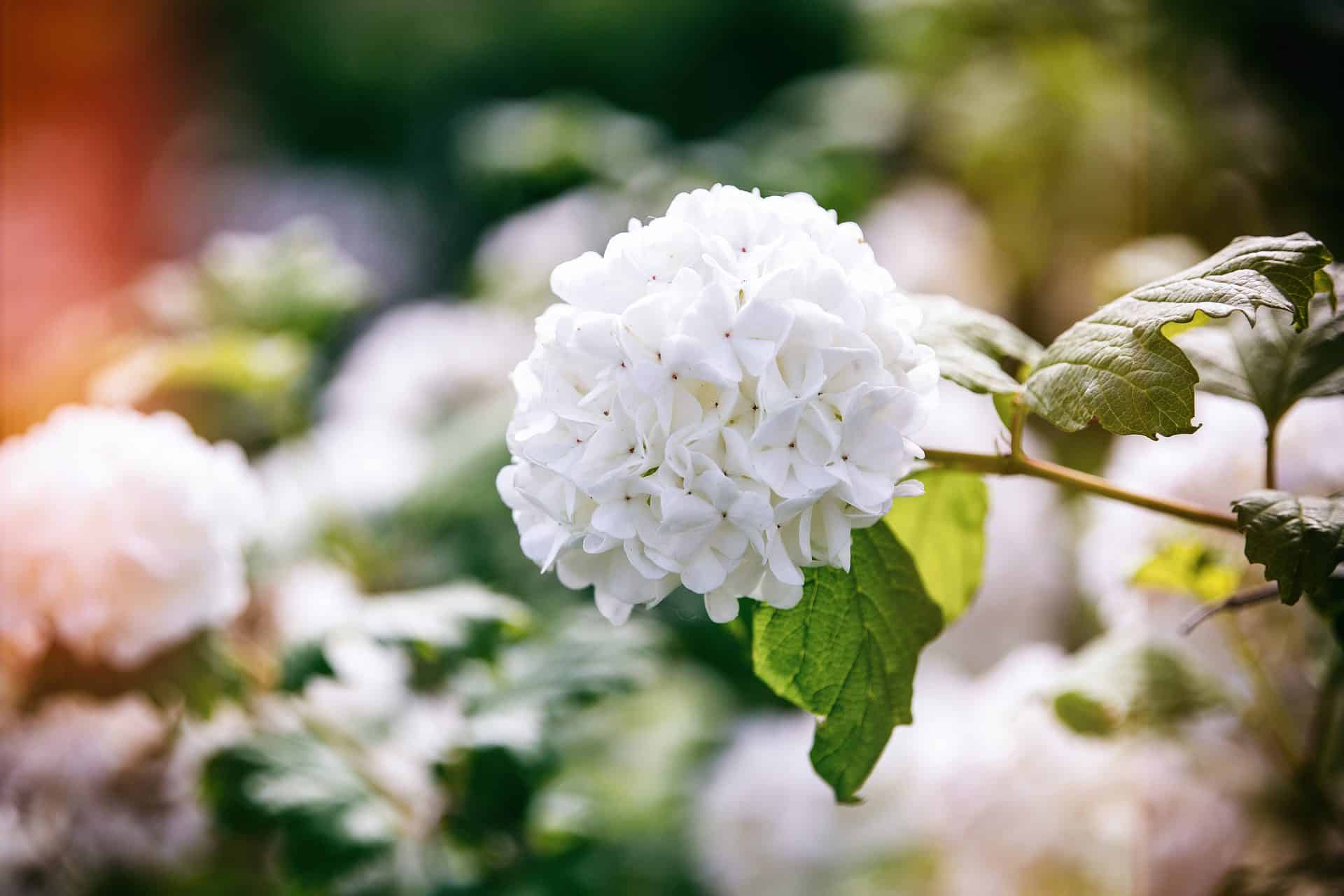
The best light condition will be full sunlight for at least six hours daily. So plant your snowball viburnum in a well-lit outdoor area with access to full sun. Such a condition will help boost each year’s blooms.
If your area is warmer, your snowball bush will do well with partial shade. Too much shade is not an ideal growing condition, so keep away from that.
You will not have vibrant green foliage with blooms, which can result in unhealthy plants.
Watering
The good thing about the semi-evergreen and snowball bush care is that it is drought tolerant, but you still need to keep the soil moist.
Water regularly until the plant is well-established in the area. It helps snowball bushes establish a sound root system.
After that, provide at least an inch of water weekly. It would help to add a thick layer of mulch around the base of the snowball viburnum. The mulch will help conserve moisture and protect the root ball.
Temperature & Humidity
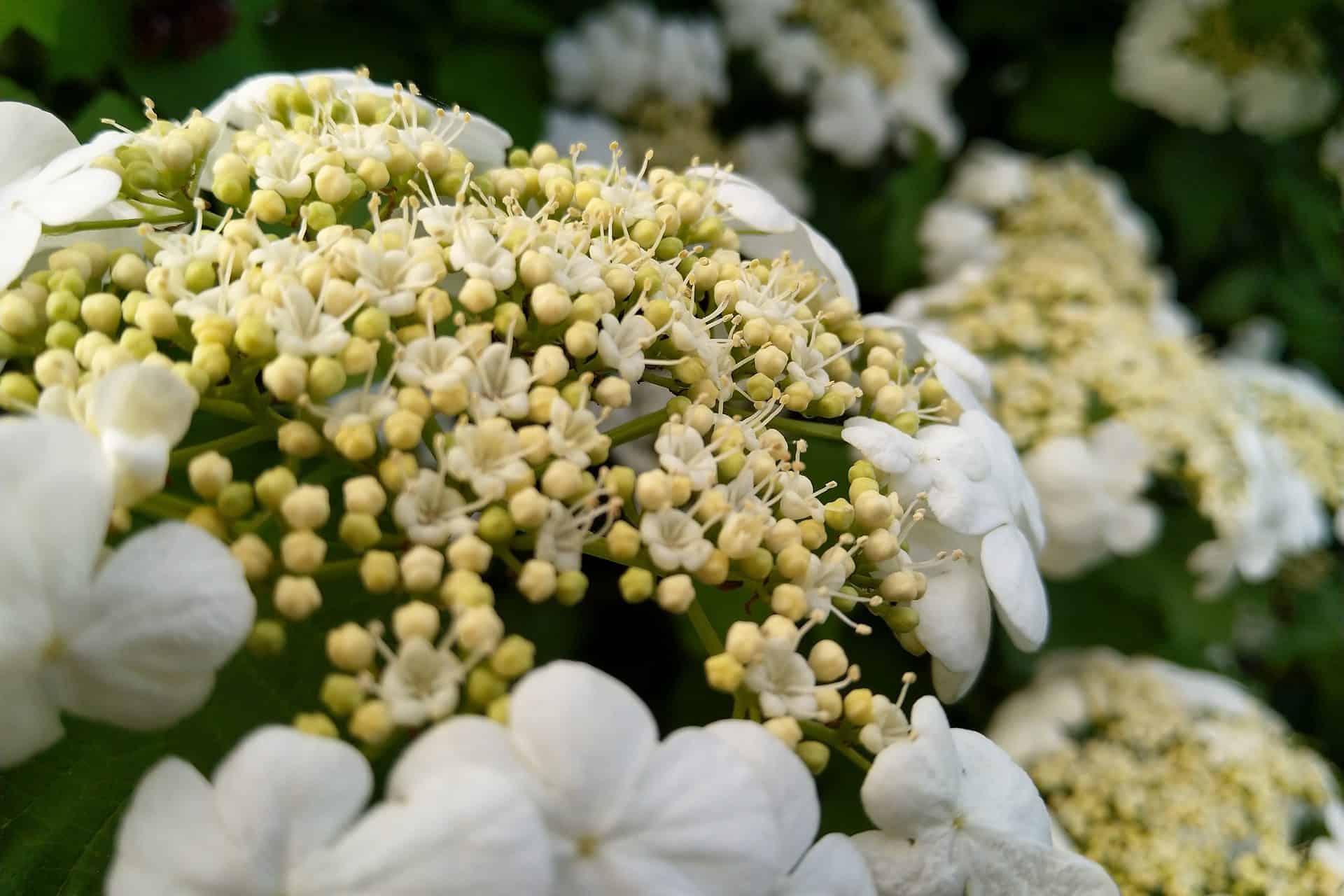
Snowball bush viburnum will thrive in locations under USDA hardiness zones 6 to 9. It’s cold and hardy in areas under zone 6, so it will most likely withstand the lowest temperature in these areas.
But colder than that, your snowball bush will not survive. In the same way, snowball bushes will tolerate the hot temperatures of zone 8, but beyond that range, it is stressful for the plant.
Fertilizer
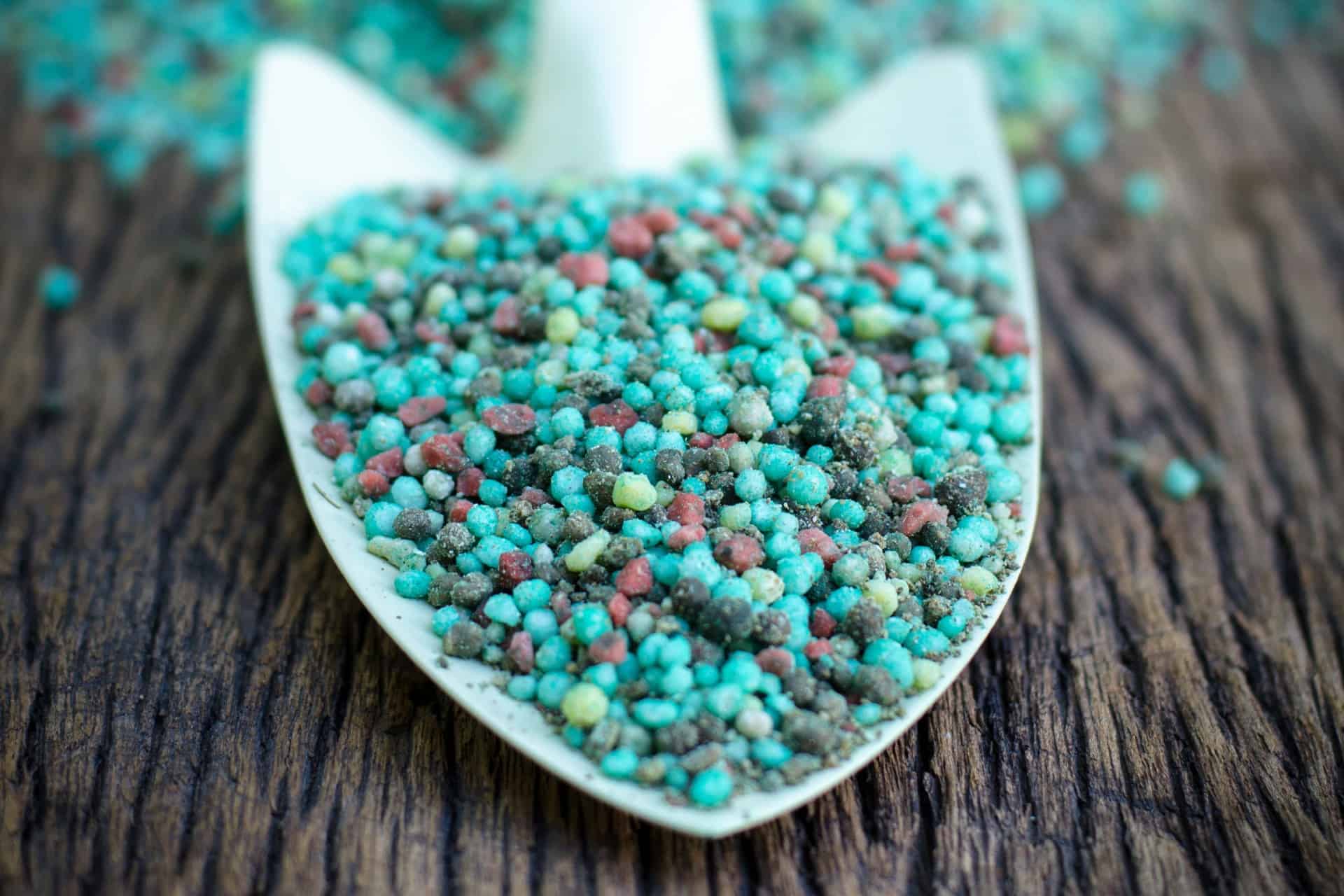
During the growing season in spring, add a slow-release fertilizer around the bases of your snowball bushes. Fertilizers will help boost new growth, but be wary of too much nitrogen as it can deter the development of flower buds, resulting in less production of flowers.
This large deciduous shrub isn’t a heavy feeder.
Pruning Snowball Bushes
Pruning snowball bushes is a common practice to maintain their shape and size and provide a healthy plant. Prune your snowball bushes during late winter or early spring before new blossoming begins. This is typically done in February or March.
Steps to Prune Snowball Bush Viburnum
Start by inspecting the plant for any dead or diseased branches. You should remove dead or diseased branches on your shrub first. Cut these branches back to the base or where they meet a healthy branch.
Snowball bushes tend to grow with a dense center. To improve air circulation and light penetration, thin out some inner branches. Remove up to 1/3 of the oldest and tallest branches, cutting them back to the base. This will encourage growth to take place from the base.
If your snowball shrub has grown too tall or wide for your space, you can reduce its size by cutting back some outer branches. Make the cuts just above a leaf node or lateral branch junction to encourage new growth in the desired direction.
After the snowball flowers have faded in late spring, you can deadhead (remove) the spent flower clusters. This is optional but can improve the overall appearance of the plant. Viburnum grow exceptionally, and they can tolerate drought. Plus, next year’s blooms will bloom on old wood.

Propagating
Some viburnum plants wouldn’t produce fruit and seeds because snowball flowers are sterile. This is true for Viburnum macrocephalum. Thus, the best way to propagate this plant is through asexual means: cuttings.
Steps For Propagating Snowball Bushes:
During spring, look for soft green stems from your bush.
Cut the stem at a slanting position, ensuring it’s at least 4 to 6 inches long.
Remove most leaves and retain only one set of young leaves on top.
Dip into a rooting hormone, then insert the lower tip at a growing media.
Cover the top portion with transparent plastic to preserve moisture and prevent the cutting from drying up.
Water the soil regularly to keep it moist.
After two weeks, check if the roots have developed. You can tug the stem to know.
Once new development is visible, you can transplant the shrub. Make sure to acclimate it first to the environment to reduce stress impact. Then, enjoy watching this large shrub grow.
Snowball Bush Species and Varieties
There are many species and varieties of snowball bushes that you could choose from, and some popular options are the following:
Chinese snowball viburnum
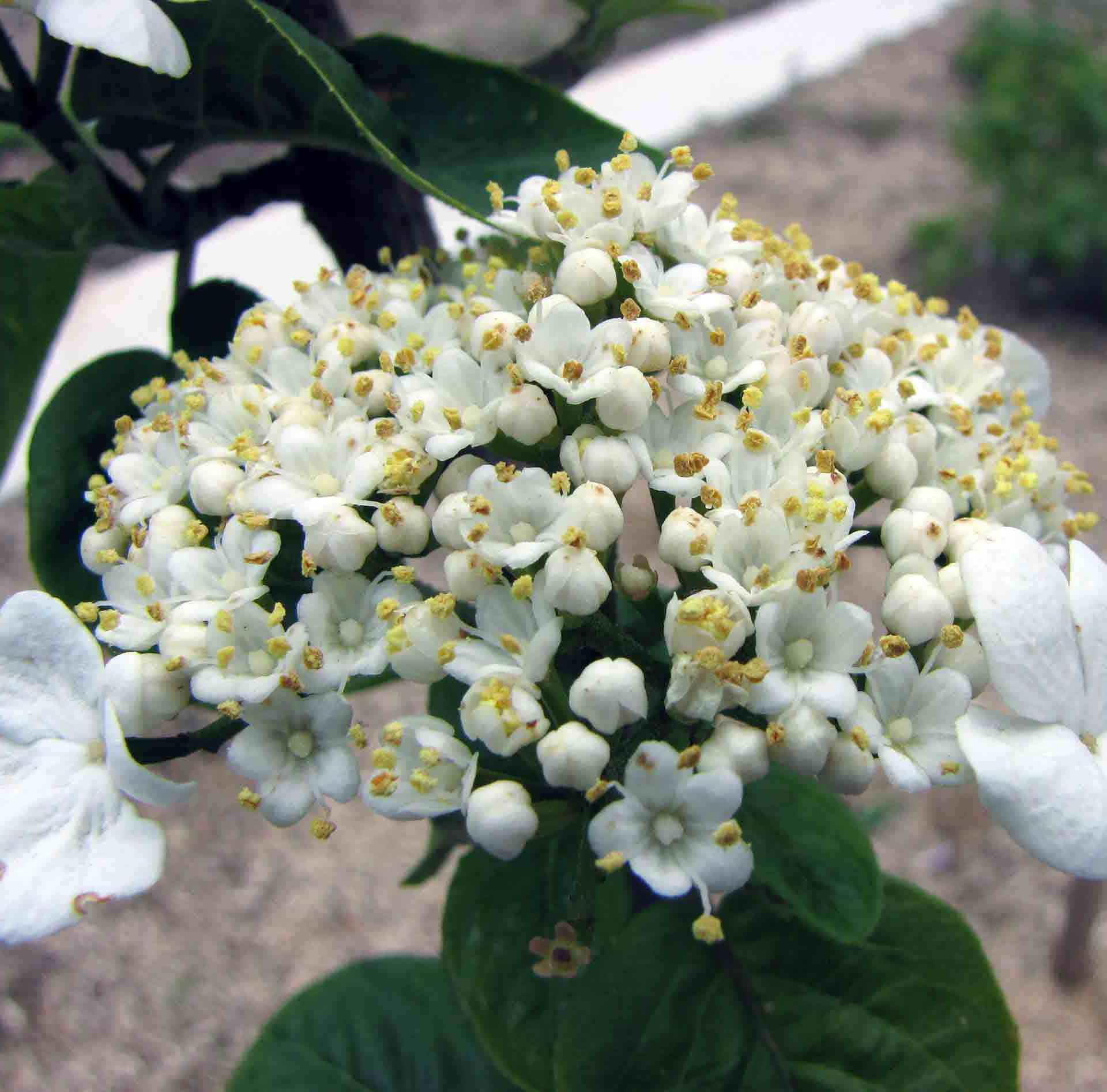
The Chinese snowball viburnum is scientifically known as the Viburnum macrocephalum; this Chinese snowball viburnum bush produces the most enormous blooms, about 8 inches in diameter. The color of the Chinese snowball bush starts from lime green to cream to pure white.
Sometimes, all colors are shown in flower clusters, resulting in a tricolor effect.
Japanese snowball bush

The Japanese snowball bush or Viburnum plicatum can grow up to 15 feet when mature. It also produces white snowball-like flower clusters that are displayed heavily during spring. Compared to Chinese snowball viburnum, the Japanese snowball bush produces oval berries, which hummingbirds love.
Viburnum carlcephalum

What you’ll love about Viburnum carlcephalum is its pretty blooms and fragrance with lime green foliage. Once the flowers open in late spring, you’ll be mesmerized by the fragrant scent they disperse.
European cranberry bush
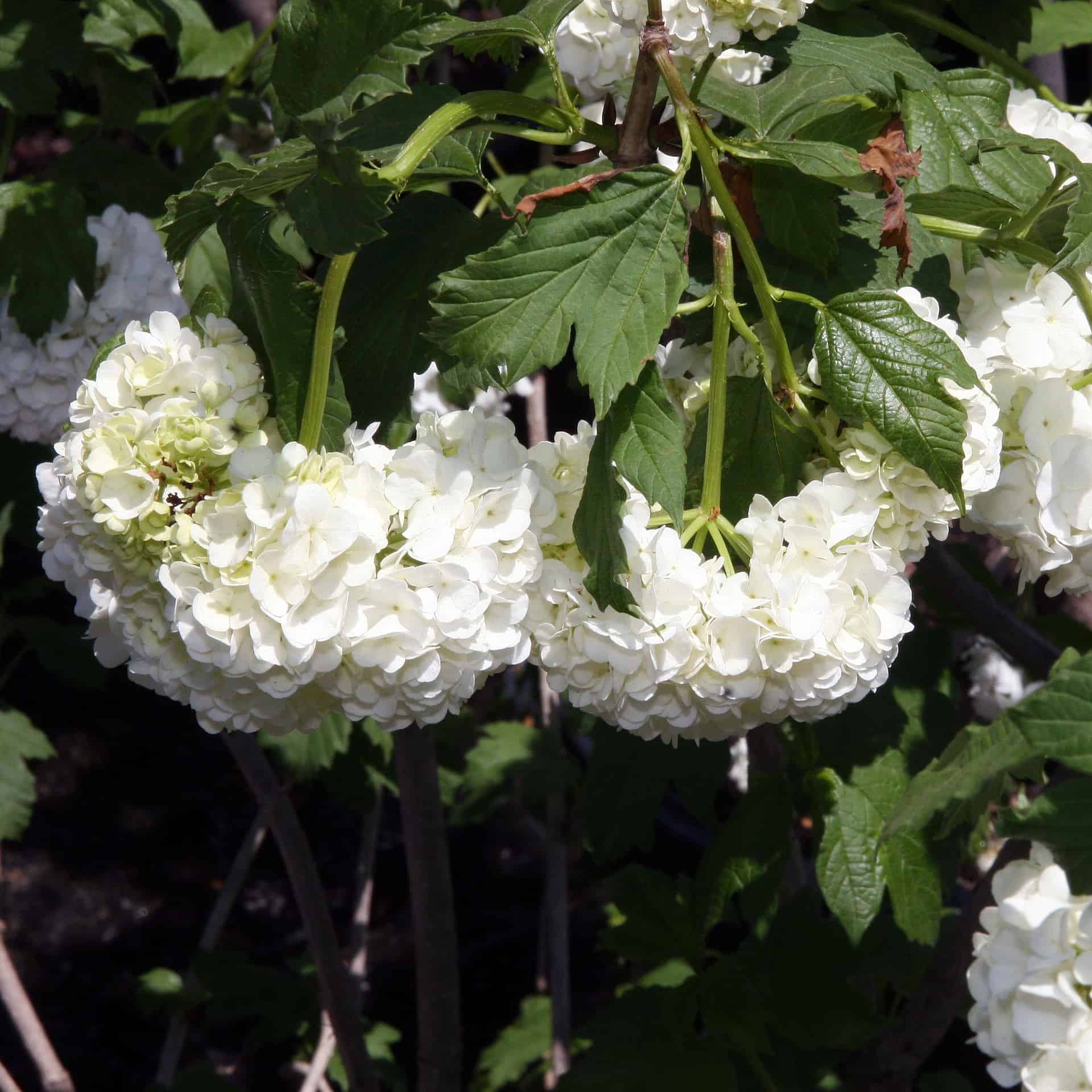
Also known as the guelder rose (Viburnum opulus ‘Roseum’), this species also produces large flowers that shift color from green to white and then to pink. The flowers are also sterile, so no fruits are produced. It grows between 12 to 15 feet in height, but there are also dwarf varieties like the Viburnum opulus ‘Compactum’.
Korean spice viburnum
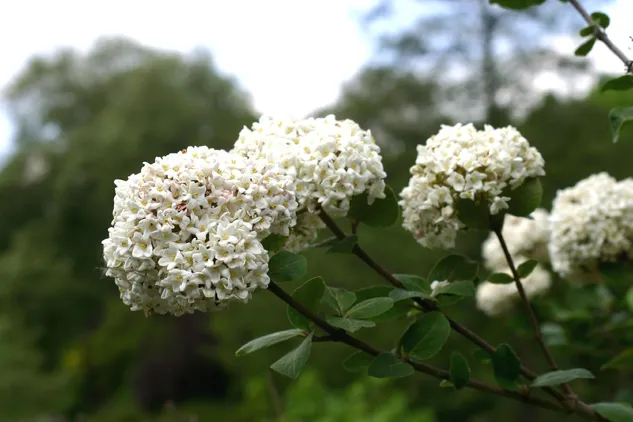
Viburnum carlesii is one of the snowball bushes known for its flowers that appear in hemispherical clusters. The flower buds appear pretty in pink. Once it opens, the petals turn white and are also very fragrant.
Snowball Bush Common Diseases & Pests
Plant diseases such as bacterial leaf spots and powdery mildew are common in snowball bush viburnum, especially when the foliage is constantly wet. Powdery mildew is a fungal disease that affects plants, appearing as a white or gray powdery coating on leaves and stems.
It’s best to keep proper spacing when you plant snowball bushes to reduce the chances of moisture build-up.
If your plant becomes diseased, you must prune the affected parts to prevent its spread.
Common pests include aphids and bugs but are mostly manageable using insecticidal soap.
Whether you want to buy, sell or simply reach out to other plant enthusiasts, Plantly is the right place to be!