The Stephania erecta plant, better known as the potato plant, is an exciting plant to have. But is this tropical plant a potato or not? If you keep reading, you will find all the juicy detail about this plant here. One thing is for sure it used to be a rare plant.
Plant Name: Stephania pierrei or Stephania erecta
Other Name: Fat-bottomed plant or potato plant
Plant Type: Tropical deciduous plant
Native Areas: South-East Asia and some parts of Australia
Light Requirement: Bright indirect light
Watering: Moderate
Fertilizer: Liquid Fertilizer
Toxicity: Toxic to humans and pets
Temperature: 60°F – 80°F
Propagation: Seeds
Growth: 3 feet tall and 7 inches wide
Soil Type: Well-draining soil
USDA Hardiness Zones:
More About The Rare Plant Stephania Erecta

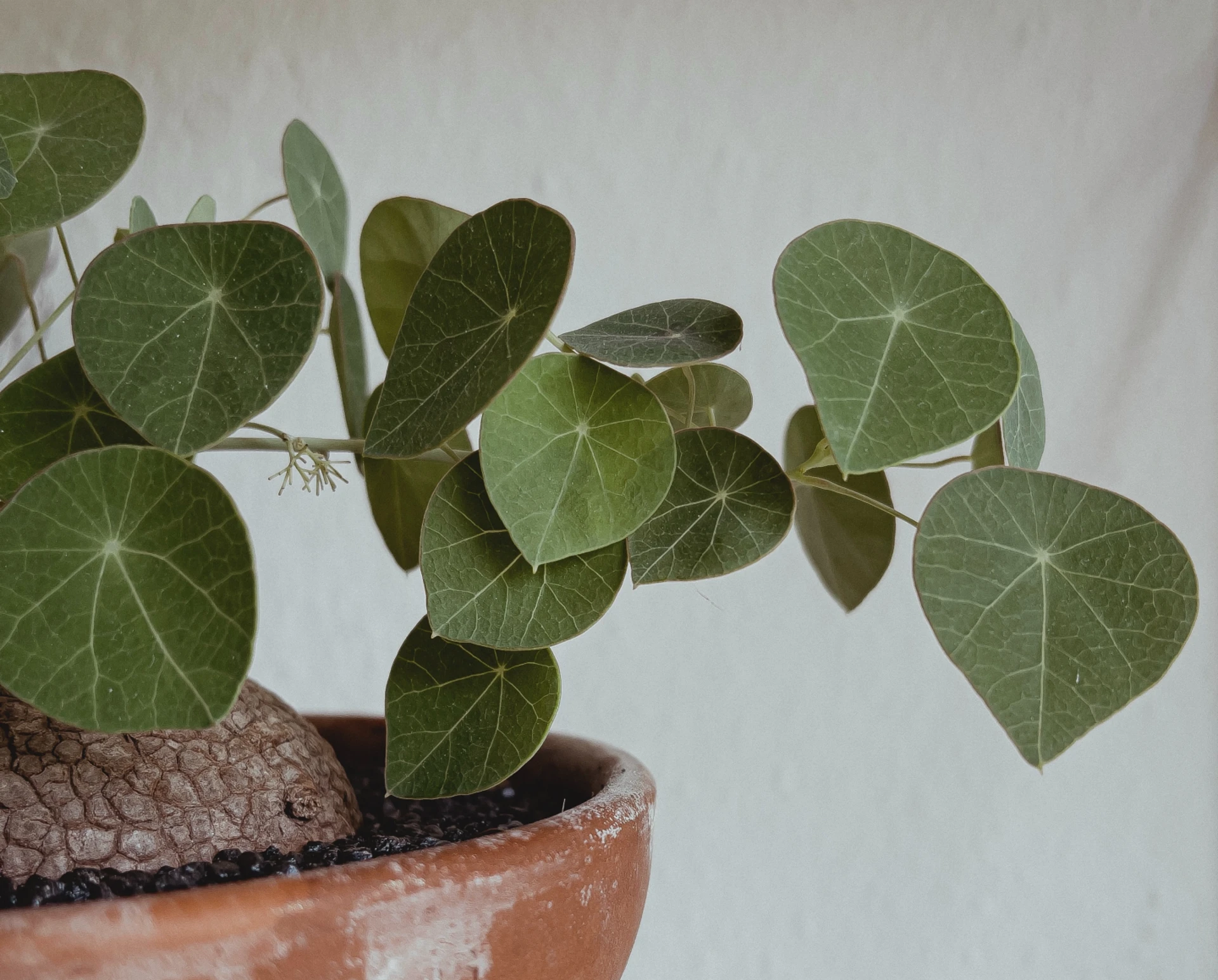
In the houseplant world, the Stephania erecta, with its potato-like body, and with fleshy, bulbous stems holds some of the best-kept secrets. The potato plant has a woody bulb called the caudex that holds water.
Still, the Stephania erecta flowering plants are slow growing and can take up to 20 years to reach three feet high indoors. The most growth occurs in spring and summer, forming umbrella-like green leaves with long vining stems.
But, in winter, the bulb becomes dormant loses all the leaves, and only produces new growth in spring from a node at the top of the bulb. Then, when blooming flowers, you see white or yellow inflorescence in clusters on the stem.
The caudex can reach up to 7 inches wide, and the bulb can grow considerably with a larger pot—an adult outdoor plant blooms from early to late spring. If pollination takes place, you see fruiting taking place in late summer.
The fruit looks like oval pods with tiny brown to black seeds inside. Another fascinating thing is the plant grows in its natural habitat in Thailand. Still, while everyone knows the plant as the Stephania erecta, the scientific name changed to Stephania pierrei.
So, the brown bulb of the plant looks like a potato, but it is not a potato. When you buy the plant, you receive it as a bulb without the greenery. It is known as a dormant bulb, and it is up to you to activate the plant.
Stephania Erecta Care Guide
So, the next important question is how do you wake up the dormant caudex? You will find all the information on Stephania erecta’s caudex awakening here. But one thing is for sure it will be one of the most exciting things to see when this bulb starts to sprout.
Sprouting The Stephania Erecta Rare Plant
Here are some simple steps to help you wake up the rare plant’s roots. But one important note is it will take patience:
Start by soaking the plant’s caudex for 24 hours in warm water as you would with a seed or a nut.
Choose a pot and add a thin layer of rocks at the bottom to allow water to drain freely. Fill up the container two-thirds with well-draining soil.
Place the caudex with the small ring at the end with a node/bump facing upwards onto the soil. This is where the foliage will sprout.
Leaving the caudex exposed is better, as a buried bulb is susceptible to root rot.
Start by watering the soil without over-watering it. Then place a germination dome over the plant providing moisture. Next, you can use a plastic bag to seal the moisture allowing your potato plant to sprout.
Now all it takes is patience, as the caudex can take up to two weeks to come out of the dormancy period. Then it can take up to three months to sprout.
Here the crucial thing is to provide humidity to grow faster as the root system develops under the bulb. Eventually, you will see small green shoots showing that your plant is awake.
The Best Soil For Stephania Erecta Plants

The potato plant has succulent features that prefer having its soil dry, and excess moisture must drain out of the pot. Thus, your plant needs soil with a neutral pH between 6.0 and 7.0.
When you have a soil mix like clay, it can result in waterlogging that shows water stagnant on the topsoil. This can lead to problems with the leaves and roots.
For this reason, we recommend using a succulent potting mix that provides drainage but retains moisture.
Temperature Stephania Erecta Without Too Much Direct Sunlight.
For Stephania erecta to send out those creeping vines, it needs balanced light and temperatures. Thus it helps to provide temperatures between 60°F and 80°F with up to 6 hours of bright indirect sunlight growing as indoor plants.
With its woody bulb, this interesting plant can tolerate various lighting conditions, but too much direct light can harm the delicate leaves. The same can be said for the opposite of receiving too little light as it halts the growth.
Signs of excessive light and temperatures result in your plant’s yellowing and browning leaves appearing, which becomes crispy. The same happens with low light, but you get a progressive leaf drop.
We recommend placing your plant in spring and summer near an east-facing window and a south-facing window to keep it five feet away from direct sunlight. Also, use sheer curtains to protect your potato plant from scorching sunlight.

In winter, prevent placing your potato plant near a north-facing window, and never let the temperature drop below 50°F. For the best results during the dormant period, place your potato plant on a heating mat or use a frost blanket to protect against the cold.
If the light is not sufficient, you can use LED grow lights.
Humidity Stephania Erecta and Watering to Prevent Root Rot
The potato plant can go without water for a long time. Although, at the same time, high humidity is not much of a problem, low surrounding moisture results in slowing down the growth.
Preferably allow the soil mix to dry between watering as the plant does not like wet feet leading to root rot. Keep the humidity around 60%. Signs of over-watering are yellow foliage, and you will find that the bulb rots. Signs of underwatering are yellow, brown, and crispy leaves.
With low humidity, your plant will have fewer blooms, and the foliage will decline in size. During winter, do a finger dip test to check if the top three inches of the soil are dry before watering.
Preferably water at the base of the bulb instead of over the foliage. To improve drainage, you can blend the soil mix with some perlite. We recommend misting the leaves only in summer, allowing them to dry before the evening.
Fertilizing Stephania Erecta
You can feed your potato plants in spring and summer with a balanced liquid fertilizer every four to eight weeks. Signs of over-fertilizing are yellow leaves, browning of the leaf margins, and root damage.

When your Stephania erecta is under-fertilized, you have smaller leaves, fewer blooms, a change in the leaf color, and stunted growth. Also, refrain from feeding your plant in fall to winter as the caudex becomes dormant.
You can use a half-strength fertilizer when watering the plant during the growing season. Then, use distilled water to flush out the salt in the soil and unclog the drainage holes about once a week to provide good drainage.
How to Prune Stephania Erecta Plant Leaves
When it comes to pruning, there is no particular schedule, as the plant sheds its leaves in the fall to winter. But you can remove the yellowing leaves to help it produce more foliage.
Furthermore, trim the vines that become leggy, allowing for bushier growth. Thus you can prune your plant every four weeks to remove diseased or dead leaves.
Repotting Stephania Erecta
As the caudex grows slowly, you can keep your plant in the same pot for years. When the time comes to repot, you can use a terracotta pot with enough drainage holes that are an inch wider and deeper than your existing planter.
Signs your Stephania erecta is rootbound and needs to be transplanted are:
Stunted Growth
Producing flowers is less
Enlarged bulb with quick draining of water
Roots poking out of the drainage holes
STEPS TO REPOT YOUR STEphania erecta
Uproot your plant and prepare another container with pebbles and a succulent potting mix.
Untangle the roots and keep all the soil in contact with the bulb’s base to help prevent transplant shock.
Place the caudex in the center and add soil along the sides, keeping it at the same level as in the previous pot.
Moisten the soil and place your plant in bright indirect light for a few weeks.


How to Propagate Stephania Erecta
The best time to harvest Stephania erecta seeds is in late summer after the tiny yellow flowers fade. Then soak the seeds in lukewarm water in a dark place for 24 hours. Next, take a seed starter tray and fill it up with a seed starting potting mix.
Place the seeds about 0.2 inches deep in the potting soil and sow one seed in one section. Cover the tray with plastic wrap and place it in dappled sunlight. It helps to set the tray on a heating mat to speed up the seed germination.
When the soil dries, lightly sprinkle distilled water over it. The seeds can take up to five months to germinate. When the seedlings have three leaves, you can transplant them into individual pots.
HARVESTING AND STORING THE BULB
When the flowering cycle ends, your plant starts to shed its leaves to become dormant. Still, although the bulb might look dead, it sprouts new growth in spring. We recommend
Harvesting & Storing Stephania Erecta Bulb
Once the summer ends, Stephania begins to shade its foliage and becomes dormant. Follow these steps to store your bulb.
Water the soil to help pry out the bulb by turning the container upside down.
Take hold of the stem to remove the bulb from the pot.
Place the bulb in a mesh bag, keep it in a well-ventilated, dry place, and avoid bright light.
When spring arrives, you can replant your bulbs using the steps previously discussed.
Stephania Erecta Similar Plants
In the Stephania genus, you can find quite a few cultivars. But one other species stands out, known as the Stephaina tetrandra. It is also a perennial climbing variety with twining stems that grows from a fleshy rootstock.
Furthermore, this herbaceous plant comprises 50 herbs used in Chinese medicine and harvested in the wild. The root has antibacterial and anti-inflammatory properties. People use it for treating spleen and kidney deficiency or for treating arthritis. And yes, Stephania tetrandra is a medicinal plant.
Stephania Erecta Common Diseases and Pests
Like most houseplants, your potato plant can have some common issues. One of the biggest mistakes is over-watering. Another problem is underwatering or not providing enough sunlight to the proper humidity and temperature.
If your plant shows signs of wilted to crispy brown leaves without falling off, it can be under or over-watering your plants. Check the soil moisture to determine if you should stop or water Stephania erecta.
When the leaves turn brown and curl, they must be moved out of the direct sunlight as it scorches the bulb. With long stems and small leaves, it needs more light to thrive. It helps move your plant to a spot where it can receive bright indirect light or grow lights.
Some other concerns are root and bulb rot to rust fungus, a fungal disease. Whiteflies, aphids, mealybugs, and spider mites are common pests that can bother your plant. The best treatment for these bugs is neem oil.
You can take two teaspoons of the neem oil mixed with one teaspoon of dish soap and water in a spray bottle. Then spritz the plant foliage and spray on the underside of the leaves and the surrounding soil.
Whether you want to buy, sell, or simply reach out to other plant enthusiasts, Plantly is the right place to be!