You have this gorgeous variegated plant you want to buy. Maybe it is the Variegated Monstera deliciosa or another species. Yes, the Monstera is sought after, making it a rare plant to find.
Still, it is not the only plant variegation capturing houseplant enthusiasts’ attention.
The truth is that variegated plants are becoming more popular as indoor plants. These cultivars have various colors in the leaves, making them attractive indoors. A fact is they are the favorite indoor plants for many people. But what causes variegation in plants?
What makes them different from other green plants? Let’s find out!
What is Variegation How Does it Happen?
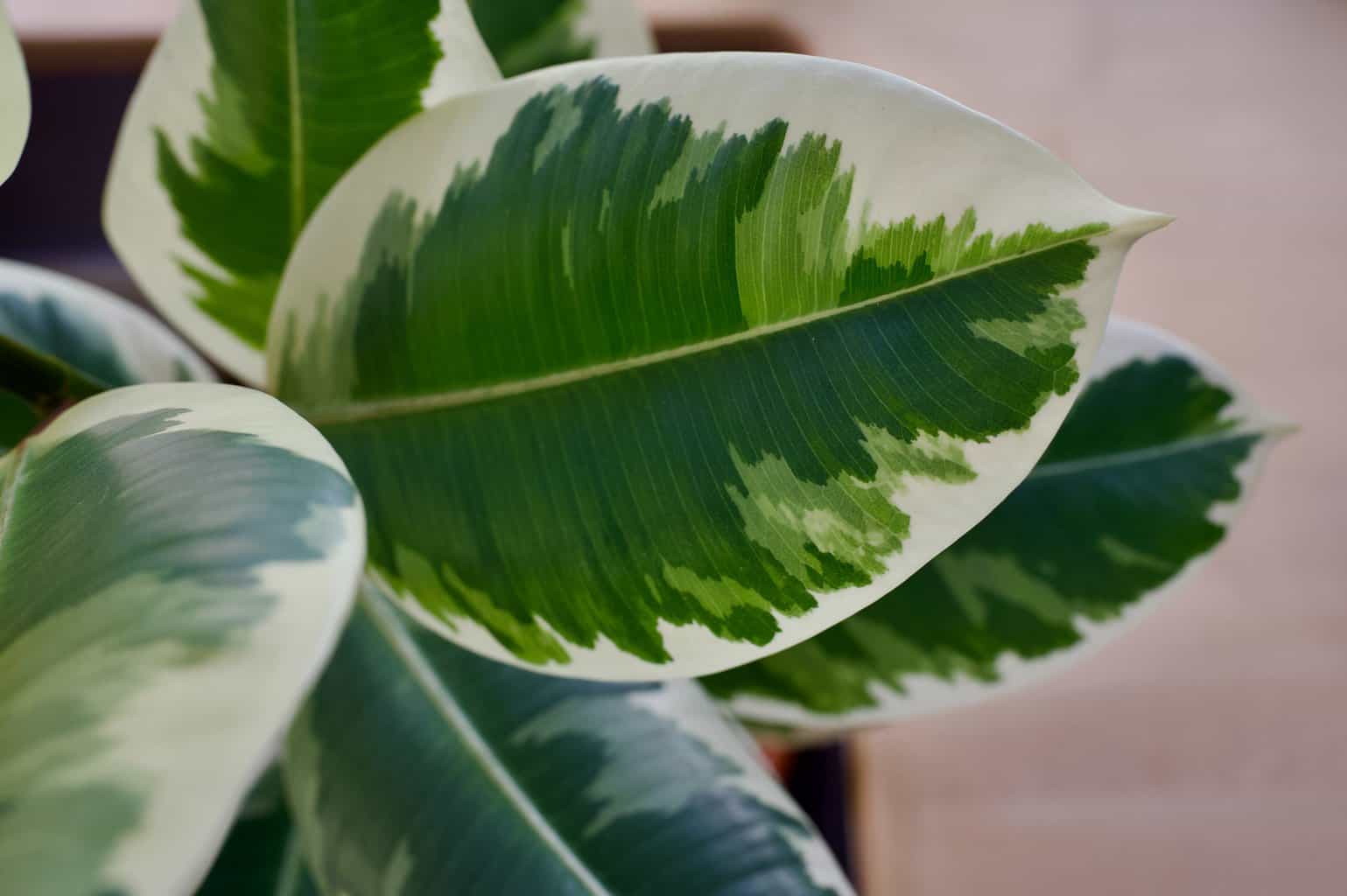
When a plant has variegated foliage, it lacks green pigment chlorophyll in the plant cells. It happens because of a cell mutation and not because it needs to adapt to a new environment.
Sometimes it is a genetic mutation making it inherited, while other times, it is chimeric and randomly happens, resulting in natural variegation. An inherited mutation has a stable color change, and when you propagate the green shoot from a parent plant with colored leaves or even sow seeds, that color reappears in your new plant.
It can apply to plants with green leaves that have variegation in white or yellow patches or even have a single solid color like gold or purple. Also, random mutation typically shows up as variegation in plants.
Still, if you propagate from the random mutation, the color does not typically recur. Hence, propagation needs to be from the colored shoots or the variegation. But, unfortunately, variegated forms in nature die out as it is weak growers.
The reason is plants’ lack of chlorophyll to make food and helps with growth. Still, you can also get viral variegation as the leaves have discolored veins but are very rare yet stable. One such plant is the Lonicera japonica ‘Aureoreticulata’ with golden yellow veins.
Four Different Variegated Plant Types
We can take it further by looking at the different variegation types, each with distinct attributes.
The Most Common Variegated Foliage
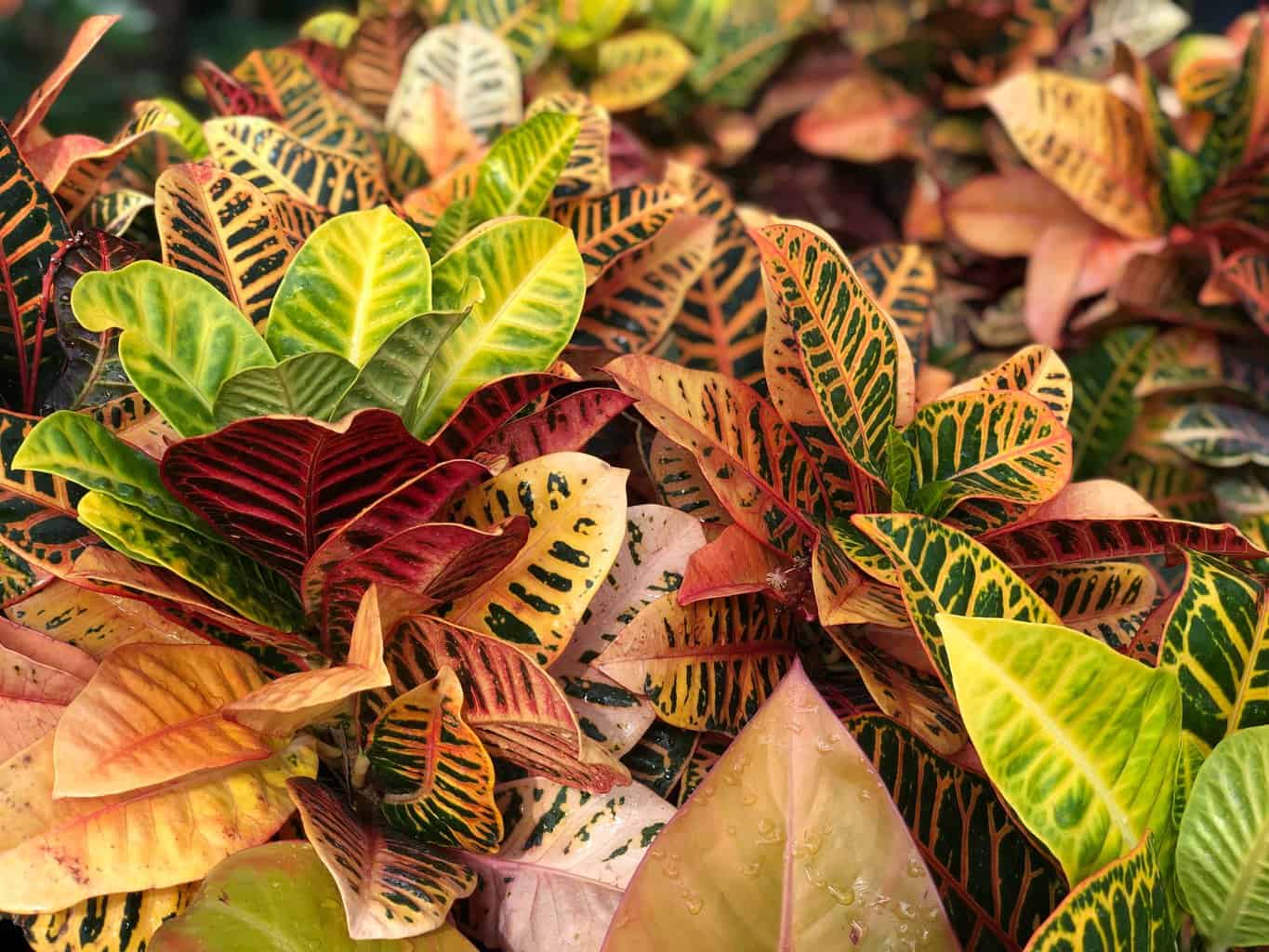
Pattern gene variegation is a common type as it is natural variegation. You see specific patterns on the leaves. Hence, it is not a mutation but part of the plant cells (DNA). Some popular indoor plants with variegated leaves are your
Chinese evergreens, calathea, and prayer plants. These days you find many plants with pattern gene variegation as cultivars to create a new hybrid species.
Sought-After Variegated Plants

The chimeral variegation is sought-after by many plant enthusiasts. The name comes from the Greek Mythology Chimera, meaning the head of a lion and the body of a goat with a serpent tail.
Chimeric variegated plants happen with genetic mutation creating plants with two different chromosomal makeups. One provides chlorophyll production, and the other cannot. Hence, you see white or yellow zones intermixed with green on the leaf or stem, like the Variegated Monstera Deliciosa.
Furthermore, these variegated houseplants can have random patterns with large yellow or white areas or even speckles. On the other hand, the leaves can appear all white or just green. However, at times it remains consistent, with patterns looking like half-moons.
But the concern is that it lacks chlorophyll and hinders photosynthesis resulting in variegation not lasting long and the plant dying. Sometimes some species also revert to green, losing the variegation.
But you can use stem cuttings, but it has no guarantee it will produce variegated foliage.
Blister Variegated Indoor Plants

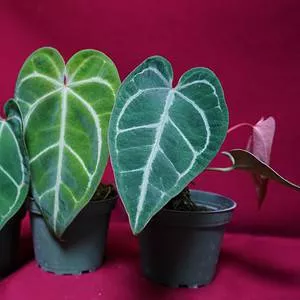
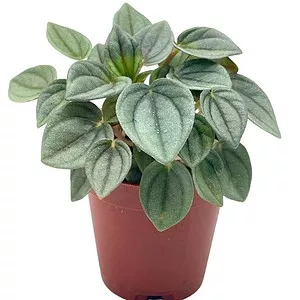
Reflective variegation or blister variegation results from air pockets forming on the leaves. The lower tissue has chlorophyll, and the upper tissue has none. Hence, you see white or silvery stripes on that specific leaf part.
These air pockets can form random splotches. You see blister variegation on the Scindapsus pictus or along the foliage’s veins. You see these striking patterns from blister variegation in different Anthuriums.
Variegated Plants With Viral Variegation

We also touched on this earlier, and it is much less commonly seen as it stems from a virus. One example where viral variegation occurs is from the mosaic virus, and tulips are good examples as they were cultivated to have the virus variegation present.
A Note of Warning Chemical Variegation
Many plant growers also temporarily use chemicals or dyes to change the leaf color. A good example is the Pink Congo Philodendron. The growers feed the plants a chemical preventing the plants from creating chlorophyll making for the pink leaves.
Once the chemical wears off after six to 12 months, those leaves revert to their green pigment.
Caring for Variegated Indoor Plants
Yes, plants with variegated leaves look stunning, and if you have one, you want to keep it that way. Of course, you do! So how do you keep your Variegated Monstera or unstable variegated plants to remain beautiful? You do not want variegated plants to revert to solid green again. You do it with some of the tips provided here:
Variegated Cultivars Need More Light Levels
Whether cultivation or natural mutation, the leaf variegation has less chlorophyll and needs more light exposure to thrive. So, if a plant exhibits pigmented variegation, it needs brighter conditions. Thus, if you have symmetrical leaf patterns on the plant and it receives enough light yet is unstable, the leaves will turn back to solid green.
Use Distilled Water
With a variegated form, whether it is fishbone prayer plants or hosta cultivars, these types of variegation are sensitive to chemicals and minerals found in tap water. So, depending on the kind of variegation compared to normal plants, they thrive better on distilled water.
If your plant dramatically starts browning around the leaf edges into the variegation, it has something to do with the water.
Careful With The Fertilizer
Various types of species, like tap water, are sensitive to fertilizer. Hence, it helps not to over-fertilize as it can end up dying. The reason is that, for instance, a fishbone prayer plant cannot handle added nitrogen supplied through feeds.
Thus, the nitrogen affects the root and prevents the absorption of water. Still, it does not mean you cannot use fertilizer; you need to do it with caution.
Keep an Eye on Pests
While you can maintain variegation with more sun, distilled water, and less feeding, you still need to watch out for insect pests. You may find your houseplants susceptible to spider mites, and they take over your houseplants.
Remove the Green Parts of Variegated Specimens
Once your plant appears variegated and starts producing green leaves, it will continue to revert to save on energy production. Removing those green sections retains the ability to develop variegated foliage with all other conditions met.
Six Variegated Specimens We Love
Monstera Albo (chimeral variegation)

White Princess Philodendron (chimeral variegation)

Calathea Vitata (pattern-gene variegation)
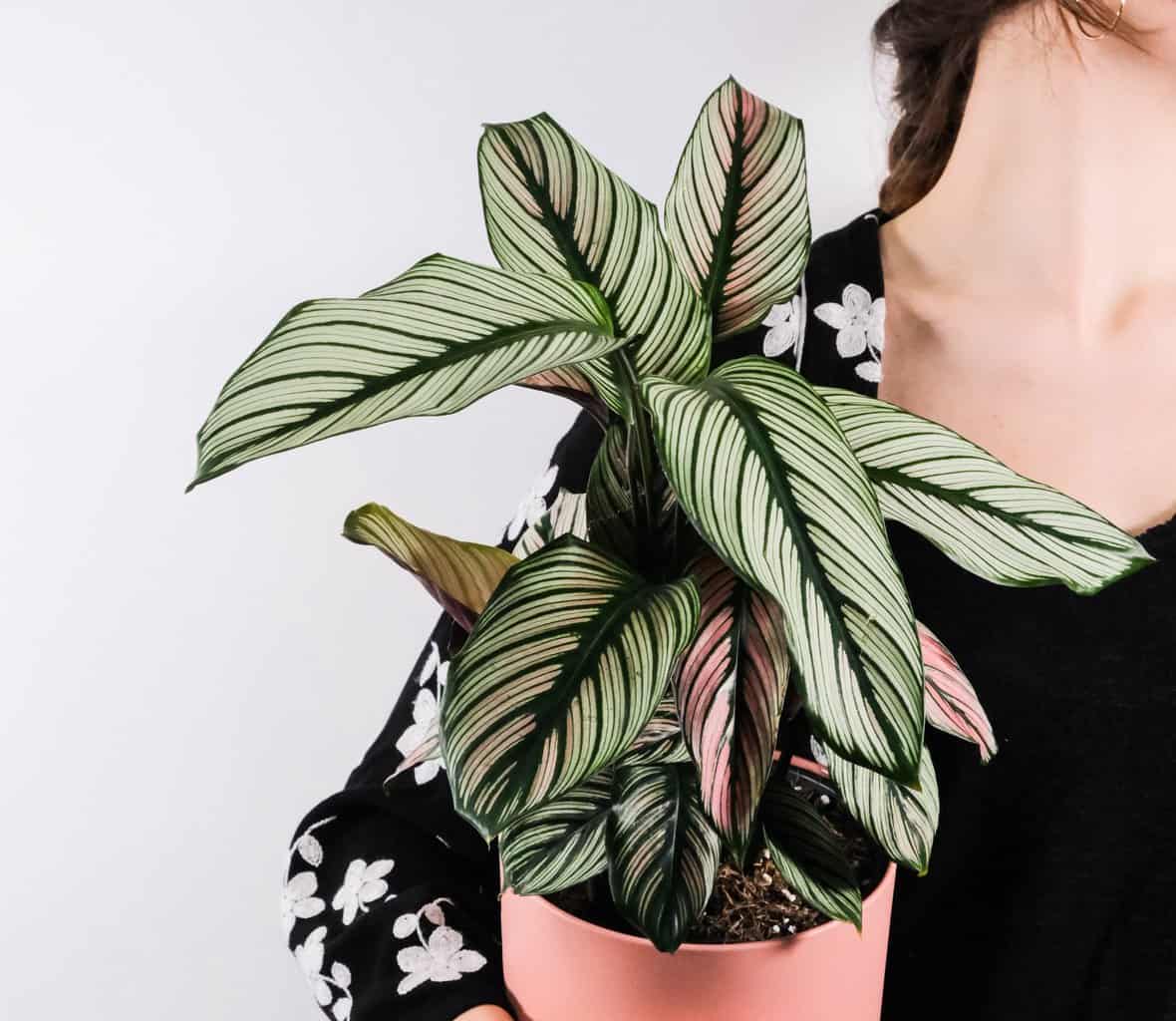
Variegated String of Hearts (pattern-gene variegation)

Anthurium Regale (reflective variegation)
Scindapsus Pictus (reflective variegation)
Final Thoughts
One thing is for sure this houseplant trend will still stick around. We hope that the above tips help you keep those variegated leaves when you receive them from the nursery and that it does not turn to green leaves.
Whether you want to buy, sell or simply reach out to other plant enthusiasts, Plantly is the right place to be!