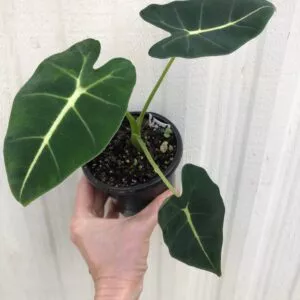
Look at the Yucatan princess with its large elephant ears for a spectacular plant to grow indoors in the Alocasia genus. The new growth starts light green, turning dark green. One thing is for sure it makes for an exceptional statement piece in the living space.
Plant Name: Alocasia sarawakensis Yucatan Princess
Other Name: Yucatan Princess, Alocasia Yucatan Princess, or Elephant Ear
Plant Type: Tuberous Perennial
Native Areas: Borneo
Light Requirement: Bright Indirect Light
Watering: Moderate
Fertilizer: Liquid Fertilizer
Toxicity: Toxic to humans and pets
Temperature: 65°F to 75°F
Propagation: Rhizomes and offsets
Growth: 8 feet tall
Soil Type: Slightly acidic soil
USDA Hardiness Zones: Cold hardy in zone 9
What is Alocasia Yucatan Princess Plant?
The Yucatan princess, also known as the elephant ear plant, is a tuberous perennial plant belonging to the arum family. There are more than 80 species of Alocasia, with most of them found growing in tropical and subtropical Asia.
This elephant ear can reach up to eight feet tall but reaches a height of 3 feet, growing as an indoor plant given the correct indoor, lighting exposure. The glossy leaves stand on chocolate brown stems and unfurl in a glossy gray-green with maroon undersides.
The Yucatan princess rarely blooms indoors, but when it does, you see the creamy white flowers. Still, these plants are not grown for the blooms but more for the colorful foliage and prominent veins on the leaves. It is grown outdoors or indoors as a houseplant.
As with the other cultivars in the genus, the Alocasia sarawakensis Yucatan princess is toxic to humans and pets. All parts of the plant consist of calcium oxalate crystals that cause abdominal discomfort.
Alocasia Sarawakensis Yucatan Princess Care Guide

The short and sweet of Alocasia Yucatan princess care, even if it gets a bad rap for being difficult to grow, it is not a fussy plant once you do get the hang of caring for it. Care-wise, it needs the right potting soil with water and fertilizer and enough indirect light to thrive.
Soil Requirements For Tropical and Subtropical Asia Plants
Your Alocasia Yucatan princess needs well-draining, acidic, coarse moist soil for healthy growth. We recommend avoiding heavy soils filled with peat moss, sphagnum, or coco coir as they are too moisture retentive for your tropical plant that is sensitive to overwatering.
We recommend the following fresh potting soil mix:
One part of potting soil
Two parts perlite
One part orchid bark
One part of horticultural charcoal
As you can see, only 20% of the potting mix is present, with 80% chunky amendments giving your plant space to breathe and excess water to drain.
Ideal Lighting Is it Direct Sunlight or Indirect Light Requirements

Like most varieties in the genus, when it comes to Alocasia Yucatan princess care, it grows best in bright indirect light. So, your plant needs at least six hours of bright light to grow. Depending on where you live, an ideal spot is the south-facing window placed three feet away.
During the winter, we recommend using grow lights.
Watering Yucatan Princess
You can expect to water your Alocasia Yucatan princess once a week, depending on the temperature, time of year, and the size of your plant.
During spring and summer, you will water more during the growing season than in winter. Still, do the finger test to see if the soil’s top two inches are dry before watering.
The rule is not to overwater, which can lead to root rot. So, avoid root rot by double-checking the soil moisture first.
Temperature and Humidity
The tuberous perennial beauty grows in warm temperatures between 65°F and 75°F.
The tropical plant does not enjoy sudden temperature changes below 65°F. Therefore, it is susceptible to cold injury resulting in leaf drop to no growth.

As a native plant, it needs high humidity to develop those large lush leaves. Therefore, we recommend aiming for more than 50%.
If you do not have a humid environment, it helps to place a pebble tray with water underneath your plant without the water touching the roots.
Or invest in a humidifier or group it with other humid-loving plants when low humidity is present.
Fertilizing Yucatan Princess
Giving your Alocasia Yucatan princess a monthly feed during the growing season will do wonders for your plant. You can use a liquid fertilizer made for your tropical Alocasia plant. Select a urea-free one and use it with your regular watering routine to dilute the feed, preventing root burn.

In the fall, refrain from feeding as it reaches the dormant period with winter on hand.
Repotting Elephant Ear
You only need to repot your elephant ear when it becomes root bound, with the roots growing out of the drainage holes. The best time to do this is in spring using a container two inches larger than the one it is growing in.
It also helps to water your plant well the day before and provide your tropical plant with fresh potting soil and partial shade, as it helps prevent transplant shock. Luckily this outdoor plant has slow growth.
Pruning Alocasia Yucatan Princess
The elephant ear always benefits from light pruning to control the growth, making it look bushy. The best time to prune your Yucatan princess is in spring when actively growing. Also, ensure to cut above a leaf node as this is where new growth emerges.
Propagating Yucatan Princess
You can propagate your Yucatan princess using rhizome cuttings or removing offsets from the mother plant. Still, ensure you have a healthy plant to do this and wait until your plant matures. The recommended time to do this is in spring and summer.
Rhizome Division

A day before taking a cutting from the rhizome, water your plant well. Then, use a sterilized knife cleaned with 70% isopropyl solution.
Unpot your Yucatan princess and tease the roots out of the soil with your fingers.
Take your knife and remove a portion of the tuber with a few roots and stems attached.
Fill a container with moist soil with enough drainage holes and repot the tuber.
Place the parent plant back in the pot and provide both plants with humidity and indirect sunlight.
It will take your elephant ear six weeks to root and may show some stress at this time. Yet, when new growth appears, you know your plants have recovered.
Offsets
As with the division, water your plant well the day before.
Then wiggle the plant out of the container and remove the compacted soil to help dislodge the rootball.
Look at the mother plant at the rootball for clumps forming.
Gently separate the corms in a new pot with fresh soil. Then, return the parent plant to its current pot.
Place both plants in a warm spot with high humidity and indirect sunlight, avoiding full sun.
Both plants might show signs of stress with drooping leaves, as it can take up to six weeks for new growth to appear.
Alocasia Yucatan Princess Similar Plants
When you look at the Yucatan princess, you can easily confuse it with another similar plant, like the Alocasia pink dragon. Both these tropical plants have pink stems with large leaves, but they are two different species. The pink dragon has more prominent light green veins, while your Yucatan princess’s vein color resembles the leaf.
Other varieties that we love are as follows:
The Alocasia cuprea, known as the mirror plant, is another popular variety with copper sheen foliage. Check our article Alocasia Cuprea Plant Care for more information and a care guide.
The Alocasia Tiny Dancer is an unusual aroid with spectacular foliage.
As with most varieties in the genus, these plants prefer bright indirect light to direct sunlight. Also, avoid poor drainage making your plant six, and all of these plants are highly toxic.
Common Pests and Diseases Affecting Alocasia Yucatan Princess Plant
One of the big culprits that bother your Yucatan princess is spider mites. Here are some tips to handle the problem:
Take some neem oil and dilute it with water to apply directly to the soil. It works as a preventative measure. Mix one tablespoon of neem oil with 1/3 tablespoon of castile soap and one liter of lukewarm water.
Another helpful solution is dinotefuran with abamectin, which helps keep your Yucatan princess pest-free.
Also, examine your plant’s leaves for fine webbing before taking your new plant indoors.
Keep inspecting the plant leaves for pests to catch them early, and keep a bottle of Bonide Insecticide Soapy Spray on hand to apply when you see these pests.
Another concern with your Alocasia Yucatan princess is bacterial leaf spots from overwatering or cold temperatures. The areas start tan turning to brown, then yellow or black.
It happens mostly when the foliage remains wet for hours, and best to water your plant near the soil line. Also, use a humidifier to increase humidity instead of misting.
Another disease is pythium rot which happens with poor drainage. The air supply of the roots is cut off with stagnant water resulting in the rotting of the roots.
Signs of Overwatering or Underwatering Alocasia Yucatan Princess Plant
When grown indoors, overwatering can happen, and the leaves turning yellow is a sure sign of it. But yellow leaves can also mean underwatering your plant. The best is to determine if the soil is dry or soggy to determine the cause.
Whether you want to buy, sell, or simply reach out to other plant enthusiasts, Plantly is the right place to be!