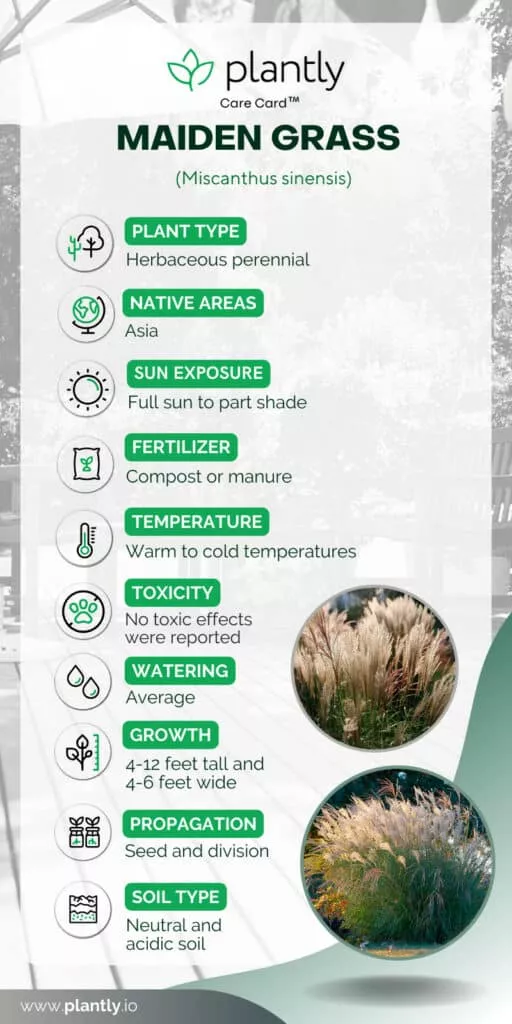
Maiden grass, or Chinese silver grass, is an ornamental grass with graceful arching leaves with copper-colored plumes or flower heads. You see the copper-colored plumes in fall transforming to silvery white plumes adding seasonal interest to the garden.
The Gracillimus maiden hair grass has slow growth reaching a foot in the first year. Still, by the third year, it can have a growth spurt. The best time to plant your maiden grass is in spring or fall, providing enough time to establish before winter. 😊
Another fantastic thing is that it adds winter interest or an accent plant to the garden, and you can also use it with cut flowers to brighten up your living space. The grass looks fabulous from early fall to late summer and thrives in full sun. Furthermore, it is deer-resistant, drought-tolerant, and looks fabulous anywhere.
More About Miscanthus Sinensis Gracillimus

To add winter interest to your garden, the Gracillimus maiden grass is attractive as it can produce substantial foliage.
The Chinese silver grass has an ornamental display in early spring to late winter. Some detailed information that stands out with this grass Gracillimus is the arching form with coppery flower heads in early fall changing to silver in winter.
⚠️Still, a note of warning is that the U.S. Forest Service reports that the Miscanthus sinensis Gracillimus is an invasive species in different parts of the country. Another thing is that if you can grow the Gracillimus maiden as ornamental grass, you can use the flower plumes as dried flowers.
Furthermore, it does not only add visual interest with the golden bronze color, but it is also deer-resistant.
Miscanthus Sinensis Gracillimus Varieties
You can find different types of maiden grass belonging to the Miscanthus sinensis genus, and some of the following are prized for their variegated foliage:
Miscanthus Sinensis Zebrinus

Zebra grass grows with horizontal golden bands and has an arching form.
Miscanthus Sinensis Strictus

The porcupine grass also has yellow horizontal bands but has an erect form looking like the porcupine coils.
Miscanthus Sinensis Variegatus

The variegated Japanese silver grass has vertical white stripes with an arching form.
Gracillimus Maiden Grass Care
When it comes to caring for the Gracillimus maiden grass, there are a few requirements you need to consider:
Always plant the Gracillimus maiden grass around a water 💦 feature as a huge safety measure. Also, avoid planting the grass if you live in areas with wildfires.
Keep the ground evenly moist when young; mature clumps are more drought-tolerant once established.
Also, plant your Chinese silver grass in well-drained soil, but it can also be grown in clay soil.
Miscanthus Sinensis Light Needs
The maiden grass thrives in full sun to partial shade. You can provide your Gracillimus maiden grass with six hours of direct light daily. It can also handle some shade, but too much shade will not allow you to enjoy those beautiful flower plumes adding winter interest to the garden. The foliage turns from copper to silver throughout the year.
Chinese Silver Grass Soil Needs

Gracillimus maiden grass can thrive in different soil conditions but prefers moist soils filled with organic matter that drains well. It can tolerate excessive drought and moisture and grows in salty environments in clay to sandy soil. So, you can grow the grass Gracillimus in a coastal landscape.
Watering Gracillimus Maiden Hair Grass

After planting your Miscanthus sinensis Gracillimus maiden grass, you must soak them well to help the root system become established. Please water 💦 at the root level to prevent plant rust when the foliage is burned with water.
You can expect to water your Miscanthus sinensis Gracillimus every three days in the first growing season. Once your ornamental grass becomes established, it is somewhat drought-tolerant. Hence, it can rely on normal watering from the rainfall.
Temperature and Humidity From Early Spring to Winter

Maiden grass prefers moist soils and warm weather. Hence, it thrives in full sun in the southern regions with temperatures reaching 80°F to 95°F. But the Chinese silver grass can also tolerate cold temperatures as it is cold hardy.
Overwintering Chinese Silver Grass
When early fall arrives, and you see dead grass stalks waving in the breeze during winter dormancy, leave them. These stalks work as mulch to protect the crown underground. Furthermore, the waving grass is winter interest in the garden with snow ❄️.
As the winter passes, you can remove some stalks to use dried flowers. One thing is that the ornamental grass handles winter temperatures well.
Fertilizing Miscanthus Sinensis Gracillimus

The ornamental grass works perfectly with the water supplied and needs no added feed or pesticides. You can use some compost, manure, or organic matter worked into the sand or clay soil to provide well-drained soil and nutrients.
Pruning Miscanthus Sinensis Gracillimus
To keep your ornamental grass healthy, cut them back in early spring or late winter before new shoots appear. Using hedge clippers, you can secure the top with rope and cut about three inches from the ground.
Also, wear gloves with long sleeves as the foliage is relatively sharp. You can prune the flower plumes before their seeds invade your landscape. The plumes look beautiful with cut flowers 💐. Chinese silver grass can self-sow, becoming a problem in the landscape.
Propagating Maiden Grass
The best way to propagate the ornamental grass is through division in early spring before new growth appears. But you can also grow it from seeds. You can divide your Miscanthus sinensis Gracillimus every three years to help reenergize the growth.
You may notice in mid-fall that the center starts to die out, which means it is time to divide them. Still, before dividing your maiden grass, cut the foliage to three inches above the ground in late winter or early spring. Doing this helps to produce substantial foliage.
Dividing Plants
Take a pointed spade or shovel.
Now, dig around the rhizomes of the root ball and do this deeply until you reach under the root ball.
Dig a circle around your plant to hoist it with the whole root ball.
Next, plunge the shove edge into the root system to split it in half. Divide the halves where possible.
Now, plant them three to six inches apart as it needs space for the mature clumps to form.
Drench your plants with water.
Growing From Seeds
Start your new shoots indoors as follow in early spring:
Fill a tray with potting soil and press one or two seeds onto the soil.
Leave them without covering them with soil, as it needs light to germinate.
Keep the soil moist and aerated.
Place the tray in a warm spot with full sun and temperatures above 60°F.
Your seedlings should sprout in two to three weeks.
As soon the soil outside warms up and there is no threat of frost, you can transplant them outdoors.
Common Pest and Diseases
The Miscanthus sinensis Gracillimus is not bothered by many pests or diseases except rust. The fungus spreads via spores and happens when watering and moisture remains behind on the foliage. For this reason, it is best to water at the base of the plant.

How to Get Miscanthus Sinensis Gracillimus Maiden Grass to Bloom
The maiden grass blooms copper-colored plumes in late summer, turning to silver with white seedheads in fall and winter. The flowers look like wispy plumes and have no scent but are feathery and rust-colored. It changes color to a silver tone. During fall and winter, the fluffy plumes form small flower clusters on the stalk.
If you have problems getting your maiden grass Gracillimus to bloom, it can result from an unusual summer or standing in wet winters. It flowers best when warm and sunny. With soggy soil, it can result in root rot and death.
To avoid this, add grit or sand to provide your maiden grass with well-draining soil. Or you need to relocate your plant to a sunny spot in the garden. Also, beware of leaving the flower in tack as it self-seeds, and best to deadhead before it develops.
Whether you want to buy, sell, or simply reach out to other plant enthusiasts, Plantly is the right place to be!