Spanish moss is a plant that most people know as it gently sways around in the breeze, draping branches looking like tree hair.
You find Spanish moss in most parts of Central to South America, but why is it called Spanish moss? Is this plant Spanish 😂? Is it moss, or is this plant something entirely else?
Stay a bit longer to learn tips for Spanish moss care to keep it alive with us. While here, you can also check out how to care for air plants and another moss, Tillandsia ionantha.
Plant Name: Tillandsia usneoides
Other Name: Spanish moss, Old Man’s Beard, Spanish Beard, Tree Hair, Kali’s Hair, French hair
Plant Type: Epithytic
Native Areas: Central and Southern United States
Light Requirement: Indirect sunlight
Watering: Regular watering indoors
Fertilizer: Bromeliad feed
Toxicity: Non-toxic
Temperature: Tropical climates and moist environments
Propagation: Offshoots
Growth: 20 to 25 feet long
Soil Type: No need for soil
USDA Hardiness Zones: 8-11
More About Tillandsia Usneoides

Spanish moss is an epiphytic flowering plant that lives on host plants like bald cypress trees or oak trees in the garden. Hence, growing this air plant requires some form of a tree as a growing medium.
Still, these plants prefer Southern live oaks, which does not mean you cannot grow them like other indoor plants.
Now where did the name Spanish moss originate? It came from the word Spanish beard, but Native Americans call it itla-okla, meaning tree hair.
Others thought 🤔 it resembled the long beards of conquistadors and called it Barbe Espagnol, meaning Spanish beard.
Over time it became known as Spanish moss and was native to mainly North America in Texas and Virginia. Still, the Tillandsia usneoides trendils hang in a moist environment from different trees.
Then you find Mexico, South America, and Central America, where you find humid air around large trees. Another interesting thing is that the plant people used for cushioning car seats and mattresses in 1930.
Spanish Moss Varieties
Another fascinating thing is that the plant is not even a moss and a bromeliad, a relative of the pineapple 🍍. As it is epiphytic, it lacks roots and grows on trees to take in the nutrition to moisture through the foliage.
Munro’s Filiformis, Silver Ghost, El Finito
Compared to other air plants, this variety you find native to Paraguay is sold as the Silver Ghost. It has fine smooth tendril leaves with a gray-green shade. When in bloom, you see greenish-tinged flowers.
Maurice’s Robusta
The air plant has thicker leaves in gray-green but leans more to the grayish side when watered. It is native to Mexico and blooms yellow-green to yellow flowers.
Odin’s Genuina
The air plant has fine silver leaves with yellow-brown flowers when in bloom.
Spanish Gold
The moss plant has bright yellow tiny flowers with slender gray-green foliage with highlights of gold.
Care For Spanish Moss
To grow Spanish moss is not too difficult as it does grow wild in most parts of the southeastern United States. But there are a few things you can do to help with Spanish moss care to ensure its longevity. Here are a few of our recommendations.
Recommended Light Air Plant
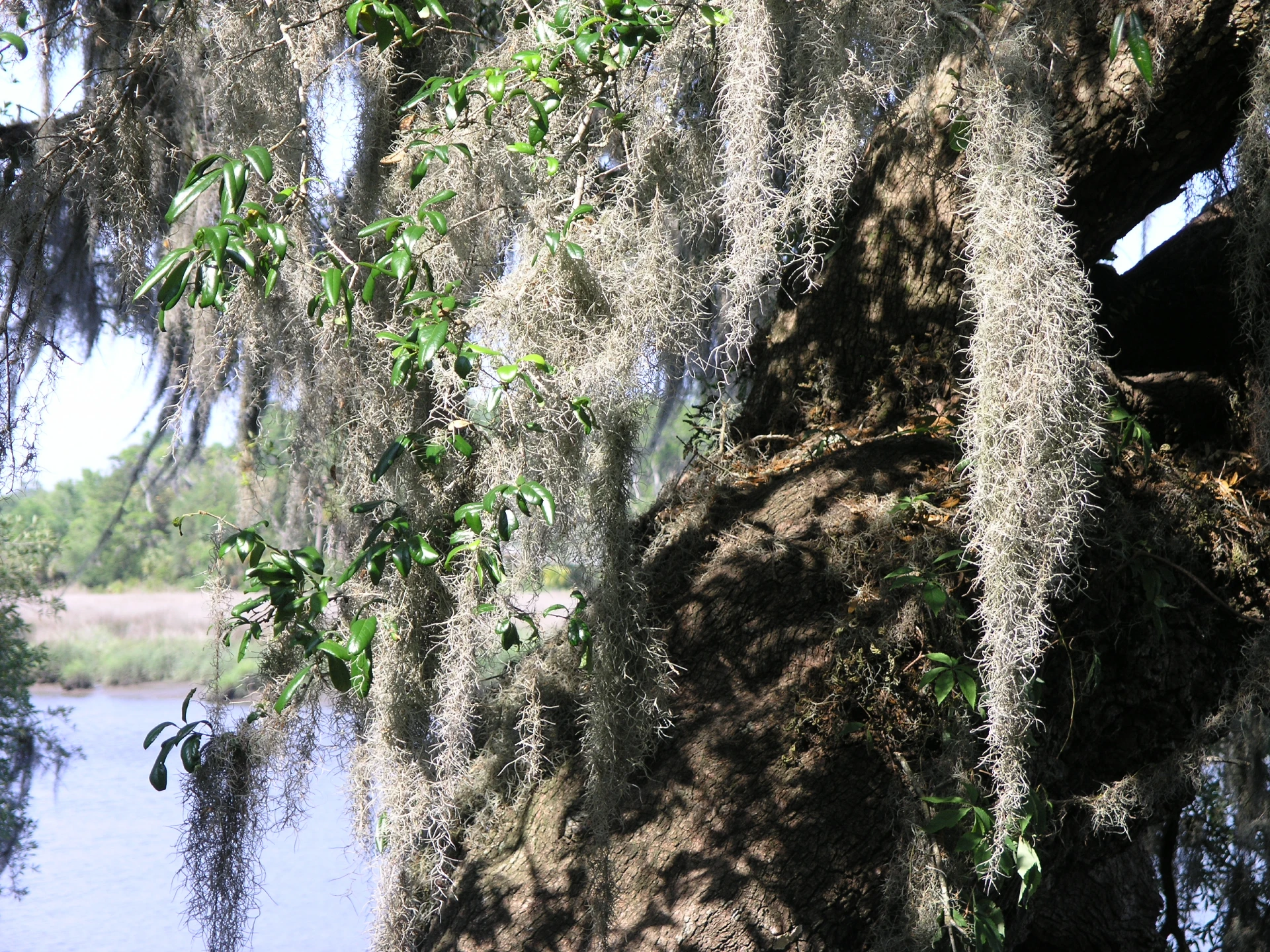
Whether grown outdoors or deciding to be grown indoors, it needs the right balance of light.
Spanish moss in its natural habitat grows under trees in the natural environment, so it needs ambient humidity with indirect light and not direct sunlight.
While it can handle some direct light in non-tropical regions, limiting it to only the morning to receive direct sun with part shade in the afternoon is best.
Spanish Moss Container
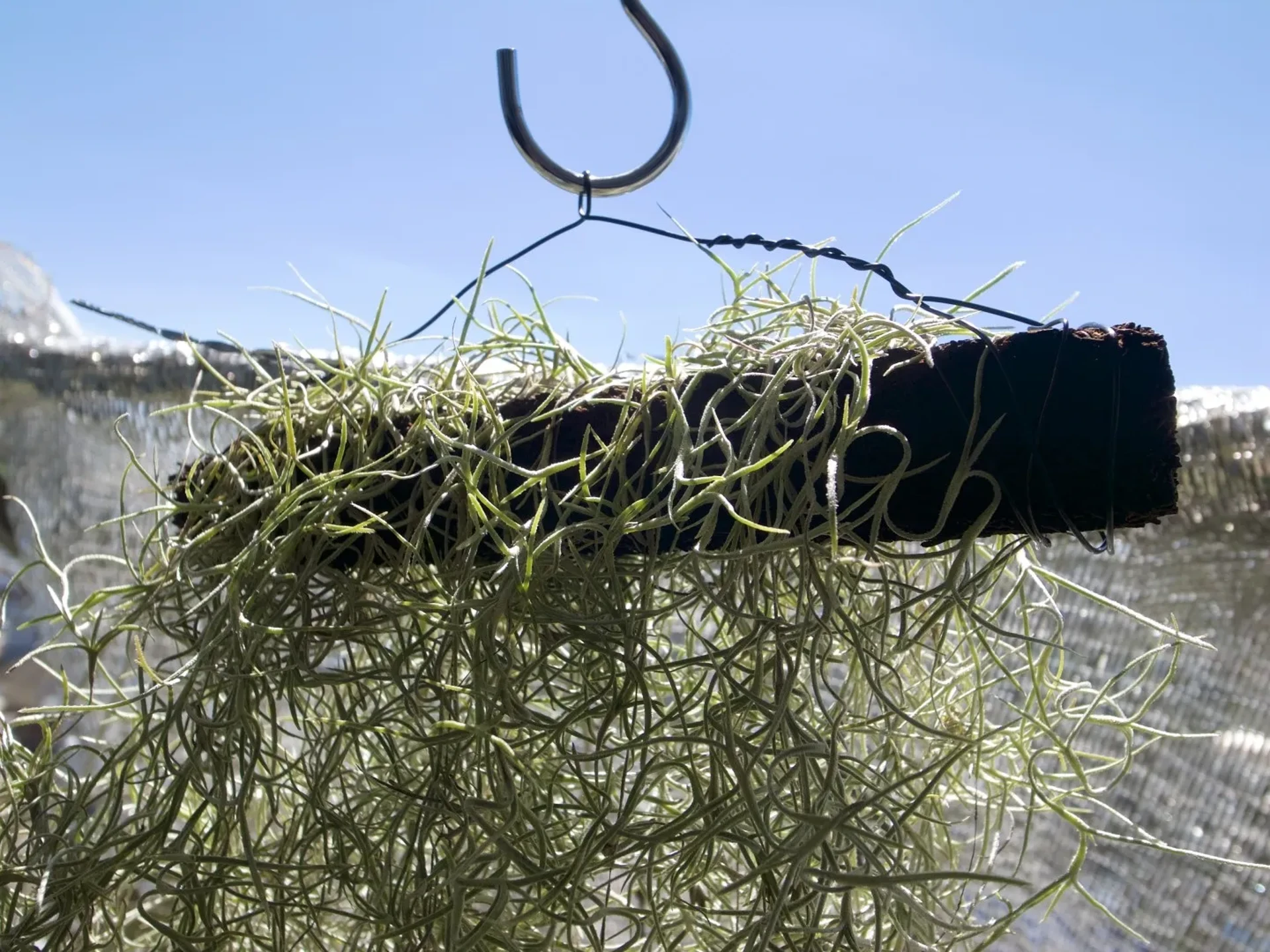
Compared to other species, moss grows on a host tree and does not need soil to thrive. You can hang your Spanish moss from a hook to grow or glue it to other surfaces or wood. You can even drape your Tillandsia plants from other plants.
Hence place Spanish moss in a hanging planter to make a beautiful centerpiece. The important thing is to prevent the air plant from forming a dense clump like a ball, or it might not be able to receive fresh air on all the strands and will die off.
Also, keep in mind that the entire plant will need water regularly, and best to use a container where you can easily remove your plant or something you can soak it in.
Interesting Tip: Some growers grow air plants successfully using bald cypress and old oak tree branches. In contrast, others grow Spanish moss indoors on wireframes and must not bundle up. It is not grown as a potted plant.
How to Water Spanish Moss
It thrives in moist, humid environments for Spanish moss care and watering. Still, it does not enjoy being wet for too long as it can result in rot.
It will need frequent watering but only when completely dry or in low humidity. Then give it a good soaking from the top with room temperature water and gently shake it out of the foliage.
For watering an old man’s beard indoors, place a bucket over the plant and pour water over it until it drips.
You can mist your plant in between soaking if needed but use distilled water or rainwater compared to tap water.
Too much chlorine can result in problems and kill it. When freshly watered, you will notice a greenish tinge on the foliage, but they return to gray-green or silver.
Temperature and Humidity

Spanish moss care provides them with the right temperature and humidity. For indoor growing, Spanish moss can thrive at room temperature.
The Tillandsia usneoides can even handle light frost if it remains dry. But when exposed to very low temperatures, they go dormant and can return fine when they warm up.
The Spanish moss is hardy in the growing zones 8-11 but will need protection from freezing temperatures. Most importantly, please provide them with good air circulation for all parts of the plant to thrive.
Fertilizer to Grow Spanish Moss
Spanish moss in the wild prefers growing on a host tree with a high degree of foliar leaching. Hence, they get enough nutrients and minerals to grow. Still, when growing Spanish moss indoors, you must find a way to provide them with the nutrients needed during the growing season.
If you have a pond or aquarium, then feeding your air plants is not a problem as you can soak them in the water instead of using other types of water as they benefit from the fish 🐠 poop as fertilizer. But if you must use tap water, you can find a bromeliad fertilizer.
You find them available in sprays or powder form to dissolve in water. You can spray or soak them every few weeks during spring and summer.
Pruning Spanish Moss Plant
Spanish moss prefers growing by itself and does not need pruning. But you can trim or snip the ends to maintain the length. But do not do this too much or often, as it will cause more side shoots to form. The Spanish moss is a slow grower.
Propagating Tillandsia Usneoides
As with most bromeliads, you can cultivate Spanish moss using the offshoots. Hence, Spanish moss grows from the side shoots you can cut to grow a new plant.
Trim off one of the Tillandsia usneoides side shoots and treat it as a new plant.
Alternatively, you can grow them from seed, but you must be there at the right time to harvest them. The problem is that the seed is fluffy, the wind blows it away, and best started using an offshoot.
For cuttings, first, prepare the spot where you want to hang it from. Then drap your air plant overtop and water it well. When completely dry, water it again for it to grow.
Troubleshooting Spanish Moss Care
When growing in bright indirect light in its natural environment, the Spanish moss rarely is bothered by pests. It can house wildlife, but some problems can arise.
Growing Problems With Spanish Moss
Some problems are over or underwatering your plant leading to brown dry tips showing a lack of water or low humidity. Please provide them with more water to prevent this from happening.
The same can happen with overwatering, leading to browning but mushy foliage, and best to allow your plant to dry between watering.
Spanish Moss Pests
A primary concern is spider mites and some species of butterflies to boll weevils. You can use insecticide or neem oil spray to keep these pests away. When grown outdoors and it dies falling to the ground, frogs can use it as a home. At the same time, birds harvest on the air plant for nesting material, whether alive or dead.
Lastly, the Spanish moss care is a breeze as the plant is mostly disease-free but can get rot from overwatering.
Whether you want to buy, sell, or simply reach out to other plant enthusiasts, Plantly is the right place to be!