Today we will share some care tips on a plant with a strange name with lovely flowers; the turtlehead plant. 😊
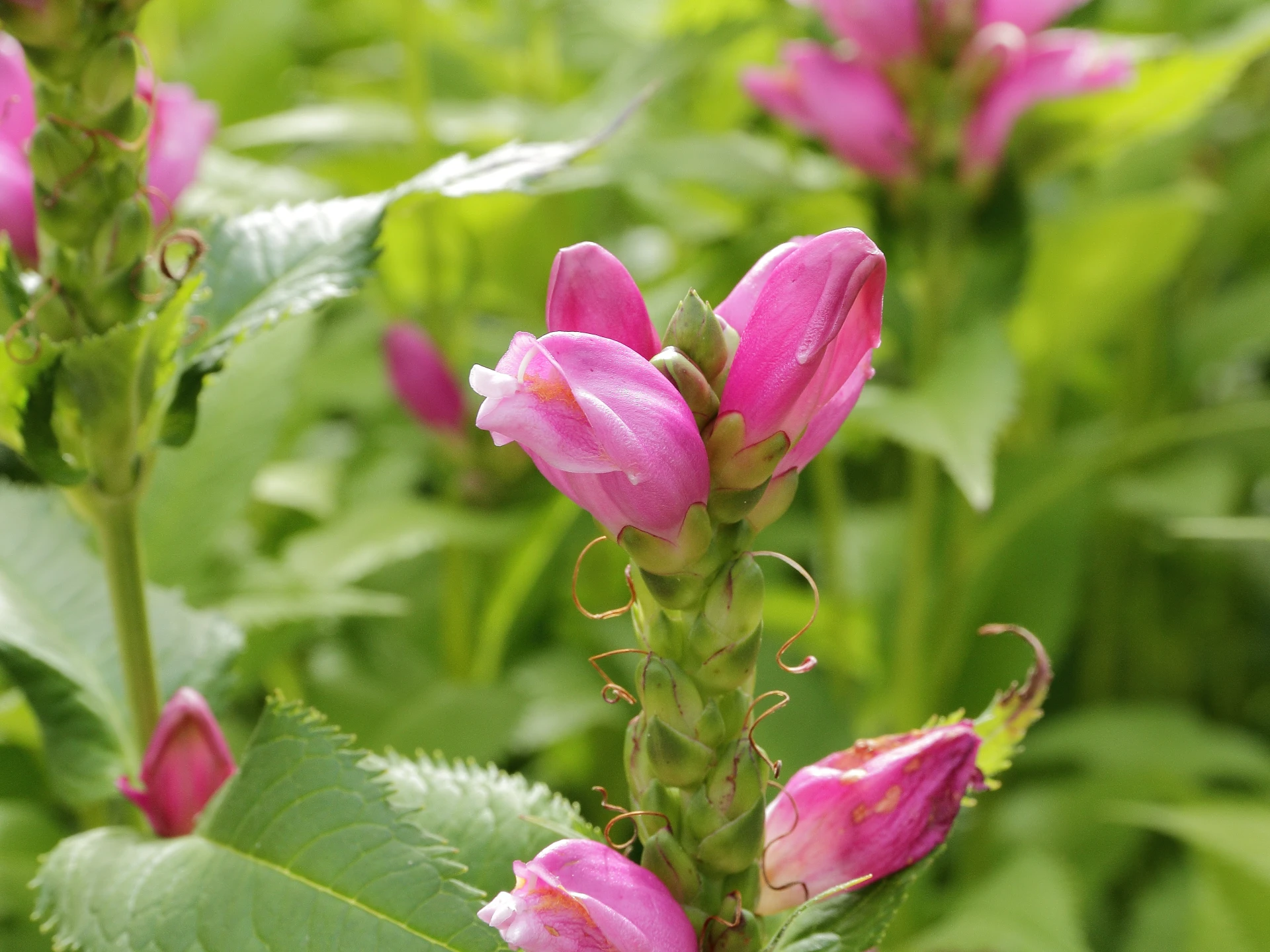
The clump-forming plants look fabulous on a perennial border and are native to the eastern United States. The hooded flowers look like snapdragon blooms but resemble turtle 🐢 heads, so cute. Still, the exciting thing is the name Chelone comes from ancient Greek mythology.
The story goes that a nymph named Chelone did not attend Zeus and Heras’s marriage, and she was tossed into the river and transformed into a tortoise carrying her home around with her on her back.

Additional Turtle Heads Plants Information
There are different varieties of turtlehead plants, but they all share similar growing conditions but only vary in appearance and size. The bloom time to color and the native range differ as well.
For example, the red turtlehead plants blooms in mid-summer or early fall. The plant prefers a bog garden but can also be cultivated in part shade in a home garden. The plants have dark green foliage with oval leaves slightly toothed.
The stems stand up straight even when they flower.
Then you have other cultivars known as the pink turtlehead with pink flowers with a white turtlehead blooming white flowers. These plants you can plant in spring or summer to enjoy established plants before winter.
It is a slow-growing plant hardy in the USDA zone 5 to 9, and it can bloom for three to six weeks, making it worthwhile in any woodland flower garden.
Turtlehead Plants Varieties
Several cultivars and hybrids of the turtlehead plants are available, some rare plants and others well-known.
The Chelone obliqua ‘Alba’ blooms white flowers in late summer.
The Chelone obliqua ‘Tiny Tortuga‘ is a dwarf variety with rose pink blooms in early fall or mid-summer.
The Chelone glabra, known as the white turtlehead plant or Balmony, is showy with ivory blooms in late summer to early fall.
The Chelone glabra ‘Black Ace’ has black foliage in early spring and blooms in late summer.
The Chelone Iyonii, or pink turtlehead, has long stems with a bushy appearance, and flowers range from light pink to deep rose 🌹 or red.
The Chelone Iyonii ‘Hot Lips’ bloom pink flowers in mid-summer to fall.
Chelone Plants Care
These native plants prefer moist soil with dappled sunlight but can also tolerate shade. Chelone plants do not like poorly drained sites or dry soil. When grown in direct sunlight, it helps provide a layer of leaf mulch to keep the roots wet and cool.
Turtlehead Garden Care and Light

The plants thrive in wild gardens in full sun but can tolerate some shade. This plant belongs to the figwort family, a bitter herb, and grows beneath tree canopies in the wild.
When grown in direct sun, keep the soil moist or choose one more tolerant for the bright sunlight like the Chelone lyonii.
Still, these cultivars require light to bloom. You will love that these plants attract hummingbirds and pollinators to a woodland setting.
Chelone spp Soil Requirements

The species prefer organically rich, moist soil with a soil Ph between 6.0 and 7.0. The plant’s roots spread slowly, and prefers soil with good drainage. Another attraction is that the terminal spikes with blooms attract the Baltimore checkerspot butterflies 🦋.
Water Garden Needs For Turtlehead Plant

Turtlehead grows along stream banks and thrives in moist to wet soil. Hence, new plants need to be kept moist throughout the growing season. The less water they receive, the more they will suffer.
Temperature and Humidity
Whether you have a Chelone glabra or other species, they prefer moisture and do not do well in arid and hot climates. Provide your plants with some dappled light and mulch in warm regions.
Fertilizing Turtleheads

Please do not feed your species during the first growing season. You can feed them yearly in spring using a balanced liquid fertilizer to encourage blooms.
Pruning Turtlehead
The blooms of these species make for beautiful cut flowers in a vase. The flowers attract butterflies as well. But when your plant starts to flop, it helps to pinch or prune them back in mid-spring.
How to Get Turtlehead to Flower
Once you have an established plant, you can pinch the tips of the shoots as it helps train them to grow bushy to produce blossoms. It would be best if you also did not deadhead (remove the spent flowers), as you can leave them to dry to collect the seeds. These plants self-seed easily and spread slowly.
How To Propagate Turtlehead
You can quickly grow new plants by dividing your turtlehead plant in early spring when the shoots stand one inch high. In warm climates, we recommend doing this in early fall.
Use a shovel to lift the clumps from the ground and separate them into smaller clusters with three established shoots in each section.
Dig a hole for each section at the same depth as the clump and place it in the hole.
Backfill with potting medium and press it down around the roots.
Water well and ensure it has moisture until it becomes established. Avoid feeding your plants in the first year.
How to Grow Turtlehead From Seed
You can also sow seeds indoors, but some species need cold stratification to germinate. The best time to sow seeds is in spring, and if you live in colder climates, you can start them indoors to transplant them outside after the last frost.
Use seed trays or cell packs and fill them with moist sterile potting soil.
Press the seeds into the potting mix and keep them moist.
Place your seedlings in light to germinate; it should take up to six weeks.
Please wait until your seedlings are six inches high to harden them for growing outside.
If the ground is compact, add peat moss before transplanting them into the garden.
Common Pests and Diseases
The good news is that your turtleheads are seldom bothered by pests or diseases, but they have some common problems.



Common Problems with Turtlehead
These plants can develop powdery mildew with moisture fluctuations in the growing environment. The water you plant at the base instead of over the foliage prevents powdery mildew from forming.
Whether you want to buy, sell, or simply reach out to other plant enthusiasts, Plantly is the right place to be!