For a tree that can grow easily as a very graceful single specimen in the home or garden with fluffy foliage, the Vanderwolf’s Pyramid Limber Pine comes to mind. 😄
The care-free low-maintenance tree has a slow growth to grow in garden beds or tree/shrubbed beds.
Furthermore, it can become a dramatic bonsai tree when trained. Still, it is a rare plant with a unique appearance and pyramidal habit.
But with this in mind, and if you decide to get one, what is the care, as we mentioned, low-maintenance? Well, keep reading as we would like it if you stay a while longer.
Plant Name: Pinus flexilis Vanderwolf’s Pyramid
Other Name: Vanderwolf’s Pyramid Limber Pine, Limber Pine, Limbertwig, Rocky Mountain Pine
Plant Type: Evergreen trees
Native Areas: Rocky Mountains in the USA and Canada
Light Requirement: Full sunny location
Watering: Regular Watering
Fertilizer: All-purpose fertilizer for trees
Toxicity: Toxic to humans and pets
Temperature: Cooler temperatures
Propagation: Seed and cuttings
Growth: 60 feet tall and up to 40 feet wide
Soil Type: Well-drained soil
USDA Hardiness Zones: 4-7
More About Vanderwolf’s Pyramid Limber Pine
The botanical term for this adaptable standout feature evergreen is Pinus flexilis which belongs to the Pincaceae family. Hence, you can expect an evergreen color year-round in your garden.
You find the Vanderwolf’s Pyramid Pine 🌲 growing in expansive estate-sized landscapes and a native limber pine found in the Rocky Mountain foothill regions.
Thus you can grow these trees as a very graceful single specimen in the following hardiness growing zones 4-7. The tree also has a moderate plant tolerance and grows slowly, reaching 60 feet tall and 40 feet wide with dance branches and a pyramidal shape.
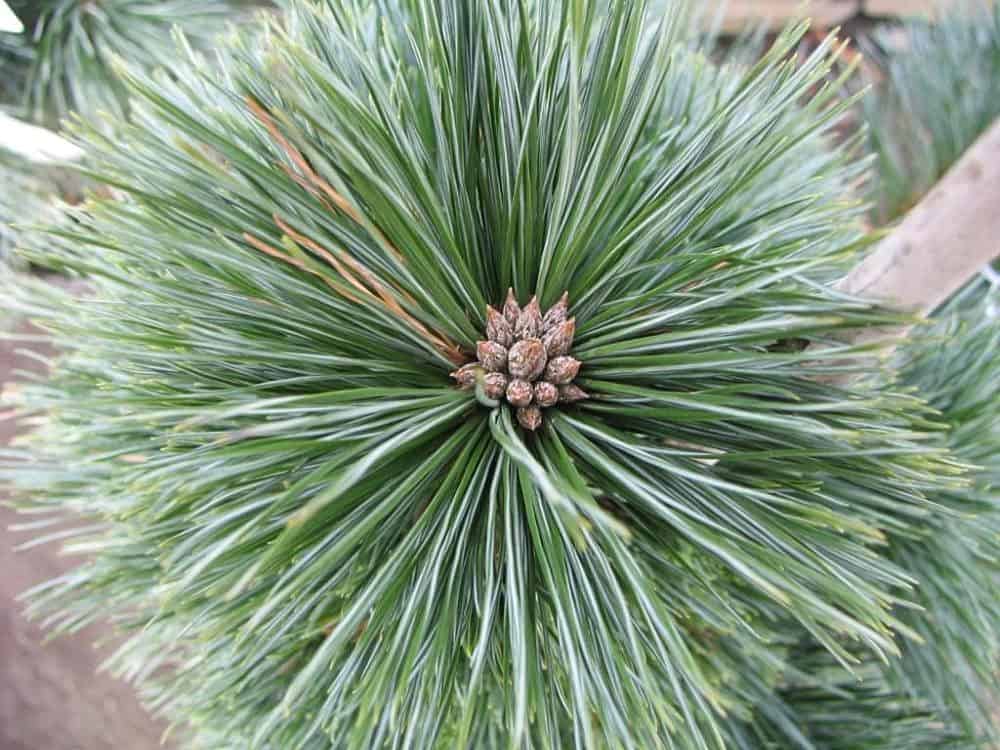
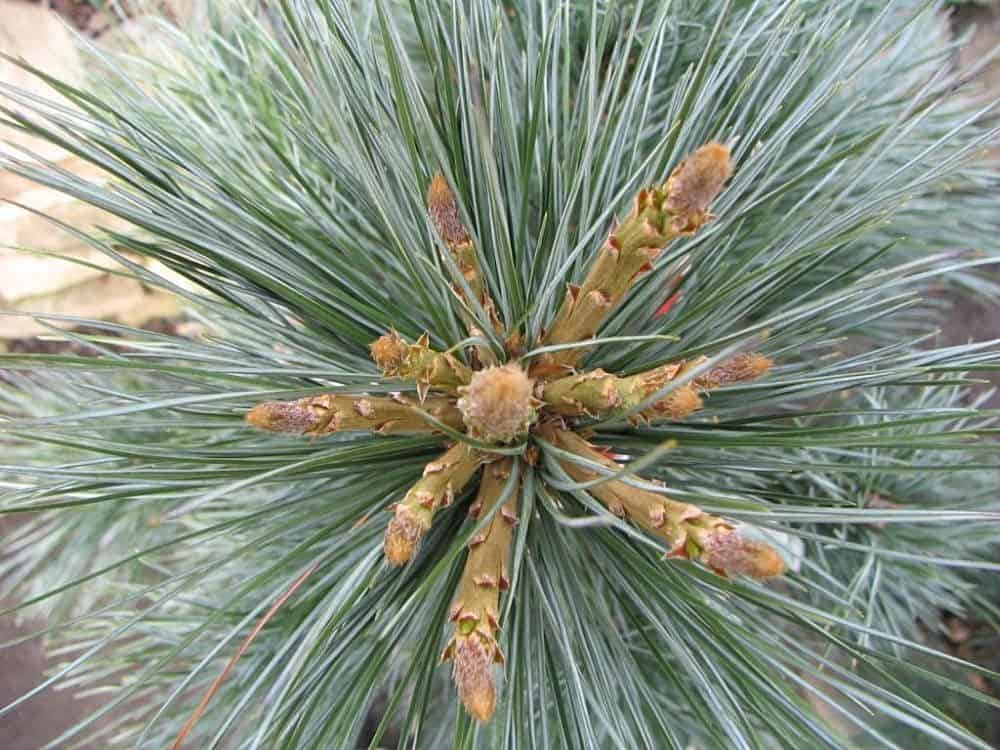
The limber pines’ prime time is spring to winter. The pine produces fluffy foliage, dense branches, blue-green needles, and decorative pine cones. In addition, to add color to natural landscapes, these native species have brown-coppery flowers.
But a definite standout with the Vanderwolf’s Pyramid Pine is that it grows as a large tree with a unique pyramidal shape. 😉
Vanderwolf Pine Care Guide
To achieve the best-growing results with Vanderwolf’s Pyramid Limber Pine, it helps to provide them with expansive estate-sized landscapes. These trees can grow in containers as bonsai trees as they have flexible branches to train and grow in a more rounded form.
You also see them in Asian-themed gardens, rocky soils, gravel beds, and other landscape parts. Hence, it is a remarkably resilient low-branched tree to grow in front yards. But what is the care needed for these remarkably resilient trees? Let’s find out!
Recommended Soil For Vanderwolf’s Pyramid Limber Pine

Pinus flexilis Vanderwolf’s Pyramid can grow in different soil types, but well-drained soil is best. We recommend a soil mix of loam, sand, chalk, and clay. Also, provide your limber pine with alkaline, acidic, or neutral soil.
Suitable Lighting For Limber Pines
For the best growing conditions, plant your limber pine in full sun 🌞 for it to thrive. But if you live in a hot climate, giving your tree partial shade is best. The best for your tree is up to six hours of direct sunlight daily.
The more sun it receives, the more the blue-green needles’ color stands out. One thing is for sure you will love the interesting texture of the foliage.
Watering Needs For Limber Pine

Vanderwolf’s Pyramid Limber Pine must not be in standing water; good drainage is essential.
For young trees, you will need to water deeply in the first growing season to allow the roots to become established.
Once your limber pine reaches a mature height, it is drought-tolerant to a certain point.
Temperature and Humidity
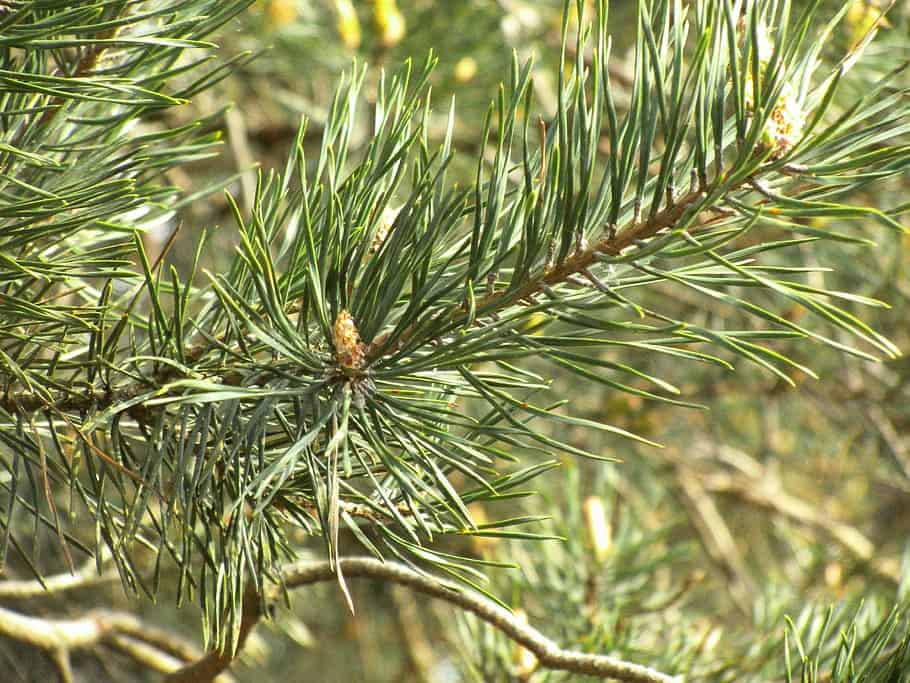
While the Vanderwolf’s Pyramid grows best in full sun, it does not do well in hot and humid regions. For this reason, it helps to add a layer of mulch around your tree to retain moisture and trim away the branches to provide enough air circulation.
Also, provide your Vanderwolf’s Pyramid Limber Pine with partial shade in the afternoon sun. For overwintering young trees planted in the landscape, a wrap can be beneficial for the first year.
Fertilizing Vanderwolf’s Pyramid

As well-draining soil is essential for these trees, fertilizing is also crucial. Compared to other trees, the limber pine needs feeding four times a year.
You can provide an all-purpose food with soil sulfur in spring followed by humic and all-purpose food in summer. In the fall and winter, you can use only an all-purpose food.
Doing this allows for new growth, and new shoots will develop in early spring.
Pruning Vanderwolf’s Pyramid
The candle pruning technique is beautiful to control the shape of your pine trees.
The pine tree grows tall thin candles above, and you can snap them off. It also helps limit the growth of a fast-growing tree. You can snap them off at the base.
You can snap the candles in half if you want a bushier growth. If you want your tree to grow taller, leave the candles alone and only snap off the tips to bush out a bit.
Alternatively, you can remove damaged or dead branches as well.
Propagation Vanderwolf’s Pyramid Limber Pine
You can use the two methods to propagate your limber pine using seeds or cuttings.
Using Seeds:
Collect the cones in the fall and shake them upside down 👇 to help release the seeds.
Place the seeds in a water dish and keep the ones that float, discarding the ones that sink.
Dry the seeds and place them in an airtight container until mid-winter arrives.
Then sow the seeds into individual pots with a moist essential starting mix. Place the pointed end downwards and press it beneath the soil surface.
Leave the pots in a sunny spot and keep them moist.
Germination will occur over two to three months, and you will notice a small needle appearing.
When your seedlings are six inches tall, you can transplant them to a large pot and move them outdoors to help climatize them before planting them in the ground.
Using Cuttings:
Take a six-inch cutting from new growth in mid-fall to early winter.
Remove the needles at the end of the cutting and treat it with a rooting hormone.
Prepare a pot with a moist starting mix and leave it in a sunny location while keeping the soil moist.
A cutting can take up to a year to root, and once rooted, you can transplant it into a larger container to acclimate outdoors before you plant it in the ground.
Vanderwolf Pine Similar Plants

The Vanderwolf’s Pyramid Limber Pine is not the only tree that produces eye-catching blue-green foliage. Here are some other trees you can look at as well:
The Dwarf Eastern White Pine is like a shrub plant with blue-green leaves to brighten the home or garden.
The Loblolly Pine is a fast-growing tree with purple/lavender, gold/yellow, and red/burgundy flowers. The leaves are dark green.
The Sherwood Compact Mugo Pine has golden-yellow flowers with beautiful green foliage.
Vanderwolf Pine Common Diseases and Pests
The limber pine does not get bothered by pests or wild animals. Still, it is susceptible to white pine blister rust. The best is to avoid planting your tree close to currants or gooseberries. These trees are the host for these diseases. Hence, your limber pine has good disease resistance.