President’s Day is usually celebrated every third Monday of February. This is to honor those who have served as presidents in the White House.
President’s Day is an official state holiday and Washington’s birthday.
No matter the coincidence, we celebrate some remarkable presidents on the day. Plantly is dedicating this article to all the presidents who ruled the country.
11 Presidential Trees on the White House Grounds
With all the presidents ruling the country from:
President Lincoln
President Woodrow Wilson
President James Monroe
President Franklin Pierce
President Benjamin Harrison
President Washington
One tradition remains: planting memorial trees at the White House. It dates back to when John Quincy Adams planted the vegetable garden. Still, planting trees at the White House started with Thomas Jefferson.
The president planted a grove of trees on the White House lawn. Since then, numerous presidents have carried on with planting trees. It ranges from planting commemorative trees to planting trees in the landscape design. Ornamental trees are displayed every year, making for a fabulous treat.
Barack Obama/Littleleaf Linden

While the first lady, Michelle Obama, was known for her White House vegetable garden, Barack Obama dutifully carried on with the White House planting commemorative trees tradition.
In 2009, Barack Obama dug a hole for his famous Littlelef Linden in the spot of the Failing Scarlet Oak that President Bush had planted the year before. The fact is that President Bush had tried to replace the Scarlet Oak in that same spot in 1889 Benjamin Harrison.



Bill Clinton/White Dogwood

white dogwood @flickr
white dogwood @flickr
In 1996, President Bill Clinton planted his White Dogwood tree on the South Lawn, which is still seen today. Bill Clinton planted it as a memorial tree for his Secretary of Commerce, Ron Brown, who died along with 34 Commerce Department employees that week during a plane crash.
The Flowering Dogwood is a small tree with pink, red, or white blossoms in spring, followed by attractive berries in summer and fall. It is an easy-to-care-for species and is usually chosen for memorial trees.
George W. Bush/’ Cherokee Princess’ Flowering Dogwood

In the year that President George Bush’s daughter Jenna married in 2008, he planted a very showflowering tree called the Dogwood. Bush planted the tree along a brick path in the Rose Garden on the White House grounds.
Bush planted the tree to commemorate the event. The Virginian groom suggested the tree for planting as it is Virginia’s state tree and flower. The Cherokee Princess flowering tree displays signature blossoms in spring but comes with a bonus.
The leaves turn to a lovely scarlet in the fall.
Andrew Jackson’s Southern Magnolias

The grieving Andrew Jackson planted another famous White House tree in 1829 when he arrived in Washington. He brought a cutting from his wife’s Magnolia tree on their Tennessee ranch.
She died a day after his presidential election and did two terms from 1829-1837. The Jackson Magnolia graced the White House front with massive perfumed blooms for almost 200 years.
The tree also appeared on the $20 bill until 1998. In 2017, the White House tree needed to be removed and replaced with a slip propagation from the original one. The tree is one of the most iconic species in the Magnolia family, with evergreen leaves and beautiful white blooms.
George Washington’s Tulip Poplars

One of the most popular trees at the White House is Mount Vernon’s Tulip Poplar, planted by President George Washington. Unfortunately, Washington grew many of them, and only 13 survived.
Washington planted the tulip famous on Mount Vernon ground and home on Potomac in 1785. While not planted at the White House, the original tree continues to stand and is visited by many.
John Quincy Adams/American Elm
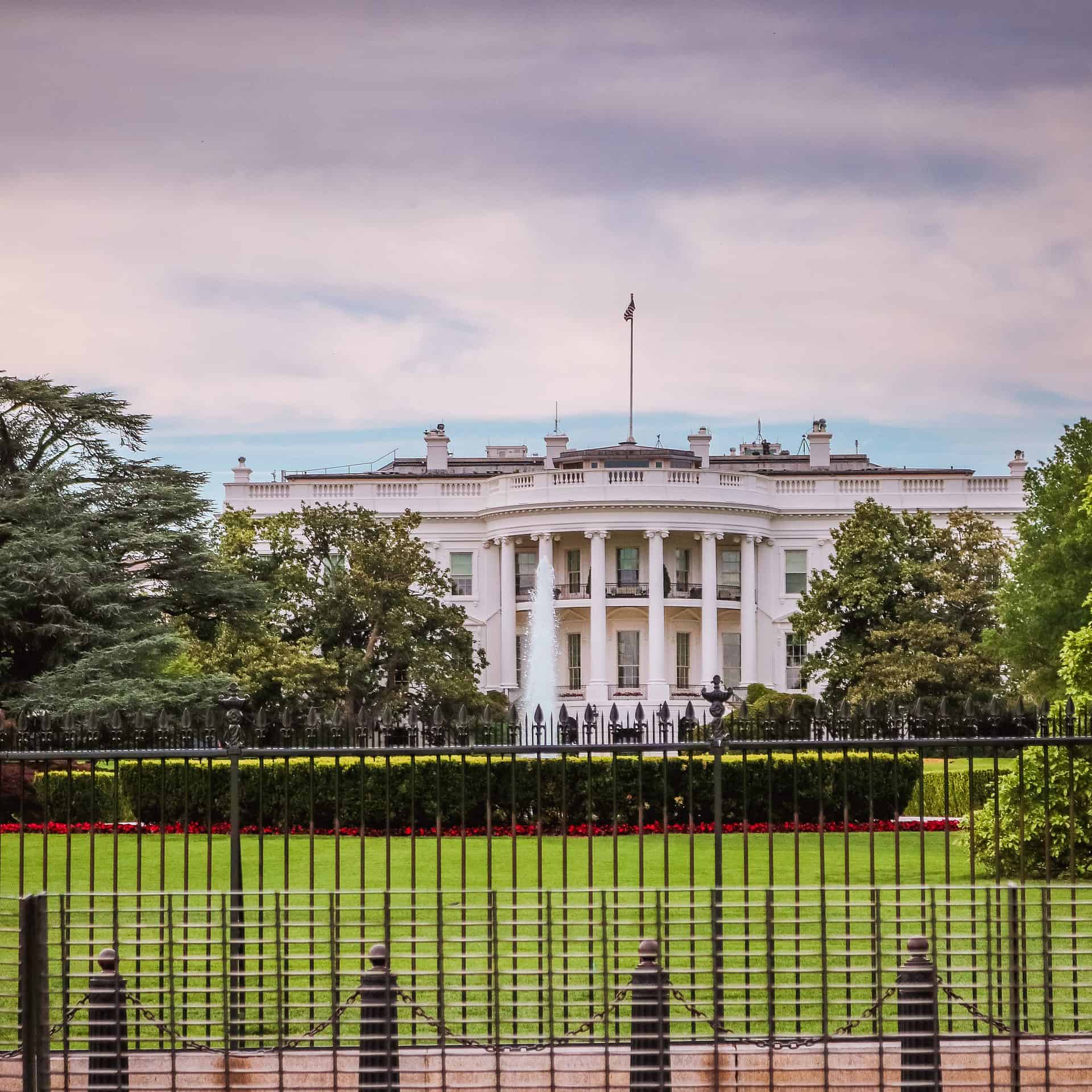
John Adams was the 6th president of the United States and served from 1825 to 1829. He loved gardening and was known in D.C. as the tree-planting Mr. Adams. He planted many American Elms on the White House grounds.
These trees survived until 1991, and First Lady Barbara Bush replaced them the same year with a newly propagated elm from Adam’s tree, which you can still see standing there today on the South Lawn side.
It is a towering tree native to the Eastern United States and Canada. It is a trendy shade tree, but during the 1930s, the Dutch Elm disease wiped out most species.
Franklin D. Roosevelt/White Oak

President Roosevelt served the country from 1933 to 1945 and was a severe amateur arborist who managed his estate landscape in New York Hyde Park. At the time, he started a tree-planting program.
Once he arrived at the White House, he installed several trees, including the White Oak, in 1935. The tree still stands on the grounds today on the White House’s eastern side.
The White Oak is native to zones four through eight and is a slow-growing tree that thrives in full sun with acorn crops and fall color display.
John F. Kennedy/’ Katherine’ Crabapple
 Crabapple @flickr
John F Kennedy served the country from 1961 until assassinated in 1963. He often strolled through the flower garden to seek inspiration. When he died, First Lady Jacqueline Kennedy asked for a basket of cuttings from the rose garden to be placed at his grave.
The fabulous thing is that the crabapple fruit that survived the frost adds color to the somber offering.
Lyndon B. Johnson/Willow Oak
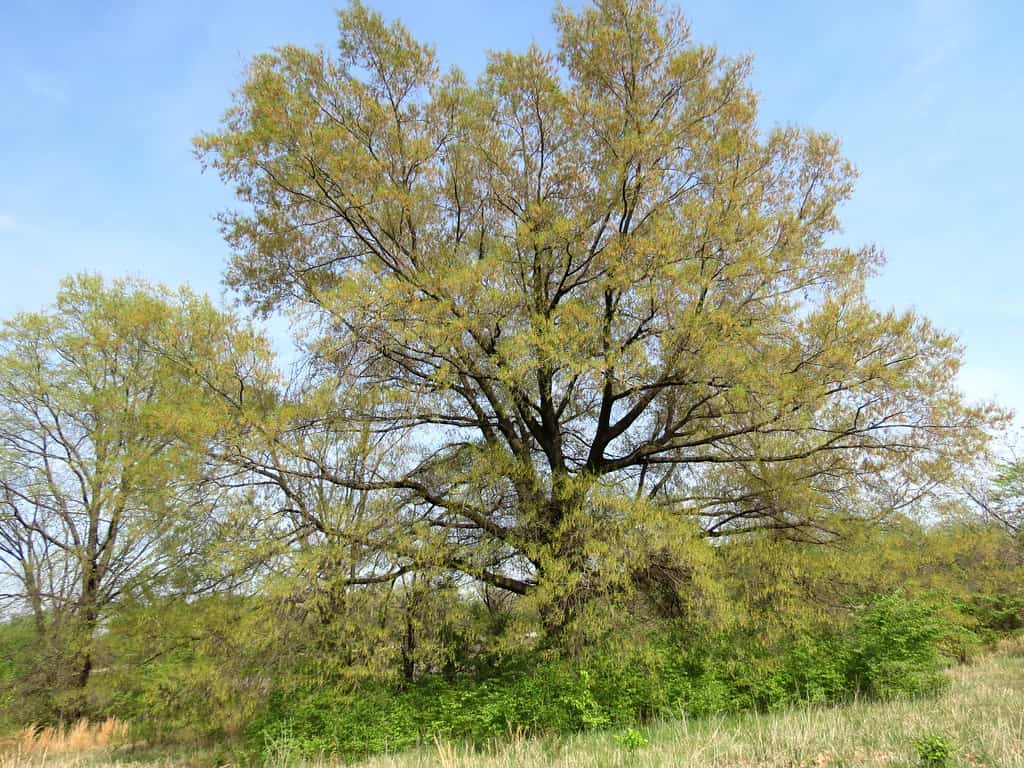 willow oak tree @flickr
Lady Bird Johnson, the wife of Lyndon B. Johnson, was a well-known gardener. She started a roadside wildflower beautification project that you can still see nationwide today. Still, Johnson had some say regarding the White House, and that was planting the Willow Oak.
You find the tree on flood plains in the eastern to central parts of the United States.
Abraham Lincoln’s Honey Locust
 honey locust tree @flickr
The famous Honey Locust you find in Jacksonville, Florida, in Duval County. It is on the Southwest Jacksonville Marker reached from Halsema Road North. It has a long history dating back to Abraham Lincoln’s Gettysburg Address and is part of a soldier’s dedication ceremony.
The cemetery was carved from the field at Gettysburg in Pennsylvania, where the armies clashed during the Civil War in 1863. A few months after the battle, a dedication was held with a two-hour address given by Edward Everett, a noted speaker.
President Abraham attended the ceremony and gave a two-minute remark, delivering the Gettysburg Address that will live forever in the American hearts. The Honeylocust Tree stood about 100 yards from the president’s speech.
Today, it is the last remaining tree from this historic site. It is a tree that grew from a seed handpicked from that Gettysburg address, Honeylocust.
Jimmy Carter/Cedar of Lebanon
 cedar of lebanon @flickr
In 1978, an ambassador from Lebanon, with other Lebanese community members, presented Jimmy Carter with a Cedar tree to plant at the White House. The jester was a thank-you gift for Carter working on the Middle East peace.
An ancient tree appears throughout the Bible and is on the Lebanon flag. The tree is part of the pine or Pinaceae family. It has graceful branches growing up to 70 feet tall and 60 feet wide. It is a slow grower.
Whether you want to buy, sell, or simply reach out to other plant enthusiasts, Plantly is the right place to be!